Brain Fog Explained: Symptoms, Causes, And How To Clear It
7 min read
You know the feeling: you sit down to work, read the same sentence three times, and still can’t process it. Your thoughts move like they’re wading through mud. Everything feels just slightly… off. If you’ve ever tried to describe this state to someone, you’ve probably landed on the same two words everyone else does, and that’s essentially brain fog explained in the most relatable way possible. It’s not a medical diagnosis, but it’s very real, and millions of people deal with it regularly.
Brain fog can show up for all kinds of reasons, chronic stress, poor sleep, nutritional deficiencies, illness, or the neurochemical aftermath of intense experiences. If you’ve ever felt mentally drained after a psychedelic journey, that cloudy, disconnected headspace is a textbook example. It’s one of the core issues we formulated Afterglow to address: that post-experience cognitive dullness that makes it hard to think, integrate, and move forward clearly.
This article breaks down what brain fog actually is, what causes it, how to recognize the symptoms, and, most importantly, what you can do to clear it and get your sharpness back. Whether your fog rolled in after a rough week or a transformative experience, the mechanisms behind it are surprisingly similar.
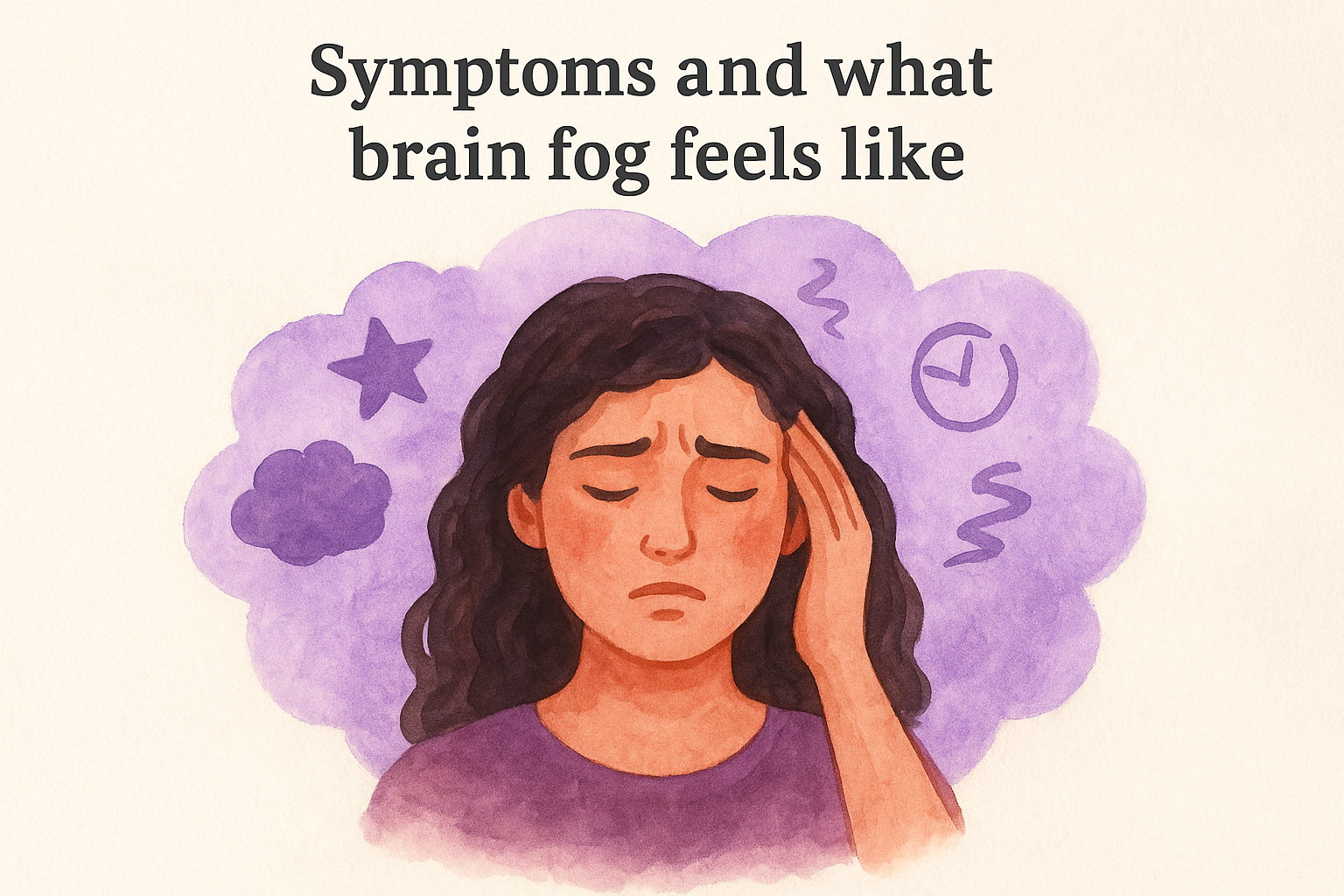
Symptoms and what brain fog feels like
Brain fog isn’t one specific symptom but a cluster of related experiences that affect your thinking, memory, and mental energy. Most people describe it as a loss of mental sharpness paired with a general sense that their brain is running on reduced capacity. The tricky part is that it can range from mildly annoying to genuinely disruptive, making it hard to complete everyday tasks you’d normally handle without a second thought.
The mental symptoms you’ll notice first
The cognitive side is usually what hits hardest. You might find yourself struggling to recall words mid-sentence, losing your train of thought in a conversation, or failing to absorb information you’ve read more than once. Concentration becomes effortful rather than automatic. Decisions that should feel simple, like what to eat or how to reply to a message, suddenly demand more effort than they should.
If your mental sharpness feels consistently out of reach even after adequate sleep, brain fog is likely the culprit.
Some people also notice slowed processing speed, where responses and reactions feel delayed by a fraction of a second. Others report difficulty with creativity or problem-solving, tasks that usually feel natural but suddenly feel blocked or hollow.
The physical side of brain fog
Brain fog often comes with physical symptoms that signal something is off beneath the surface. Headaches, fatigue, and eye strain are common companions, especially when you’re pushing through mentally demanding work. Your eyes may feel heavy even when you haven’t been awake long.
Your body and mind feel disconnected from each other in a subtle but persistent way. Some people notice mild dizziness or a low-grade pressure behind the eyes. Others find their sleep quality drops, which then feeds more fog the following day, creating a reinforcing cycle that’s hard to break without identifying what triggered it in the first place.
Why brain fog matters and when to act
Most people dismiss brain fog as simple tiredness and push through it. That approach works occasionally, but ignoring persistent fog costs you more than just a few sluggish hours. Your ability to retain information, manage emotions, and make clear decisions all take a hit. Over time, untreated fog can erode productivity, relationships, and mental wellbeing in ways that feel gradual until they become significant.
When to treat it seriously
Occasional fog after a poor night’s sleep is normal and usually resolves on its own. But when it lingers for more than a few days without an obvious explanation, it’s worth paying attention. This is especially true if it starts affecting your ability to function at work, hold conversations, or feel emotionally steady.
If fog shows up consistently after specific events, like illness, high stress, or a psychedelic experience, that pattern is a signal worth investigating rather than ignoring.
Signs you need to act now
Some signs indicate it’s time to address the fog actively rather than wait it out. If you recognize more than one of the items below, your brain is asking for support, not just rest.
You feel mentally cloudy most days for over a week
Your mood is consistently low or irritable alongside the fog
Sleep is no longer restoring your clarity the way it used to
You’re struggling to complete tasks that were previously automatic
Common causes and triggers to check first
Understanding what’s driving your brain fog is the fastest path to clearing it. The causes vary widely, but most fall into a handful of categories worth checking before you assume something serious is happening. With brain fog explained in terms of root causes, you can often pinpoint the trigger and respond directly rather than managing symptoms blindly.
Lifestyle and nutritional factors
Sleep deprivation and poor diet are the two most common culprits. Your brain needs deep sleep to clear metabolic waste through the glymphatic system, and even one or two nights of disrupted rest can dull your cognition significantly. Nutritional deficiencies, particularly low B12, iron, magnesium, or omega-3 levels, strip away the raw materials your brain needs to function sharply.
Dehydration alone can impair focus and short-term memory faster than most people realize. Even mild fluid loss of 1-2% measurably affects cognitive performance.
Health and stress-related causes
Chronic stress keeps cortisol elevated, which disrupts neurotransmitter balance and gradually impairs the hippocampus. Illness is another major trigger: post-viral fog following COVID-19 or other infections can persist for weeks as the immune system continues affecting brain chemistry. Other common causes include:
Thyroid dysfunction
Hormonal imbalances
Certain medications or supplements
A sedentary lifestyle
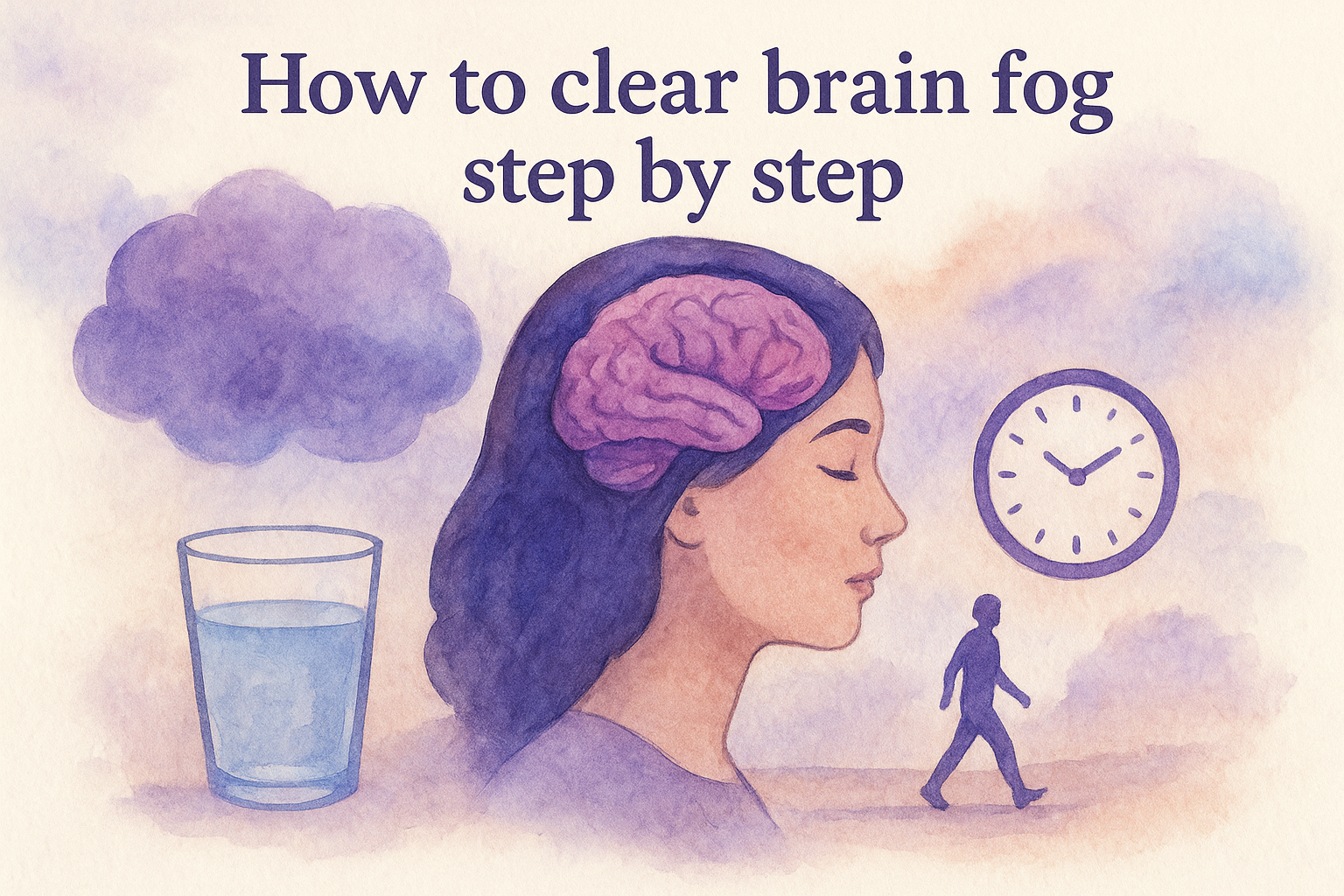
How to clear brain fog step by step
Clearing brain fog requires targeting the root cause, not just pushing harder through the haze. With brain fog explained through its triggers, you have a practical roadmap already. The steps below follow a logical sequence: fix the physical basics first, then support your brain chemistry directly.
Address the physical foundations first
Sleep and hydration are your two fastest levers. Prioritize seven to nine hours of sleep tonight as an urgent repair task, not a future goal. Drink at least 500ml of water within the first thirty minutes of waking and maintain consistent fluid intake throughout the day.
Fixing sleep and hydration first rules out the two most common triggers before you investigate anything deeper.
Physical actions that move the needle quickly:
Take a twenty-minute walk to boost cerebral blood flow
Cut alcohol and caffeine for 48 hours to stabilize your nervous system
Eat a nutrient-dense meal with protein, healthy fats, and complex carbs
Rebuild your neurochemical balance
Nutritional deficiencies in B vitamins, magnesium, and omega-3 fatty acids are directly tied to cognitive dullness. Supplementing these or adjusting your diet can restore mental clarity within days when deficiency is the root cause. Key nutrients to prioritize:
Magnesium bisglycinate for nervous system support
B-complex vitamins for energy metabolism
Omega-3s for reducing neuroinflammation
When brain fog may relate to psychedelics
Psychedelics place significant demands on your neurochemical systems, and the period after a session can leave your brain in a depleted, recalibrating state. This is a specific form of brain fog explained through the biochemistry of serotonin depletion, oxidative stress, and disrupted sleep that often follow an intense psychedelic experience. It is not purely psychological. It has a measurable physiological basis.
Why the comedown creates cognitive cloudiness
After a psychedelic session, your brain has worked hard. Serotonin and other neurotransmitters get heavily utilized during the experience, and your body needs time and raw materials to replenish them. The result is often a day or two of feeling mentally sluggish, emotionally flat, and cognitively dull.
Supporting your neurochemistry with targeted nutrients directly after a session can significantly shorten the fog window.
Your recovery window matters more than most people realize. Poor sleep following a session compounds the neurochemical depletion, and without active nutritional support, the fog can stretch from one day into several. Key factors that intensify post-psychedelic fog include:
Inadequate hydration during and after the experience
Disrupted or skipped sleep in the following nights
Low dietary intake of tryptophan, magnesium, and B vitamins
Addressing these three directly after a session gives your brain what it needs to restore clarity faster rather than waiting passively for it to return on its own.
What to do next
Brain fog explained simply comes down to this: your brain is depleted and asking for support, and the clearer you are about the cause, the faster you can respond. Start with the basics tonight, which means prioritizing sleep, drinking more water, and eating a nutrient-dense meal. If your fog follows a pattern tied to stress or illness, address the root cause directly rather than waiting for it to resolve on its own.
If your brain fog tends to show up after a psychedelic experience, you are dealing with a specific, correctable form of neurochemical depletion. Targeted nutritional support in the hours and days after a session gives your brain the raw materials it needs to restore clarity and emotional balance faster. You do not have to white-knuckle through the comedown. The Afterglow Recovery Protocol is built specifically to address the physical and cognitive toll of psychedelic experiences, step by step.
Lukas Nelpela
writes on neuroscience, mental health, and mindful exploration. With a passion in research-driven wellness and years focused on set & setting, integration, and recovery, he turns complex ideas into clear, usable insight.
You’re staring at your screen, reading the same sentence for the fourth time, and nothing sticks. Your thoughts feel like they’re wading through wet cement. So what is brain fog, exactly? It’s not a medical diagnosis, it’s a catch-all term for that frustrating state of mental cloudiness where focus, memory,
Every process in your body, thinking, moving, recovering, runs on energy produced inside your cells. That energy comes from mitochondria, and when they’re not functioning well, you feel it: brain fog, fatigue, slow recovery, and a general sense of running on empty. Mitochondrial support refers to the nutrients, habits, and
You sit down to focus, stare at your screen, and nothing clicks. Thoughts scatter, simple decisions feel impossible, and your mind moves like it’s stuck in wet concrete. If you’ve been looking up how to get rid of brain fog, you already know the frustration, that heavy, hazy state where
Working nights, rotating schedules, or pulling irregular hours throws your body’s internal clock into a constant state of confusion. Around 20% of the global workforce does some form of shift work, and the majority of those people report poor sleep as their number one complaint. Good sleep hygiene for shift
Stiff ankles affect more than just your squat depth. Limited ankle range of motion can mess with your knees, hips, and lower back, and if you spend long hours on your feet at festivals, retreats, or anywhere that keeps you moving, you’ll feel it. A solid ankle mobility routine takes
We use various cookies on our website. Some are essential for the website to function properly, while others we may only use with your consent. You can find more information about cookies on our website here.
This website uses cookies to improve your experience while you navigate through the website. Out of these cookies, the cookies that are categorized as necessary are stored on your browser as they are essential for the working of basic functionalities of the website. We also use third-party cookies that help us analyze and understand how you use this website. These cookies will be stored on your browser only with your consent. You also have the option to opt-out of these cookies. However, opting out of some of these cookies may have an impact on your browsing experience.
Necessary cookies are absolutely essential for the website to function properly. These cookies anonymously ensure basic functionalities and security features of the website.
Cookie
Duration
Description
cookielawinfo-checkbox-advertisement
1 year
Set by the GDPR Cookie Consent plugin, this cookie records the user consent for the cookies in the "Advertisement" category.
cookielawinfo-checkbox-analytics
11 months
This cookie is set by GDPR Cookie Consent plugin. The cookie is used to store the user consent for the cookies in the category "Analytics".
cookielawinfo-checkbox-functional
11 months
The cookie is set by GDPR cookie consent to record the user consent for the cookies in the category "Functional".
cookielawinfo-checkbox-necessary
11 months
This cookie is set by GDPR Cookie Consent plugin. The cookies is used to store the user consent for the cookies in the category "Necessary".
cookielawinfo-checkbox-others
11 months
This cookie is set by GDPR Cookie Consent plugin. The cookie is used to store the user consent for the cookies in the category "Other.
cookielawinfo-checkbox-performance
11 months
This cookie is set by GDPR Cookie Consent plugin. The cookie is used to store the user consent for the cookies in the category "Performance".
CookieLawInfoConsent
1 year
CookieYes sets this cookie to record the default button state of the corresponding category and the status of CCPA. It works only in coordination with the primary cookie.
elementor
never
The website's WordPress theme uses this cookie. It allows the website owner to implement or change the website's content in real-time.
fb_event_id_atc
30 minutes
Used to match client and server events for Meta Conversion API deduplication. Contains only anonymous technical IDs; no personal data stored.
fb_event_id_ic
30 minutes
Used to match client and server events for Meta Conversion API deduplication. Contains only anonymous technical IDs; no personal data stored.
fb_event_id_pur
30 minutes
Used to match client and server events for Meta Conversion API deduplication. Contains only anonymous technical IDs; no personal data stored.
fb_event_id_vc
30 minutes
Used to match client and server events for Meta Conversion API deduplication. Contains only anonymous technical IDs; no personal data stored.
rc::a
never
This cookie is set by the Google recaptcha service to identify bots to protect the website against malicious spam attacks.
rc::c
session
This cookie is set by the Google recaptcha service to identify bots to protect the website against malicious spam attacks.
viewed_cookie_policy
11 months
The cookie is set by the GDPR Cookie Consent plugin and is used to store whether or not user has consented to the use of cookies. It does not store any personal data.
VISITOR_PRIVACY_METADATA
6 months
YouTube sets this cookie to store the user's cookie consent state for the current domain.
wpEmojiSettingsSupports
session
WordPress sets this cookie when a user interacts with emojis on a WordPress site. It helps determine if the user's browser can display emojis properly.
Functional cookies help to perform certain functions, such as sharing website content on social media platforms, collecting feedback, and other third-party functions.
Cookie
Duration
Description
sib_cuid
6 months
SendinBlue sets this cookie to store unique visits.
VISITOR_INFO1_LIVE
6 months
A cookie set by YouTube to measure bandwidth that determines whether the user gets the new or old player interface.
yt-remote-cast-available
session
The yt-remote-cast-available cookie is used to store the user's preferences regarding whether casting is available on their YouTube video player.
yt-remote-cast-installed
session
The yt-remote-cast-installed cookie is used to store the user's video player preferences using embedded YouTube video.
yt-remote-connected-devices
never
YouTube sets this cookie to store the user's video preferences using embedded YouTube videos.
yt-remote-device-id
never
YouTube sets this cookie to store the user's video preferences using embedded YouTube videos.
yt-remote-fast-check-period
session
The yt-remote-fast-check-period cookie is used by YouTube to store the user's video player preferences for embedded YouTube videos.
yt-remote-session-app
session
The yt-remote-session-app cookie is used by YouTube to store user preferences and information about the interface of the embedded YouTube video player.
yt-remote-session-name
session
The yt-remote-session-name cookie is used by YouTube to store the user's video player preferences using embedded YouTube video.
ytidb::LAST_RESULT_ENTRY_KEY
never
The cookie ytidb::LAST_RESULT_ENTRY_KEY is used by YouTube to store the last search result entry that was clicked by the user. This information is used to improve the user experience by providing more relevant search results in the future.
Performance cookies are used to understand and analyze key website performance indexes, which helps in providing a better user experience for visitors.
Cookie
Duration
Description
SRM_B
1 year 24 days
Used by Microsoft Advertising as a unique ID for visitors.
Analytical cookies are used to understand how visitors interact with the website. These cookies help provide information on metrics such as the number of visitors, bounce rate, traffic source, etc.
Cookie
Duration
Description
_clck
1 year
Microsoft Clarity sets this cookie to retain the browser's Clarity User ID and settings exclusive to that website. This guarantees that actions taken during subsequent visits to the same website will be linked to the same user ID.
_clsk
1 day
Microsoft Clarity sets this cookie to store and consolidate a user's pageviews into a single session recording.
_fbp
3 months
Facebook sets this cookie to display advertisements when either on Facebook or on a digital platform powered by Facebook advertising after visiting the website.
_ga
1 year 1 month 4 days
Google Analytics sets this cookie to calculate visitor, session and campaign data and track site usage for the site's analytics report. The cookie stores information anonymously and assigns a randomly generated number to recognise unique visitors.
_ga_*
1 year 1 month 4 days
Google Analytics sets this cookie to store and count page views.
_gcl_au
3 months
Google Tag Manager sets the cookie to experiment advertisement efficiency of websites using their services.
_hjSession_*
1 hour
Hotjar sets this cookie to ensure data from subsequent visits to the same site is attributed to the same user ID, which persists in the Hotjar User ID, which is unique to that site.
_hjSessionUser_*
1 year
Hotjar sets this cookie to ensure data from subsequent visits to the same site is attributed to the same user ID, which persists in the Hotjar User ID, which is unique to that site.
_hjTLDTest
session
To determine the most generic cookie path that has to be used instead of the page hostname, Hotjar sets the _hjTLDTest cookie to store different URL substring alternatives until it fails.
CLID
1 year
Microsoft Clarity set this cookie to store information about how visitors interact with the website. The cookie helps to provide an analysis report. The data collection includes the number of visitors, where they visit the website, and the pages visited.
MR
7 days
This cookie, set by Bing, is used to collect user information for analytics purposes.
sbjs_current
session
Sourcebuster sets this cookie to identify the source of a visit and stores user action information in cookies. This analytical and behavioural cookie is used to enhance the visitor experience on the website.
sbjs_current_add
session
Sourcebuster sets this cookie to identify the source of a visit and stores user action information in cookies. This analytical and behavioural cookie is used to enhance the visitor experience on the website.
sbjs_first
session
Sourcebuster sets this cookie to identify the source of a visit and stores user action information in cookies. This analytical and behavioural cookie is used to enhance the visitor experience on the website.
sbjs_first_add
session
Sourcebuster sets this cookie to identify the source of a visit and stores user action information in cookies. This analytical and behavioural cookie is used to enhance the visitor experience on the website.
sbjs_migrations
session
Sourcebuster sets this cookie to identify the source of a visit and stores user action information in cookies. This analytical and behavioural cookie is used to enhance the visitor experience on the website.
sbjs_session
1 hour
Sourcebuster sets this cookie to identify the source of a visit and stores user action information in cookies. This analytical and behavioural cookie is used to enhance the visitor experience on the website.
sbjs_udata
session
Sourcebuster sets this cookie to identify the source of a visit and stores user action information in cookies. This analytical and behavioural cookie is used to enhance the visitor experience on the website.
SM
session
Microsoft Clarity cookie set this cookie for synchronizing the MUID across Microsoft domains.
YSC
session
YSC cookie is set by Youtube and is used to track the views of embedded videos on Youtube pages.
Advertising cookies are used to deliver relevant advertisements and marketing campaigns to visitors. These cookies track visitors across websites and collect information to deliver tailored advertisements.
Cookie
Duration
Description
_rdt_uuid
3 months
Reddit sets this cookie to build a profile of your interests and show you relevant ads.
ANONCHK
10 minutes
The ANONCHK cookie, set by Bing, is used to store a user's session ID and verify ads' clicks on the Bing search engine. The cookie helps in reporting and personalization as well.
MUID
1 year 24 days
Bing sets this cookie to recognise unique web browsers visiting Microsoft sites. This cookie is used for advertising, site analytics, and other operations.
test_cookie
15 minutes
doubleclick.net sets this cookie to determine if the user's browser supports cookies.
yt.innertube::nextId
never
YouTube sets this cookie to register a unique ID to store data on what videos from YouTube the user has seen.
yt.innertube::requests
never
YouTube sets this cookie to register a unique ID to store data on what videos from YouTube the user has seen.