How To Reduce Anxiety Naturally: 5 Science-Backed Ways Today
7 min read
Anxiety doesn’t always show up as a full-blown panic attack. Sometimes it’s a tight chest at 3 AM, a racing mind after an intense experience, or a low-grade unease that lingers for days. If you’ve been searching for how to reduce anxiety naturally, you’re probably tired of vague advice, and you want methods that actually hold up under scientific scrutiny.
This matters especially if you’re someone who explores altered states of consciousness. Post-psychedelic anxiety is one of the most common after-effects people report, and it can undermine the very insights you worked to uncover. At Afterglow Supplements, we formulate recovery protocols built around neurotransmitter replenishment and nervous system support, so helping people manage anxiety without reaching for pharmaceuticals is core to what we do.
Below, you’ll find five evidence-backed strategies you can start using today. Some work in minutes, others build resilience over weeks. All of them are grounded in research, not wishful thinking, and they pair well with a recovery-focused lifestyle.
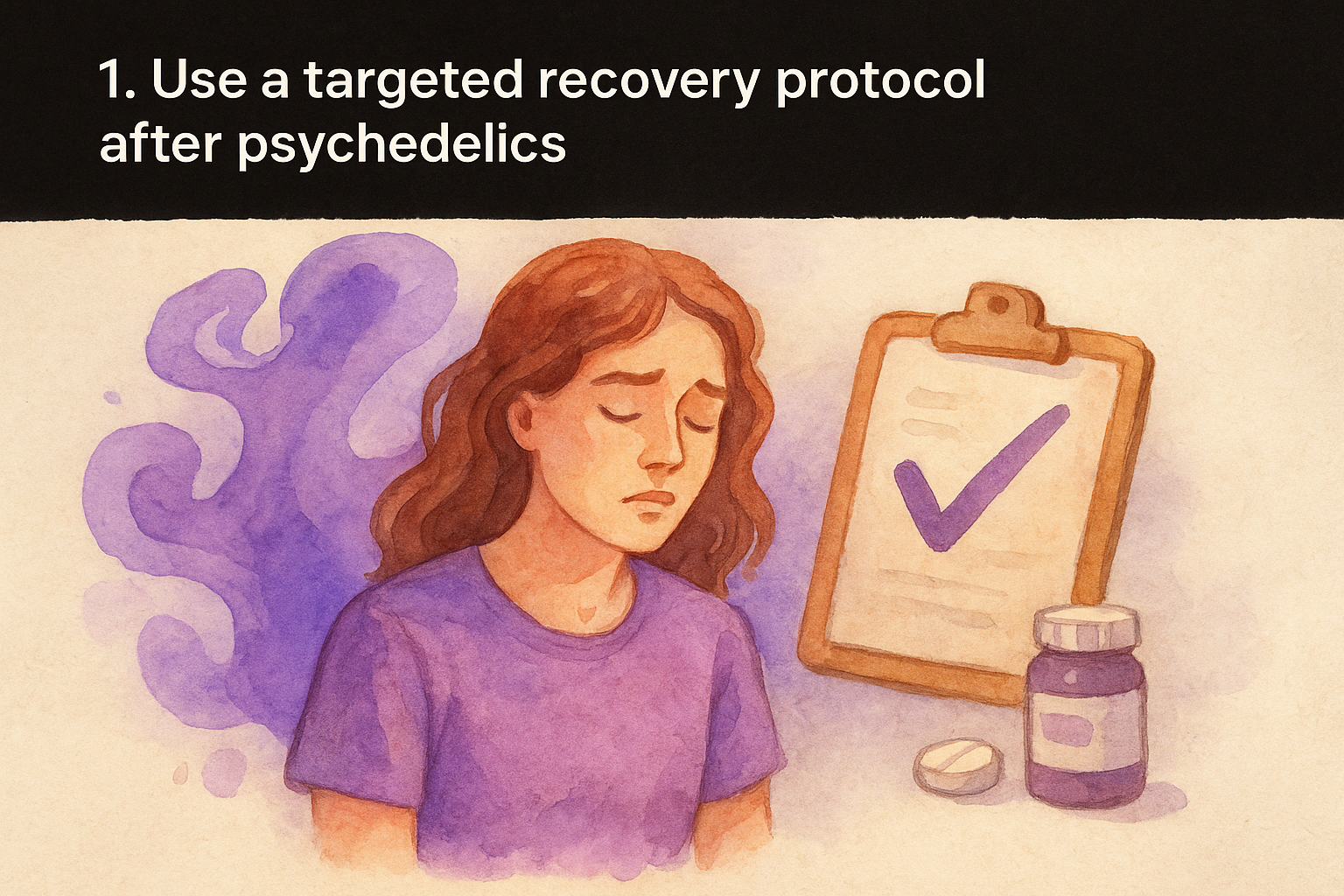
1. Use a targeted recovery protocol after psychedelics
If you’ve ever felt anxious, flat, or mentally foggy in the days after a psychedelic experience, neurochemical depletion is likely the cause. Substances like psilocybin and MDMA temporarily flood your brain with serotonin and other neurotransmitters, and the crash that follows can trigger real anxiety symptoms that linger for 24 to 72 hours.
Why it helps
A targeted recovery protocol addresses what’s actually happening in your body after an intense experience: depleted serotonin precursors, oxidative stress, and disrupted sleep cycles. Replenishing key nutrients, including L-Tryptophan, Magnesium Bisglycinate, and N-Acetylcysteine (NAC), gives your nervous system the raw materials it needs to rebalance, rather than leaving it to recover on its own timeline.
Supporting your neurochemistry directly is one of the most practical answers to how to reduce anxiety naturally after a psychedelic experience.
How to do it today
Structure your recovery around a four-step protocol that runs from preparation all the way through to the following day. Afterglow Supplements is built around this exact framework, with each phase targeting a specific recovery need:
Before: Prime your system with L-Tryptophan and Magnesium
During: Maintain hydration with electrolytes
Before sleep: Support rest with Melatonin and calming nutrients
Next day: Replenish with NAC and Phosphatidylserine for cognitive recovery
Best for and when to use it
This approach works best when your anxiety links directly to a psychedelic experience, including post-trip blues or a prolonged serotonin crash. Begin the protocol within 12 to 24 hours of the experience to get ahead of the worst symptoms.
Risks and when to get help
Most recovery ingredients are well-tolerated by healthy adults, but interactions with existing medications are possible. If your anxiety persists beyond 72 hours or includes thoughts of self-harm, contact a healthcare professional right away.
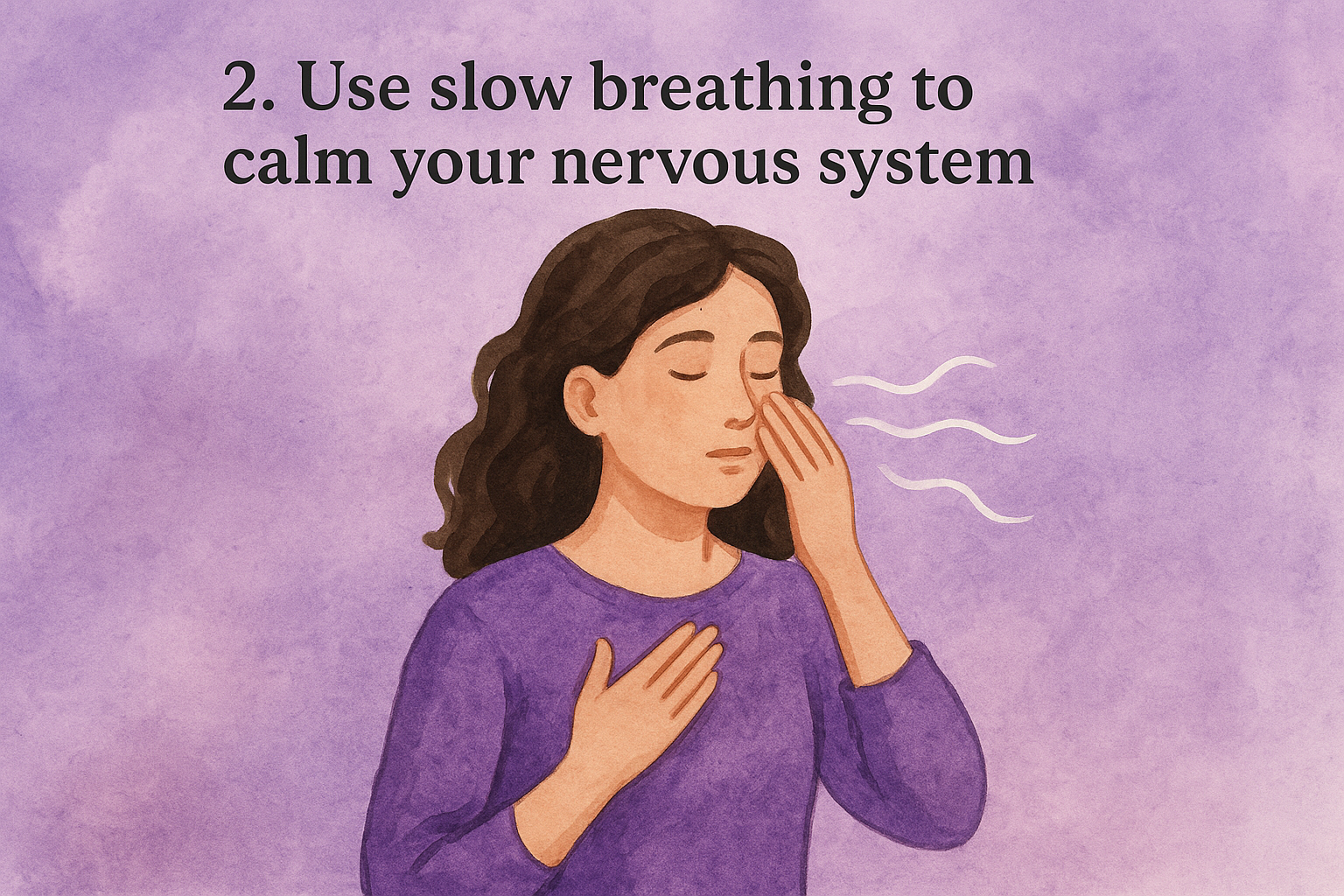
2. Use slow breathing to calm your nervous system
Your breath is one of the few autonomic functions you can consciously control, which makes it a direct lever for calming your nervous system on demand.
Why it helps
Slow, controlled breathing activates your parasympathetic nervous system, which counteracts the fight-or-flight response driving your anxiety. Research shows that extending your exhale lowers heart rate and cortisol levels within minutes, giving you a reliable, drug-free tool.
Controlled breathing is one of the most accessible answers to how to reduce anxiety naturally, requiring nothing but your lungs and a few minutes.
How to do it today
Try box breathing: inhale for 4 seconds, hold for 4, exhale for 4, hold for 4. Repeat for 5 to 10 minutes. You can do this sitting, lying down, or even mid-conversation if anxiety spikes unexpectedly.
Best for and when to use it
This technique works best for acute anxiety spikes, including moments of overwhelm after an intense psychedelic session or a stressful social situation. Use it immediately when you feel tension rising.
Risks and when to get help
Breathing exercises are safe for nearly everyone, but hyperventilation is possible if you breathe too fast or too forcefully. If dizziness or numbness occurs, return to a natural breath and consult a doctor if symptoms persist.
3. Move your body to burn off stress signals
Physical movement gives your body a real outlet for the stress hormones that build up when anxiety spikes. When cortisol and adrenaline accumulate, your system is primed to run or fight, and exercise is the most direct way to use those signals constructively.
Why it helps
Exercise triggers the release of endorphins and BDNF (brain-derived neurotrophic factor), both of which reduce anxiety and stabilize mood. Research shows that 20 minutes of moderate movement can lower cortisol measurably, making it one of the most reliable ways to reduce anxiety naturally.
Regular exercise also restructures how your brain responds to stress over time, not just in the moment.
How to do it today
Pick a movement type that matches your current energy. Three options, ranked from low to high effort:
Light: A 20-minute walk outdoors
Moderate: Yoga or a stretching session
Higher: A brisk jog or cycling
Best for and when to use it
Movement works best for general anxiety and low-grade unease that builds throughout the day. Use it in the morning to set a calmer baseline or in mid-afternoon when stress tends to peak.
Risks and when to get help
Intense exercise during acute recovery can temporarily raise cortisol, which may worsen anxiety short-term. If you feel worse after moving, reduce the intensity and consult a doctor if symptoms continue.
4. Stabilize your blood sugar and hydration
Blood sugar swings and dehydration are two underrated triggers for anxiety that most people miss. When your glucose drops or your electrolytes run low, your body reads it as a physical threat, which activates the same stress pathways that make anxiety worse.
Why it helps
Stable blood sugar keeps cortisol from spiking unnecessarily, while proper hydration supports nerve conduction and neurotransmitter production. Research links even mild dehydration to elevated anxiety scores and reduced cognitive performance, making hydration one of the simplest ways to address how to reduce anxiety naturally.
What you eat and drink in the hours after a psychedelic experience can significantly shape how anxious you feel the next day.
How to do it today
Start by drinking 500 ml of water first thing in the morning, ideally with added electrolytes. Follow that with a meal built around slow-digesting carbohydrates and protein, such as oats with eggs, to keep glucose steady for hours.
Best for and when to use it
This approach works best for post-experience recovery and day-to-day anxiety management. Prioritize it immediately after waking on the day following an intense experience.
Risks and when to get help
Overhydration with plain water alone can dilute electrolytes, which worsens anxiety symptoms. If you have a metabolic condition or diabetes, consult a doctor before making significant dietary changes.
5. Ground your mind with mindfulness techniques
Mindfulness works by pulling your attention away from anxious thought loops and anchoring it to the present moment. When your mind keeps replaying an intense experience or projecting into a fearful future, grounding techniques interrupt that cycle and give your nervous system a chance to settle.
Why it helps
Your amygdala, the brain region responsible for triggering fear responses, becomes less reactive when you practice mindfulness regularly. Studies show that even short daily sessions lower cortisol and self-reported anxiety scores, making it one of the most researched answers to how to reduce anxiety naturally.
Consistent mindfulness practice reshapes your brain’s default stress response over weeks, not just in a single session.
How to do it today
Start with a 5-minute body scan: sit down, close your eyes, and move your attention from your feet upward, noticing any tension without judgment. Three beginner-friendly options to rotate through:
Body scan: 5 minutes, morning or evening
Focused breathing: Pair slow exhales with a single point of attention
5-4-3-2-1 grounding: Name 5 things you see, 4 you can touch, 3 you hear
Best for and when to use it
This technique works best for lingering anxiety and rumination, particularly during the integration phase after a psychedelic experience. Use it daily for two to four weeks to see meaningful changes.
Risks and when to get help
Mindfulness is safe for most people, but some individuals find that meditation intensifies dissociation after an intense experience. If your symptoms worsen, stop the practice and speak to a mental health professional.
Your next calm step
Anxiety rarely has a single cause, which is why the most effective approach combines multiple strategies rather than relying on just one. The five methods above give you a practical toolkit: breathe through the acute spike, move to burn off the stress hormones, eat and hydrate to stabilize your body, and use mindfulness to quiet the mental loop. Together, they cover the full picture of how to reduce anxiety naturally without reaching for pharmaceuticals.
If your anxiety connects to a psychedelic experience, the recovery layer matters most. Neurochemical depletion is a real, physical process, and addressing it with targeted nutrition gives your brain what it needs to rebalance faster. You don’t have to white-knuckle through the days that follow an intense session.
Start with what you can do right now, and if you want structured support built around the science, explore the Afterglow Recovery Protocol to see how it fits your recovery.
Lukas Nelpela
writes on neuroscience, mental health, and mindful exploration. With a passion in research-driven wellness and years focused on set & setting, integration, and recovery, he turns complex ideas into clear, usable insight.
You’re staring at your screen, reading the same sentence for the fourth time, and nothing sticks. Your thoughts feel like they’re wading through wet cement. So what is brain fog, exactly? It’s not a medical diagnosis, it’s a catch-all term for that frustrating state of mental cloudiness where focus, memory,
Every process in your body, thinking, moving, recovering, runs on energy produced inside your cells. That energy comes from mitochondria, and when they’re not functioning well, you feel it: brain fog, fatigue, slow recovery, and a general sense of running on empty. Mitochondrial support refers to the nutrients, habits, and
You sit down to focus, stare at your screen, and nothing clicks. Thoughts scatter, simple decisions feel impossible, and your mind moves like it’s stuck in wet concrete. If you’ve been looking up how to get rid of brain fog, you already know the frustration, that heavy, hazy state where
Working nights, rotating schedules, or pulling irregular hours throws your body’s internal clock into a constant state of confusion. Around 20% of the global workforce does some form of shift work, and the majority of those people report poor sleep as their number one complaint. Good sleep hygiene for shift
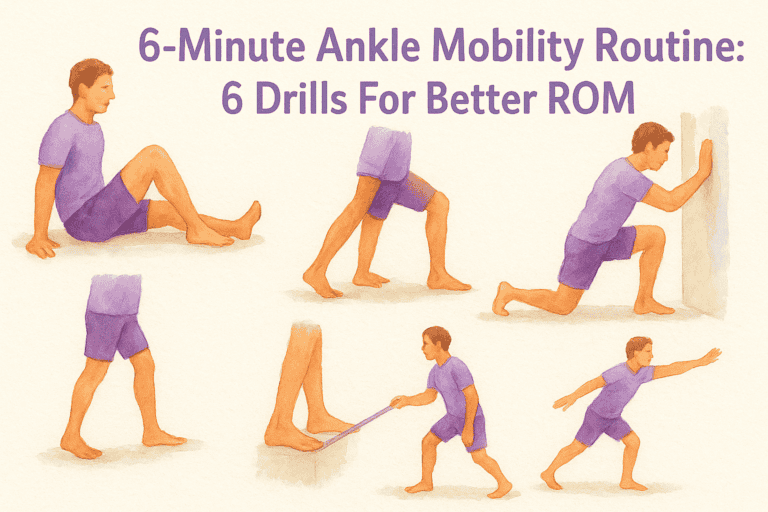
Stiff ankles affect more than just your squat depth. Limited ankle range of motion can mess with your knees, hips, and lower back, and if you spend long hours on your feet at festivals, retreats, or anywhere that keeps you moving, you’ll feel it. A solid ankle mobility routine takes
We use various cookies on our website. Some are essential for the website to function properly, while others we may only use with your consent. You can find more information about cookies on our website here.
This website uses cookies to improve your experience while you navigate through the website. Out of these cookies, the cookies that are categorized as necessary are stored on your browser as they are essential for the working of basic functionalities of the website. We also use third-party cookies that help us analyze and understand how you use this website. These cookies will be stored on your browser only with your consent. You also have the option to opt-out of these cookies. However, opting out of some of these cookies may have an impact on your browsing experience.
Necessary cookies are absolutely essential for the website to function properly. These cookies anonymously ensure basic functionalities and security features of the website.
Cookie
Duration
Description
cookielawinfo-checkbox-advertisement
1 year
Set by the GDPR Cookie Consent plugin, this cookie records the user consent for the cookies in the "Advertisement" category.
cookielawinfo-checkbox-analytics
11 months
This cookie is set by GDPR Cookie Consent plugin. The cookie is used to store the user consent for the cookies in the category "Analytics".
cookielawinfo-checkbox-functional
11 months
The cookie is set by GDPR cookie consent to record the user consent for the cookies in the category "Functional".
cookielawinfo-checkbox-necessary
11 months
This cookie is set by GDPR Cookie Consent plugin. The cookies is used to store the user consent for the cookies in the category "Necessary".
cookielawinfo-checkbox-others
11 months
This cookie is set by GDPR Cookie Consent plugin. The cookie is used to store the user consent for the cookies in the category "Other.
cookielawinfo-checkbox-performance
11 months
This cookie is set by GDPR Cookie Consent plugin. The cookie is used to store the user consent for the cookies in the category "Performance".
CookieLawInfoConsent
1 year
CookieYes sets this cookie to record the default button state of the corresponding category and the status of CCPA. It works only in coordination with the primary cookie.
elementor
never
The website's WordPress theme uses this cookie. It allows the website owner to implement or change the website's content in real-time.
fb_event_id_atc
30 minutes
Used to match client and server events for Meta Conversion API deduplication. Contains only anonymous technical IDs; no personal data stored.
fb_event_id_ic
30 minutes
Used to match client and server events for Meta Conversion API deduplication. Contains only anonymous technical IDs; no personal data stored.
fb_event_id_pur
30 minutes
Used to match client and server events for Meta Conversion API deduplication. Contains only anonymous technical IDs; no personal data stored.
fb_event_id_vc
30 minutes
Used to match client and server events for Meta Conversion API deduplication. Contains only anonymous technical IDs; no personal data stored.
rc::a
never
This cookie is set by the Google recaptcha service to identify bots to protect the website against malicious spam attacks.
rc::c
session
This cookie is set by the Google recaptcha service to identify bots to protect the website against malicious spam attacks.
viewed_cookie_policy
11 months
The cookie is set by the GDPR Cookie Consent plugin and is used to store whether or not user has consented to the use of cookies. It does not store any personal data.
VISITOR_PRIVACY_METADATA
6 months
YouTube sets this cookie to store the user's cookie consent state for the current domain.
wpEmojiSettingsSupports
session
WordPress sets this cookie when a user interacts with emojis on a WordPress site. It helps determine if the user's browser can display emojis properly.
Functional cookies help to perform certain functions, such as sharing website content on social media platforms, collecting feedback, and other third-party functions.
Cookie
Duration
Description
sib_cuid
6 months
SendinBlue sets this cookie to store unique visits.
VISITOR_INFO1_LIVE
6 months
A cookie set by YouTube to measure bandwidth that determines whether the user gets the new or old player interface.
yt-remote-cast-available
session
The yt-remote-cast-available cookie is used to store the user's preferences regarding whether casting is available on their YouTube video player.
yt-remote-cast-installed
session
The yt-remote-cast-installed cookie is used to store the user's video player preferences using embedded YouTube video.
yt-remote-connected-devices
never
YouTube sets this cookie to store the user's video preferences using embedded YouTube videos.
yt-remote-device-id
never
YouTube sets this cookie to store the user's video preferences using embedded YouTube videos.
yt-remote-fast-check-period
session
The yt-remote-fast-check-period cookie is used by YouTube to store the user's video player preferences for embedded YouTube videos.
yt-remote-session-app
session
The yt-remote-session-app cookie is used by YouTube to store user preferences and information about the interface of the embedded YouTube video player.
yt-remote-session-name
session
The yt-remote-session-name cookie is used by YouTube to store the user's video player preferences using embedded YouTube video.
ytidb::LAST_RESULT_ENTRY_KEY
never
The cookie ytidb::LAST_RESULT_ENTRY_KEY is used by YouTube to store the last search result entry that was clicked by the user. This information is used to improve the user experience by providing more relevant search results in the future.
Performance cookies are used to understand and analyze key website performance indexes, which helps in providing a better user experience for visitors.
Cookie
Duration
Description
SRM_B
1 year 24 days
Used by Microsoft Advertising as a unique ID for visitors.
Analytical cookies are used to understand how visitors interact with the website. These cookies help provide information on metrics such as the number of visitors, bounce rate, traffic source, etc.
Cookie
Duration
Description
_clck
1 year
Microsoft Clarity sets this cookie to retain the browser's Clarity User ID and settings exclusive to that website. This guarantees that actions taken during subsequent visits to the same website will be linked to the same user ID.
_clsk
1 day
Microsoft Clarity sets this cookie to store and consolidate a user's pageviews into a single session recording.
_fbp
3 months
Facebook sets this cookie to display advertisements when either on Facebook or on a digital platform powered by Facebook advertising after visiting the website.
_ga
1 year 1 month 4 days
Google Analytics sets this cookie to calculate visitor, session and campaign data and track site usage for the site's analytics report. The cookie stores information anonymously and assigns a randomly generated number to recognise unique visitors.
_ga_*
1 year 1 month 4 days
Google Analytics sets this cookie to store and count page views.
_gcl_au
3 months
Google Tag Manager sets the cookie to experiment advertisement efficiency of websites using their services.
_hjSession_*
1 hour
Hotjar sets this cookie to ensure data from subsequent visits to the same site is attributed to the same user ID, which persists in the Hotjar User ID, which is unique to that site.
_hjSessionUser_*
1 year
Hotjar sets this cookie to ensure data from subsequent visits to the same site is attributed to the same user ID, which persists in the Hotjar User ID, which is unique to that site.
_hjTLDTest
session
To determine the most generic cookie path that has to be used instead of the page hostname, Hotjar sets the _hjTLDTest cookie to store different URL substring alternatives until it fails.
CLID
1 year
Microsoft Clarity set this cookie to store information about how visitors interact with the website. The cookie helps to provide an analysis report. The data collection includes the number of visitors, where they visit the website, and the pages visited.
MR
7 days
This cookie, set by Bing, is used to collect user information for analytics purposes.
sbjs_current
session
Sourcebuster sets this cookie to identify the source of a visit and stores user action information in cookies. This analytical and behavioural cookie is used to enhance the visitor experience on the website.
sbjs_current_add
session
Sourcebuster sets this cookie to identify the source of a visit and stores user action information in cookies. This analytical and behavioural cookie is used to enhance the visitor experience on the website.
sbjs_first
session
Sourcebuster sets this cookie to identify the source of a visit and stores user action information in cookies. This analytical and behavioural cookie is used to enhance the visitor experience on the website.
sbjs_first_add
session
Sourcebuster sets this cookie to identify the source of a visit and stores user action information in cookies. This analytical and behavioural cookie is used to enhance the visitor experience on the website.
sbjs_migrations
session
Sourcebuster sets this cookie to identify the source of a visit and stores user action information in cookies. This analytical and behavioural cookie is used to enhance the visitor experience on the website.
sbjs_session
1 hour
Sourcebuster sets this cookie to identify the source of a visit and stores user action information in cookies. This analytical and behavioural cookie is used to enhance the visitor experience on the website.
sbjs_udata
session
Sourcebuster sets this cookie to identify the source of a visit and stores user action information in cookies. This analytical and behavioural cookie is used to enhance the visitor experience on the website.
SM
session
Microsoft Clarity cookie set this cookie for synchronizing the MUID across Microsoft domains.
YSC
session
YSC cookie is set by Youtube and is used to track the views of embedded videos on Youtube pages.
Advertising cookies are used to deliver relevant advertisements and marketing campaigns to visitors. These cookies track visitors across websites and collect information to deliver tailored advertisements.
Cookie
Duration
Description
_rdt_uuid
3 months
Reddit sets this cookie to build a profile of your interests and show you relevant ads.
ANONCHK
10 minutes
The ANONCHK cookie, set by Bing, is used to store a user's session ID and verify ads' clicks on the Bing search engine. The cookie helps in reporting and personalization as well.
MUID
1 year 24 days
Bing sets this cookie to recognise unique web browsers visiting Microsoft sites. This cookie is used for advertising, site analytics, and other operations.
test_cookie
15 minutes
doubleclick.net sets this cookie to determine if the user's browser supports cookies.
yt.innertube::nextId
never
YouTube sets this cookie to register a unique ID to store data on what videos from YouTube the user has seen.
yt.innertube::requests
never
YouTube sets this cookie to register a unique ID to store data on what videos from YouTube the user has seen.