8 Biohacking Tools That Actually Improve Sleep And Focus
14 min read
Most people chase productivity hacks and sleep tips without addressing the root causes of their brain fog and restless nights. They download another app, buy another gadget, and wonder why nothing sticks. The difference between wasting money and actually seeing results comes down to choosing biohacking tools that work with your body’s natural systems, not against them.
Whether you’re recovering from an intense experience, optimizing your daily performance, or trying to break out of a mental rut, the right tools can shift everything. At Afterglow Supplements, we’ve spent years researching how specific compounds and protocols support neurotransmitter balance, sleep quality, and cognitive function. That research informs not just our recovery formulas but also how we evaluate what actually moves the needle.
This guide covers eight tools, from supplements to wearables to environmental upgrades, that have solid science behind them and real-world results to match. No gimmicks, no influencer fluff. Just practical options you can start using today to sleep deeper and think clearer.
1. Afterglow 4-step recovery protocol supplements
The Afterglow protocol stands out among biohacking tools because it tackles recovery from a neurotransmitter perspective. Instead of treating symptoms like restless sleep or brain fog as isolated problems, this science-based system replenishes what your brain actually needs to restore balance after intense experiences, including psychedelic journeys, demanding work cycles, or late-night events.
What it is
Afterglow’s protocol combines 20+ carefully selected ingredients across four distinct phases. You get pre-experience support, during-experience hydration, before-sleep relaxation, and next-day recovery. Key compounds include L-Tryptophan for serotonin synthesis, Melatonin for sleep regulation, Phosphatidylserine for cortisol management, Magnesium Bisglycinate for muscle relaxation, and N-Acetylcysteine (NAC) for neurotoxicity protection. The formulation also includes L-Theanine for calm focus and electrolytes to prevent dehydration-related crashes.
Why it can improve sleep and next-day focus
Your brain depletes serotonin and dopamine during periods of heightened neurochemical activity. Without proper support, you face mood crashes, anxiety, and cognitive dullness. The protocol addresses this by supplying precursors and cofactors your body needs to rebuild these neurotransmitters. Melatonin and magnesium help you fall asleep faster and stay asleep longer, while NAC protects neurons from oxidative stress. Phosphatidylserine lowers cortisol spikes that keep you wired at night.
When your neurotransmitter levels recover properly, your sleep architecture improves and your waking focus sharpens without artificial stimulation.
The result is deeper REM cycles and faster cognitive processing the next day. You wake up feeling restored, not just rested.
How to use it in a real-world routine
Take the pre-experience capsules 2-3 hours before your session to load protective compounds. During the experience, sip the hydration mix every hour to maintain electrolyte balance. Before bed, use the relaxation formula 30-60 minutes before you want to sleep. This timing allows magnesium and melatonin to take effect. The next morning, take the recovery capsules with breakfast to support neurotransmitter synthesis throughout the day.
What it costs
A full Afterglow kit costs €59.90 and includes everything for multiple recovery cycles. Individual protocols break down to roughly €15-20 per complete use, depending on how you pace the supplements. That puts it in line with other targeted recovery products but with a broader ingredient profile designed specifically for neurotransmitter restoration.
2. Sleep tracker wearable
Sleep tracker wearables sit among the most data-driven biohacking tools available today. These devices monitor your sleep cycles, heart rate variability, and recovery metrics in real time, giving you objective feedback instead of guessing how well you rested. Unlike older fitness bands that only count steps, modern sleep trackers analyze sleep architecture with enough precision to show when you’re spending too little time in deep sleep or waking up repeatedly without realizing it.
What it is
A sleep tracker wearable is a ring, watch, or chest strap that measures physiological signals throughout the night. Most models track heart rate, body temperature, movement, and breathing patterns to determine which sleep stage you’re in at any given moment. The device syncs to an app that breaks down your night into light sleep, deep sleep, REM sleep, and wake periods. You get a morning score that reflects your recovery readiness based on how your nervous system performed overnight.
Why it can improve sleep and next-day focus
Tracking reveals patterns you would never notice otherwise. You might discover that late caffeine or alcohol consistently disrupts your REM cycles, or that your bedroom temperature spikes at 3 a.m. and fragments your sleep. Armed with this data, you adjust your routine and watch your deep sleep percentage climb. Better sleep architecture means your brain consolidates memories more efficiently and your prefrontal cortex operates at full capacity the next day.
When you know exactly how your habits affect your sleep, you stop guessing and start making changes that actually stick.
How to pick one that gives useful data
Choose a tracker that measures heart rate variability (HRV) and respiratory rate, not just movement. Rings like Oura and Ultrahuman offer comfortable all-night wear without wrist discomfort. Watches like Garmin or Whoop provide more metrics but feel bulkier. Focus on battery life and whether the app gives actionable recommendations instead of just numbers. Free trials let you test the platform before committing.
What it costs
Basic models start around $100-$150, while premium trackers run $300-$500. Most require a monthly subscription of $5-$10 for full data access and insights. Factor in the subscription cost when comparing options.
3. Blue light blockers for screens
Blue light blockers rank among the simplest biohacking tools to implement, yet most people skip them because they assume their screens don’t actually disrupt sleep. The reality is that short-wavelength light from phones, laptops, and monitors suppresses melatonin production for hours after exposure. If you scroll before bed or work late into the evening, you’re training your brain to stay alert when it should be winding down. Blue light blockers give you a way to use screens without sacrificing your circadian rhythm.
What it is
Blue light blockers come in two forms: software filters and physical glasses. Software options like f.lux or Night Shift adjust your screen’s color temperature to reduce blue wavelengths after sunset. Physical glasses feature amber or orange-tinted lenses that block the 400-500 nanometer range entirely. Some glasses filter all blue light, while others allow some through for tasks that require color accuracy.
Why it can improve sleep and next-day focus
Your suprachiasmatic nucleus (SCN) interprets blue light as daylight, which delays melatonin release by up to 90 minutes. When you block this wavelength, your brain recognizes that evening has arrived and initiates the sleep preparation cascade on schedule. You fall asleep faster, spend more time in restorative deep sleep, and wake up with sharper focus because your circadian clock stayed aligned.
When your melatonin timing stays consistent, your brain knows when to be alert and when to shut down.
How to use it without overthinking it
Turn on screen filters 2-3 hours before bed or put on blue light glasses at sunset. You don’t need to eliminate screens entirely. Just reduce the intensity and wavelength that keeps you wired. If you work late, use filters during the day too, but set them to a lighter tint so you can still see colors accurately.
What it costs
Software filters are free. Physical glasses range from $15 for basic models to $80 for prescription-compatible frames. Most people do fine with inexpensive options from major retailers.
4. Bright light therapy and sunrise alarm clock
Light drives your circadian clock more powerfully than any other signal. When you expose yourself to bright light at the right time, you shift your sleep-wake cycle and lock in consistent energy patterns. Bright light therapy devices and sunrise alarm clocks let you control this process deliberately, especially during dark winter months or when your schedule conflicts with natural daylight. These biohacking tools work by mimicking the sun’s intensity and timing, which your brain uses to calibrate your internal 24-hour rhythm.
What it is
Bright light therapy uses a 10,000-lux lamp positioned at eye level to flood your retinas with the same wavelength spectrum that triggers wakefulness. You sit near the device for 20-30 minutes in the morning. Sunrise alarm clocks gradually increase light intensity over 30-60 minutes before your set wake time, simulating natural dawn. Some models combine both functions, letting you use the lamp after you wake and the gradual alarm to ease you out of sleep.
Why it can improve sleep and next-day focus
Morning light exposure advances your circadian phase, which means you fall asleep earlier and wake up more alert. Your brain suppresses melatonin secretion within minutes of bright light hitting your eyes, clearing the grogginess that usually lingers after waking. Over time, consistent light timing strengthens your sleep pressure cycle, so you feel genuinely tired at bedtime instead of wired.
When your circadian rhythm stays locked to a predictable light schedule, your prefrontal cortex performs better throughout the day.
How to set timing and brightness safely
Use your light therapy device within 30 minutes of waking. Position it at a slight downward angle, about 16-24 inches from your face. Start with 10 minutes and increase to 30 as your eyes adjust. For sunrise alarms, set the light to peak 15 minutes before your alarm sounds. Avoid bright light after 8 p.m., as late exposure delays your rhythm.
What it costs
Basic sunrise alarms start at $30-$50. Therapeutic light boxes run $80-$200 depending on lux output and size. Combined models cost $100-$300.
5. Sleep temperature control system
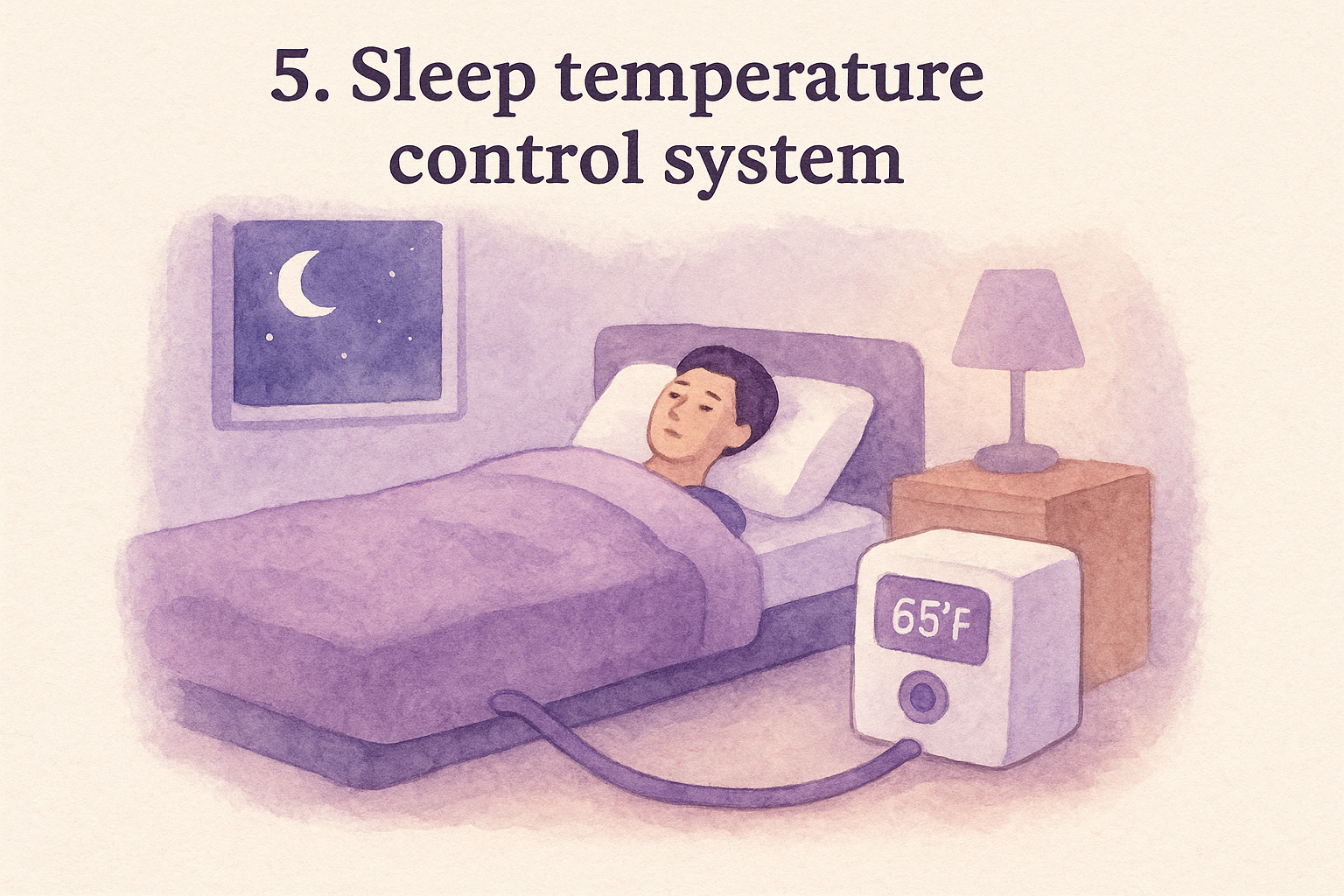
Your body needs to drop its core temperature by 2-3 degrees to initiate deep sleep, but most bedrooms stay too warm throughout the night. When you overheat, you spend more time in light sleep stages and wake up multiple times without remembering. Sleep temperature control systems solve this by creating a microclimate around your body that stays within the narrow range your nervous system requires for restorative rest. These biohacking tools work independently of your room’s thermostat, giving you precision that a ceiling fan or open window can’t deliver.
What it is
Temperature control systems pump cooled or heated water through a mattress pad or sleep pod. You set your desired temperature through an app, and the device adjusts throughout the night based on your sleep stage. Most models let you schedule temperature curves, starting cool to help you fall asleep, warming slightly during REM, and cooling again before you wake.
Why it can improve sleep and next-day focus
When your skin temperature stays between 60-67°F, your body reaches deep sleep faster and stays there longer. This thermal stability prevents the micro-awakenings that fragment your rest. Better deep sleep means your glymphatic system clears metabolic waste more efficiently, which translates to sharper cognition and faster processing speed the next day.
When your body maintains its ideal sleep temperature, your brain spends more time in restorative stages that rebuild neural connections.
How to dial in your bedroom setup
Start at 65°F and adjust by one degree each night until you stop waking up hot. Place the control unit on your nightstand or floor for easy access. Run the system for 30 minutes before bed to pre-cool your sheets. Pair it with breathable bedding to maximize heat transfer.
What it costs
Entry models like the ChiliPad start at $500-$700. Premium systems like Eight Sleep run $2,000-$2,500 and include sleep tracking. Ongoing costs are minimal, typically $5-$10 monthly in electricity.
6. Breathing trainer for downshifting fast
Breathing trainers belong to the category of biohacking tools that deliver immediate results without complexity. When your nervous system stays stuck in sympathetic overdrive from work stress, screen time, or physical tension, you need a reliable way to trigger your parasympathetic response. Breathing trainers guide your respiratory rate and depth through visual or haptic feedback, forcing your body to shift out of fight-or-flight mode within minutes. This makes them particularly useful for people who struggle with jaw clenching, racing thoughts, or difficulty unwinding before bed.
What it is
A breathing trainer is a handheld device or app that paces your breath through vibration patterns, visual cues, or resistance. Physical models like the Shift use gentle vibrations to guide your inhale and exhale timing. App-based options display breathing animations you follow with your chest. Some devices add exhale resistance to engage your diaphragm more fully, similar to how yogic breathing techniques work.
Why it can improve sleep and next-day focus
Controlled breathing activates your vagus nerve, which signals your heart rate to slow and your cortisol levels to drop. Within 5-10 minutes of paced breathing, your body transitions from stress response to recovery mode. This shift allows you to fall asleep faster because your nervous system recognizes that it’s safe to rest. Better vagal tone also improves focus the next day by stabilizing your autonomic balance.
When you breathe intentionally, you override the automatic stress patterns that keep you tense and mentally scattered.
How to use it for stress, jaw tension, and wind-down
Use your breathing trainer for 5-10 minutes when you notice jaw clenching or mental agitation. Sit comfortably and follow the device’s pacing, aiming for 4-6 breaths per minute. For sleep preparation, run a session 30 minutes before bed. The physical act of deep breathing relaxes your masseter muscles, reducing jaw tension that often interferes with sleep quality.
What it costs
App-based breathing trainers run free to $10 monthly. Physical devices like the Shift or Moonbird cost $150-$250 upfront with no subscription.
7. HRV biofeedback with a chest strap and app
Heart rate variability measures how your nervous system responds to stress, and tracking it gives you objective data about your recovery state. Most biohacking tools focus on outputs like sleep scores or step counts, but HRV biofeedback looks at your autonomic nervous system directly. When you combine a chest strap sensor with a proper app, you get minute-by-minute feedback on whether your body is in recovery mode or still running on fumes from yesterday’s stress.
What it is
HRV biofeedback pairs a Bluetooth chest strap with software that analyzes the time gaps between your heartbeats. Your heart doesn’t beat like a metronome. Instead, the intervals change based on whether your parasympathetic or sympathetic branch dominates at that moment. Apps like Elite HRV or HRV4Training process this data and translate it into a readiness score.
Why it can improve sleep and next-day focus
Low HRV signals that your body hasn’t recovered from physical or mental strain, which means you’re more likely to sleep poorly and think slowly the next day. Tracking this metric helps you spot patterns before they compound. When you see consecutive days of suppressed HRV, you adjust your routine by skipping intense workouts, going to bed earlier, or reducing stimulant intake.
When you honor what your HRV data shows instead of pushing through, your nervous system rebalances faster and your cognitive performance rebounds.
How to take readings and act on them
Take your reading first thing in the morning while still lying down. Breathe normally for 3-5 minutes while the app records. If your HRV drops below your baseline, treat that day as a recovery priority. Skip high-intensity activities and focus on restorative practices.
What it costs
Chest straps run $50-$100. Apps charge $5-$10 monthly for full analytics and trend tracking.
8. Focus timer and distraction blocker
Focus timers and distraction blockers stand out among biohacking tools because they remove the decision fatigue that drains your willpower before you even start working. Your brain struggles with open-ended tasks and constant notifications, which splinter your attention into shallow work. These tools create hard boundaries that force you into focused sprints followed by real breaks, preventing the burnout that comes from eight hours of pretending to work while checking your phone every three minutes.
What it is
A focus timer structures your work into timed intervals, typically 25-50 minutes of concentration followed by 5-15 minute breaks. Apps like Forest or Focus@Will track your sessions. Distraction blockers are software tools that lock you out of social media, news sites, and other time sinks during work periods. Some apps combine both functions, giving you a timer that also blocks distracting websites.
Why it can improve focus without burning out
Timed intervals leverage your brain’s natural ultradian rhythms, which cycle between high and low alertness every 90-120 minutes. When you work in focused bursts instead of marathon sessions, you maintain cognitive intensity without depleting your mental resources. Breaks let your prefrontal cortex reset, so you return to the next interval with full processing power.
When you build recovery into your work rhythm instead of pushing until you crash, your focus stays sharp for longer.
How to build a simple daily system that sticks
Start with three 25-minute sessions each morning before checking email. Block all social media and messaging apps during these windows. Take a 5-minute walk between sessions to clear your head. As this becomes automatic, extend to five or six intervals throughout your day.
What it costs
Basic focus timers run free. Distraction blockers cost $5-$10 monthly for premium features like scheduling and device syncing.
How to choose your tools and keep it simple
Start with one or two biohacking tools that address your biggest problem right now. If you wake up foggy and can’t think straight until noon, prioritize sleep temperature control or a sunrise alarm. If you crash after intense experiences or demanding weeks, neurotransmitter support matters more than fancy wearables. Most people fail because they buy everything at once, track too many metrics, and burn out before seeing results.
Pick tools that integrate into your existing routine without adding mental overhead. A breathing trainer works because you can use it for five minutes anywhere. A focus timer succeeds because it replaces your habit of endlessly scrolling with structured work blocks. Layer slowly instead of overhauling your entire life in one weekend.
If neurotransmitter depletion drives your sleep issues and mental fog, the Afterglow recovery protocol targets the root biochemistry instead of masking symptoms. You’ll restore balance faster when you give your brain what it actually needs.
Lukas Nelpela
writes on neuroscience, mental health, and mindful exploration. With a passion in research-driven wellness and years focused on set & setting, integration, and recovery, he turns complex ideas into clear, usable insight.
You’re staring at your screen, reading the same sentence for the fourth time, and nothing sticks. Your thoughts feel like they’re wading through wet cement. So what is brain fog, exactly? It’s not a medical diagnosis, it’s a catch-all term for that frustrating state of mental cloudiness where focus, memory,
Every process in your body, thinking, moving, recovering, runs on energy produced inside your cells. That energy comes from mitochondria, and when they’re not functioning well, you feel it: brain fog, fatigue, slow recovery, and a general sense of running on empty. Mitochondrial support refers to the nutrients, habits, and
You sit down to focus, stare at your screen, and nothing clicks. Thoughts scatter, simple decisions feel impossible, and your mind moves like it’s stuck in wet concrete. If you’ve been looking up how to get rid of brain fog, you already know the frustration, that heavy, hazy state where
Working nights, rotating schedules, or pulling irregular hours throws your body’s internal clock into a constant state of confusion. Around 20% of the global workforce does some form of shift work, and the majority of those people report poor sleep as their number one complaint. Good sleep hygiene for shift
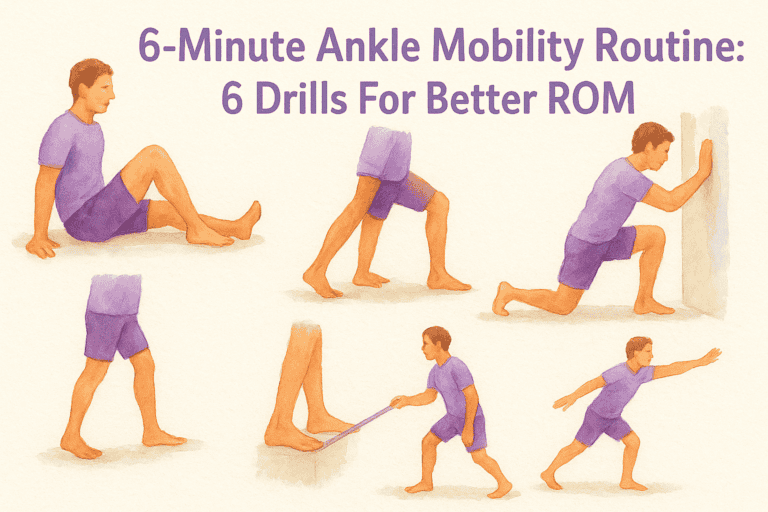
Stiff ankles affect more than just your squat depth. Limited ankle range of motion can mess with your knees, hips, and lower back, and if you spend long hours on your feet at festivals, retreats, or anywhere that keeps you moving, you’ll feel it. A solid ankle mobility routine takes
We use various cookies on our website. Some are essential for the website to function properly, while others we may only use with your consent. You can find more information about cookies on our website here.
This website uses cookies to improve your experience while you navigate through the website. Out of these cookies, the cookies that are categorized as necessary are stored on your browser as they are essential for the working of basic functionalities of the website. We also use third-party cookies that help us analyze and understand how you use this website. These cookies will be stored on your browser only with your consent. You also have the option to opt-out of these cookies. However, opting out of some of these cookies may have an impact on your browsing experience.
Necessary cookies are absolutely essential for the website to function properly. These cookies anonymously ensure basic functionalities and security features of the website.
Cookie
Duration
Description
cookielawinfo-checkbox-advertisement
1 year
Set by the GDPR Cookie Consent plugin, this cookie records the user consent for the cookies in the "Advertisement" category.
cookielawinfo-checkbox-analytics
11 months
This cookie is set by GDPR Cookie Consent plugin. The cookie is used to store the user consent for the cookies in the category "Analytics".
cookielawinfo-checkbox-functional
11 months
The cookie is set by GDPR cookie consent to record the user consent for the cookies in the category "Functional".
cookielawinfo-checkbox-necessary
11 months
This cookie is set by GDPR Cookie Consent plugin. The cookies is used to store the user consent for the cookies in the category "Necessary".
cookielawinfo-checkbox-others
11 months
This cookie is set by GDPR Cookie Consent plugin. The cookie is used to store the user consent for the cookies in the category "Other.
cookielawinfo-checkbox-performance
11 months
This cookie is set by GDPR Cookie Consent plugin. The cookie is used to store the user consent for the cookies in the category "Performance".
CookieLawInfoConsent
1 year
CookieYes sets this cookie to record the default button state of the corresponding category and the status of CCPA. It works only in coordination with the primary cookie.
elementor
never
The website's WordPress theme uses this cookie. It allows the website owner to implement or change the website's content in real-time.
fb_event_id_atc
30 minutes
Used to match client and server events for Meta Conversion API deduplication. Contains only anonymous technical IDs; no personal data stored.
fb_event_id_ic
30 minutes
Used to match client and server events for Meta Conversion API deduplication. Contains only anonymous technical IDs; no personal data stored.
fb_event_id_pur
30 minutes
Used to match client and server events for Meta Conversion API deduplication. Contains only anonymous technical IDs; no personal data stored.
fb_event_id_vc
30 minutes
Used to match client and server events for Meta Conversion API deduplication. Contains only anonymous technical IDs; no personal data stored.
rc::a
never
This cookie is set by the Google recaptcha service to identify bots to protect the website against malicious spam attacks.
rc::c
session
This cookie is set by the Google recaptcha service to identify bots to protect the website against malicious spam attacks.
viewed_cookie_policy
11 months
The cookie is set by the GDPR Cookie Consent plugin and is used to store whether or not user has consented to the use of cookies. It does not store any personal data.
VISITOR_PRIVACY_METADATA
6 months
YouTube sets this cookie to store the user's cookie consent state for the current domain.
wpEmojiSettingsSupports
session
WordPress sets this cookie when a user interacts with emojis on a WordPress site. It helps determine if the user's browser can display emojis properly.
Functional cookies help to perform certain functions, such as sharing website content on social media platforms, collecting feedback, and other third-party functions.
Cookie
Duration
Description
sib_cuid
6 months
SendinBlue sets this cookie to store unique visits.
VISITOR_INFO1_LIVE
6 months
A cookie set by YouTube to measure bandwidth that determines whether the user gets the new or old player interface.
yt-remote-cast-available
session
The yt-remote-cast-available cookie is used to store the user's preferences regarding whether casting is available on their YouTube video player.
yt-remote-cast-installed
session
The yt-remote-cast-installed cookie is used to store the user's video player preferences using embedded YouTube video.
yt-remote-connected-devices
never
YouTube sets this cookie to store the user's video preferences using embedded YouTube videos.
yt-remote-device-id
never
YouTube sets this cookie to store the user's video preferences using embedded YouTube videos.
yt-remote-fast-check-period
session
The yt-remote-fast-check-period cookie is used by YouTube to store the user's video player preferences for embedded YouTube videos.
yt-remote-session-app
session
The yt-remote-session-app cookie is used by YouTube to store user preferences and information about the interface of the embedded YouTube video player.
yt-remote-session-name
session
The yt-remote-session-name cookie is used by YouTube to store the user's video player preferences using embedded YouTube video.
ytidb::LAST_RESULT_ENTRY_KEY
never
The cookie ytidb::LAST_RESULT_ENTRY_KEY is used by YouTube to store the last search result entry that was clicked by the user. This information is used to improve the user experience by providing more relevant search results in the future.
Performance cookies are used to understand and analyze key website performance indexes, which helps in providing a better user experience for visitors.
Cookie
Duration
Description
SRM_B
1 year 24 days
Used by Microsoft Advertising as a unique ID for visitors.
Analytical cookies are used to understand how visitors interact with the website. These cookies help provide information on metrics such as the number of visitors, bounce rate, traffic source, etc.
Cookie
Duration
Description
_clck
1 year
Microsoft Clarity sets this cookie to retain the browser's Clarity User ID and settings exclusive to that website. This guarantees that actions taken during subsequent visits to the same website will be linked to the same user ID.
_clsk
1 day
Microsoft Clarity sets this cookie to store and consolidate a user's pageviews into a single session recording.
_fbp
3 months
Facebook sets this cookie to display advertisements when either on Facebook or on a digital platform powered by Facebook advertising after visiting the website.
_ga
1 year 1 month 4 days
Google Analytics sets this cookie to calculate visitor, session and campaign data and track site usage for the site's analytics report. The cookie stores information anonymously and assigns a randomly generated number to recognise unique visitors.
_ga_*
1 year 1 month 4 days
Google Analytics sets this cookie to store and count page views.
_gcl_au
3 months
Google Tag Manager sets the cookie to experiment advertisement efficiency of websites using their services.
_hjSession_*
1 hour
Hotjar sets this cookie to ensure data from subsequent visits to the same site is attributed to the same user ID, which persists in the Hotjar User ID, which is unique to that site.
_hjSessionUser_*
1 year
Hotjar sets this cookie to ensure data from subsequent visits to the same site is attributed to the same user ID, which persists in the Hotjar User ID, which is unique to that site.
_hjTLDTest
session
To determine the most generic cookie path that has to be used instead of the page hostname, Hotjar sets the _hjTLDTest cookie to store different URL substring alternatives until it fails.
CLID
1 year
Microsoft Clarity set this cookie to store information about how visitors interact with the website. The cookie helps to provide an analysis report. The data collection includes the number of visitors, where they visit the website, and the pages visited.
MR
7 days
This cookie, set by Bing, is used to collect user information for analytics purposes.
sbjs_current
session
Sourcebuster sets this cookie to identify the source of a visit and stores user action information in cookies. This analytical and behavioural cookie is used to enhance the visitor experience on the website.
sbjs_current_add
session
Sourcebuster sets this cookie to identify the source of a visit and stores user action information in cookies. This analytical and behavioural cookie is used to enhance the visitor experience on the website.
sbjs_first
session
Sourcebuster sets this cookie to identify the source of a visit and stores user action information in cookies. This analytical and behavioural cookie is used to enhance the visitor experience on the website.
sbjs_first_add
session
Sourcebuster sets this cookie to identify the source of a visit and stores user action information in cookies. This analytical and behavioural cookie is used to enhance the visitor experience on the website.
sbjs_migrations
session
Sourcebuster sets this cookie to identify the source of a visit and stores user action information in cookies. This analytical and behavioural cookie is used to enhance the visitor experience on the website.
sbjs_session
1 hour
Sourcebuster sets this cookie to identify the source of a visit and stores user action information in cookies. This analytical and behavioural cookie is used to enhance the visitor experience on the website.
sbjs_udata
session
Sourcebuster sets this cookie to identify the source of a visit and stores user action information in cookies. This analytical and behavioural cookie is used to enhance the visitor experience on the website.
SM
session
Microsoft Clarity cookie set this cookie for synchronizing the MUID across Microsoft domains.
YSC
session
YSC cookie is set by Youtube and is used to track the views of embedded videos on Youtube pages.
Advertising cookies are used to deliver relevant advertisements and marketing campaigns to visitors. These cookies track visitors across websites and collect information to deliver tailored advertisements.
Cookie
Duration
Description
_rdt_uuid
3 months
Reddit sets this cookie to build a profile of your interests and show you relevant ads.
ANONCHK
10 minutes
The ANONCHK cookie, set by Bing, is used to store a user's session ID and verify ads' clicks on the Bing search engine. The cookie helps in reporting and personalization as well.
MUID
1 year 24 days
Bing sets this cookie to recognise unique web browsers visiting Microsoft sites. This cookie is used for advertising, site analytics, and other operations.
test_cookie
15 minutes
doubleclick.net sets this cookie to determine if the user's browser supports cookies.
yt.innertube::nextId
never
YouTube sets this cookie to register a unique ID to store data on what videos from YouTube the user has seen.
yt.innertube::requests
never
YouTube sets this cookie to register a unique ID to store data on what videos from YouTube the user has seen.