12 Best Mindfulness Retreats In Germany For 2026 (Updated)
18 min read
Germany has quietly become one of Europe’s top destinations for mindfulness retreat Germany seekers, and for good reason. From silent meditation halls tucked into the Bavarian countryside to yoga-focused centers along the Baltic coast, the options here go well beyond generic spa weekends. These are structured programs built around real inner work: breathwork, vipassana, guided meditation, and sometimes deeper explorations of consciousness.
At Afterglow Supplements, we support people through transformative experiences, including the recovery and integration that follow them. Many of our community members attend retreats like these as part of their broader journey with expanded states of consciousness, whether through meditation, breathwork, or psychedelics. A good retreat can be the starting point; proper recovery and integration is what makes the experience stick.
We put together this list of 12 standout mindfulness retreats across Germany for 2026, covering everything from beginner-friendly weekend getaways to intensive multi-week silent programs. Each one was selected based on program quality, facilitator experience, guest feedback, and overall value, so you can find the right fit without spending hours comparing options.
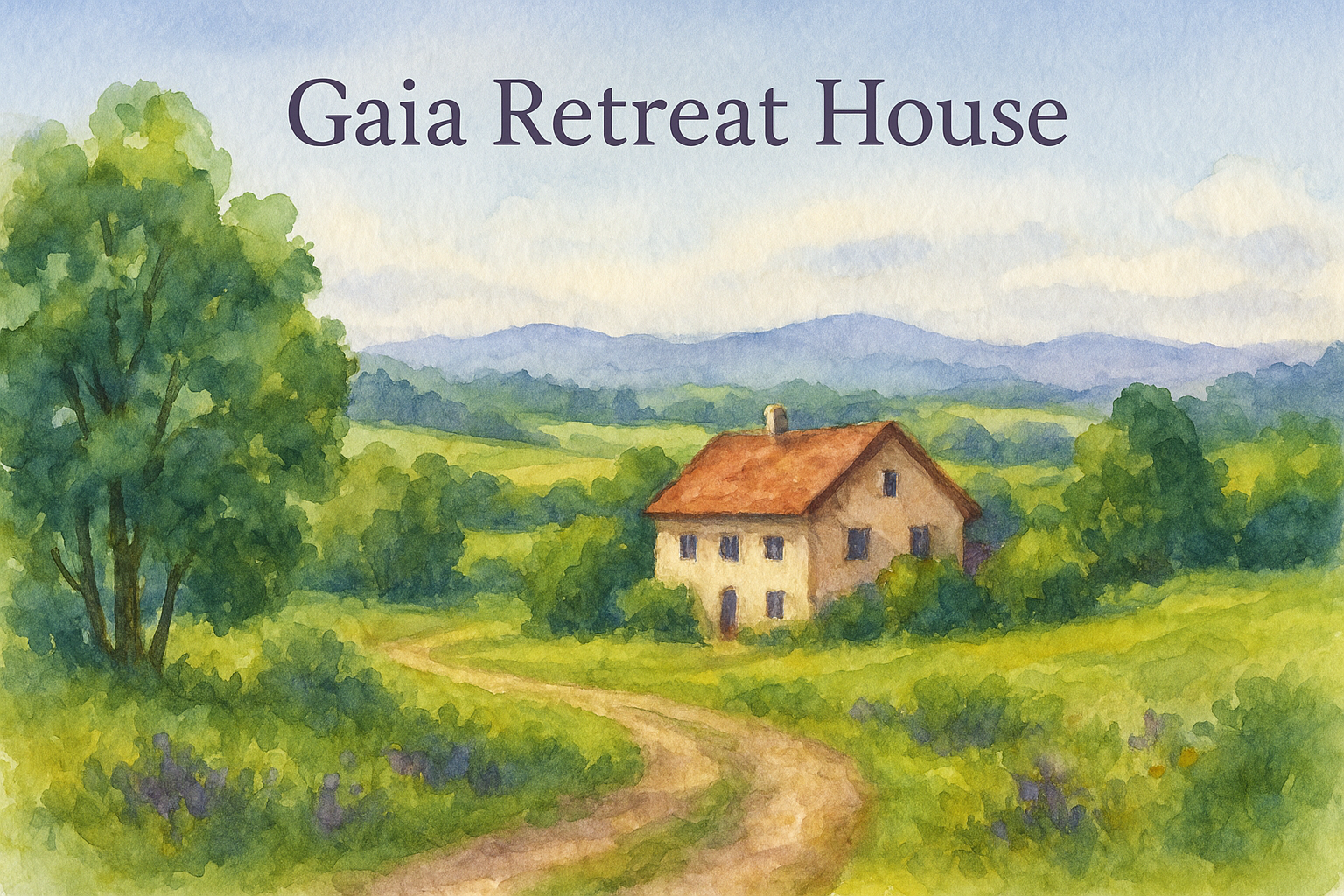
1. Gaia Retreat House
Gaia Retreat House sits in the Bavarian countryside and runs programs that blend mindfulness meditation, yoga, and nature immersion into a single, cohesive experience. It draws guests who are looking for genuine inner work rather than a polished spa break.
Retreat style and setting
The house operates in a quiet, rural setting surrounded by forest and open farmland, which keeps the atmosphere grounded and low-distraction. Programs here lean toward holistic wellness, combining Buddhist-inspired meditation with somatic body practices and extended time spent outdoors. This is one of the more intimate mindfulness retreat Germany options on this list, with small group sizes that allow facilitators to give real, individual attention to each participant throughout the program.
What you actually do there
Days follow a structured rhythm: morning meditation and breathwork, followed by yoga or conscious movement sessions, group sharing circles, and evening wind-down practices. Meals are vegetarian and prepared on-site, and you spend a significant portion of each day in silence. Several programs include guided nature walks and structured journaling, which gives you space to process what surfaces during sitting practice rather than pushing through it.
The combination of sustained silence, movement, and daily nature contact makes Gaia especially effective for people who find seated meditation alone difficult to maintain for longer stretches.
Who it fits best
Gaia works well for beginners and intermediate practitioners alike. If you have some exposure to meditation but have never committed to a full residential program, this is a practical and comfortable next step. It also suits people in the middle of a life transition or burnout period who need structured support rather than just rest.
Logistics to know before you book
The retreat house is located in Bavaria, roughly two hours from Munich by public transport. Most programs run between three and seven days, with longer formats available on request. The facility keeps group sizes small, so booking several weeks in advance is strongly recommended. Both shared and private room options are available depending on your budget.
Typical price range
Prices depend on program length and room type. A three-day program with shared accommodation typically falls between €350 and €500, while a full week in a private room can reach €900 to €1,200. All packages include meals.
2. Little Paradise
Little Paradise is a small residential retreat center in the German countryside that focuses on mindfulness meditation and regenerative rest. It draws people who want a quieter, more personal experience than a large wellness center can offer, and its reputation for warmth and attentiveness keeps guests coming back.
Retreat style and setting
The center lives up to its name with a cozy, intimate atmosphere set against open green land. Programs here blend secular mindfulness practice with gentle yoga and restorative rest, making it one of the more accessible mindfulness retreat Germany options for people who are new to structured inner work. Group sizes rarely exceed ten participants, which gives the whole experience a personal feel.
What you actually do there
Each day includes morning and evening meditation sessions, guided relaxation practices, and time set aside for solo reflection. You eat nourishing plant-based meals together with other guests, and afternoons are often left open for walking or journaling.
The balance of structure and free time here makes it particularly suited to people who feel overwhelmed by tightly packed retreat schedules.
Who it fits best
Little Paradise works best for first-time retreat goers and anyone recovering from a stressful period who needs space rather than intensity. It is also a good fit for solo travelers who want connection without pressure.
Logistics to know before you book
Advance booking is essential since capacity is limited. Programs typically run three to five days, and the center is reachable by train with a short transfer.
Typical price range
A three-day program with accommodation and meals generally runs between €300 and €480, depending on room type.
3. European Institute of Applied Buddhism
The European Institute of Applied Buddhism (EIAB) sits on a large estate in Waldbröl, North Rhine-Westphalia, and operates as a practice center rooted in Thich Nhat Hanh’s Plum Village tradition. It is one of the most established and respected options on this mindfulness retreat Germany list.
Retreat style and setting
The campus includes gardens, walking paths, and meditation halls spread across a spacious property that encourages slow, deliberate movement between activities. Programs here draw directly from Zen Buddhist teachings, with an emphasis on mindful living as a continuous practice rather than a technique you apply only on the cushion.
What you actually do there
Days are built around sitting meditation, walking meditation, and dharma talks delivered by experienced monastics. Noble silence is observed during morning and evening hours, and communal meals are eaten mindfully with full attention on the food and those around you.
This structure makes the EIAB particularly effective for people who want to understand the philosophical roots of mindfulness, not just the technique.
Who it fits best
The EIAB suits people with an existing meditation practice who want to deepen it within a traditional Buddhist framework. It also works well for those exploring contemplative life for the first time in a supported, non-dogmatic environment.
Logistics to know before you book
The center is about one hour from Cologne by train and bus. Programs run from single-day visits to multi-week intensives, and registration happens directly through their website.
Typical price range
Most residential retreats run between €60 and €100 per day, covering accommodation and vegetarian meals on a contribution basis.
4. Zen-Kloster Buchenberg
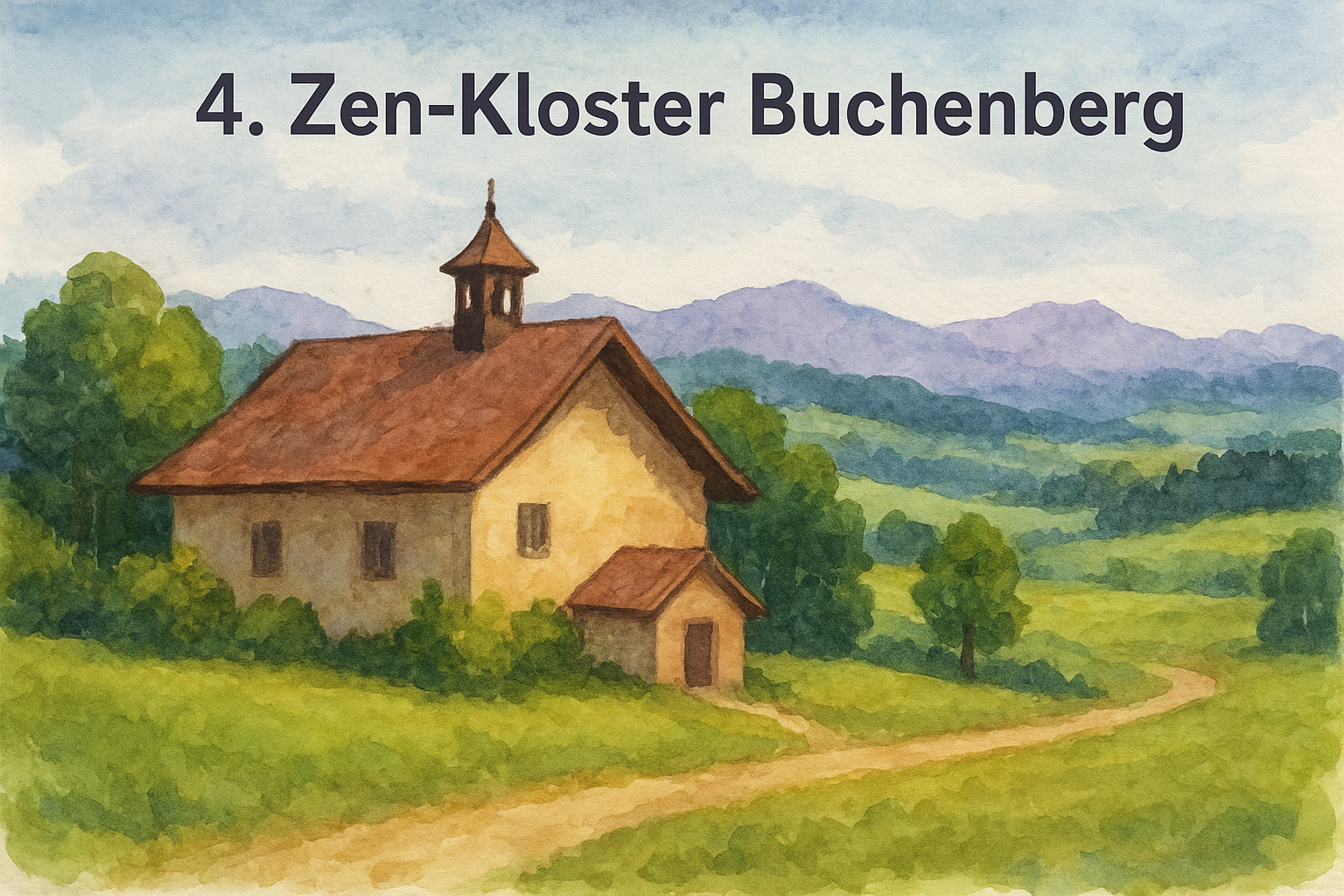
Zen-Kloster Buchenberg is a working Zen monastery in the Allgäu region of Bavaria, offering structured retreat programs rooted in the Rinzai Zen tradition. It stands apart from most entries on this mindfulness retreat Germany list because guests practice alongside resident monastics rather than in a separate retreat bubble.
Retreat style and setting
The monastery sits in the hills of the Allgäu with views across open Alpine foothills, creating an environment that reinforces the stillness the practice asks of you. Programs run on the monastery’s own daily schedule, which means the setting itself dictates the pace rather than a curated retreat timetable.
What you actually do there
You join the resident community for daily zazen, kinhin (walking meditation), and teisho (dharma talks), all delivered within a traditional schedule that begins before sunrise. Noble silence is observed throughout most of the day, keeping distractions to a minimum.
Practicing alongside monastics rather than just visiting instructors gives the experience a depth and consistency that is hard to replicate in a commercial retreat format.
Who it fits best
This retreat fits experienced meditators who are comfortable with silence and a demanding daily structure. If you are new to Zen or to residential practice generally, a more introductory program would serve you better first.
Logistics to know before you book
Buchenberg is located near Betzigau in the Allgäu, roughly 45 minutes from Kempten by local transport. Stays typically range from a long weekend to one week, and you should book directly through the monastery.
Typical price range
Costs follow a dana (contribution-based) model, with suggested amounts typically falling between €40 and €70 per day, including accommodation and vegetarian meals.
5. Benediktushof Holzkirchen
Benediktushof Holzkirchen is a contemplative center in Bavaria, about 30 kilometers south of Munich, that weaves together Christian mysticism and Zen-inspired meditation into a single coherent practice framework. It carries the legacy of Willigis Jäger, the Benedictine monk whose work helped establish what is now one of Germany’s most recognized contemplative communities.
Retreat style and setting
The center occupies a quiet campus in the Bavarian countryside, with simple architecture and landscaped grounds that keep the atmosphere focused on inner work. Programs draw from both Western Christian contemplative traditions and East Asian meditation practice, making this a genuinely cross-traditional mindfulness retreat Germany option that does not fit neatly into either category.
What you actually do there
Participants follow a structured daily schedule of silent sitting, walking meditation, and contemplative prayer periods. Most programs include guidance from experienced teachers trained directly in the Benediktushof lineage. Meals are taken in silence, and communal periods of reflection anchor the day at both ends.
The cross-traditional format means you engage with meditation as a living practice rather than a technique from a single school of thought.
Who it fits best
Benediktushof suits people drawn to contemplative depth who want a framework that bridges rather than separates spiritual traditions. It works well for those with some prior meditation experience and an openness to Christian mystical vocabulary alongside Zen forms.
Logistics to know before you book
The center sits near Holzkirchen and is accessible from Munich by S-Bahn in roughly 40 minutes. Programs range from weekend intensives to longer silent retreats, and early registration is advised due to limited capacity.
Typical price range
Most residential programs cost between €80 and €120 per day, including accommodation and vegetarian meals.
6. Yoga Vidya Ashram Bad Meinberg
Yoga Vidya Ashram Bad Meinberg is one of the largest yoga centers in Europe, sitting within the Teutoburg Forest of North Rhine-Westphalia. It runs continuous programs year-round and operates as a serious training destination rather than a casual wellness getaway.
Retreat style and setting
The ashram maintains a traditional yoga ashram atmosphere, combining physical practice with meditation, chanting, and philosophical study. As a mindfulness retreat Germany option, it stands out for the depth and variety of its continuous programming across all skill levels.
What you actually do there
Daily life follows a structured schedule beginning early with morning meditation and yoga. Sessions throughout the day cover asana, pranayama, and karma yoga (community work practice), alongside evening satsangs that bring together chanting and guided meditation.
The karma yoga component means you contribute to the community through light daily tasks, which gives the experience a grounded, participatory quality most retreat programs skip.
Who it fits best
This ashram works well for yoga practitioners at any level who want structured immersion rather than drop-in classes. People looking for a week-long or longer stay to build a genuine daily practice will get the most from the format here.
Logistics to know before you book
The key logistics to keep in mind are:
Nearest train station: Horn-Bad Meinberg, with local bus connections to the ashram
Programs range from single weekends to multi-week stays
Online booking is available directly through Yoga Vidya’s official website
Typical price range
Weekend programs typically run €120 to €200, while week-long stays with full board and accommodation fall between €350 and €600 depending on room type.
7. SAGE Institut retreat Rahula Berlin
The SAGE Institut runs structured meditation and mindfulness programs out of Rahula Berlin, a dedicated practice center in the German capital. For anyone searching for a mindfulness retreat Germany option that does not require leaving the city, this is one of the few urban formats on this list that delivers genuine depth.
Retreat style and setting
Rahula Berlin operates as a Buddhist meditation center in an accessible city location, offering programs grounded in Theravada and secular mindfulness traditions. The setting is intentionally simple, keeping the focus on inner practice rather than scenic surroundings, which suits those who prefer urban logistics over rural travel.
The urban format here removes the travel barrier entirely, making it a practical entry point for people who are curious about residential retreat practice but not ready to commit to a week in the countryside.
What you actually do there
Programs include guided sitting meditation, walking meditation, and dharma teachings delivered by experienced teachers. Multi-day formats incorporate periods of silence and a structured daily rhythm that mirrors what you would find at a rural center.
Who it fits best
This retreat works well for Berlin residents and city-based visitors who want structured mindfulness practice without commuting to a rural venue. It also suits people testing residential practice for the first time.
Logistics to know before you book
The center is reachable by public transport within Berlin. Program lengths vary from single days to multi-day intensives, and you register directly through the SAGE Institut website.
Typical price range
Most programs cost between €80 and €150 per day, with meal arrangements depending on the specific program format.
8. Hridaya Yoga silent retreat in Germany
Hridaya Yoga runs structured silent retreats across Europe, and their German programs draw participants who want a practice grounded in non-dual awareness and meditation on the spiritual heart. For a mindfulness retreat Germany option with a clear philosophical framework and serious commitment to silence, this is a strong choice.
Retreat style and setting
Hridaya programs take place at partner venues across Germany, typically in rural or semi-rural settings that keep the environment quiet and conducive to deep inner work. The approach combines Hatha yoga with extended silent meditation, built around their core teaching on the spiritual heart as the center of awareness.
What you actually do there
Each day includes multiple silent meditation sessions, pranayama practice, and yoga asana, all woven into a tightly structured daily schedule. Silence is maintained throughout the program, and you are expected to commit fully to the format from the first day to the last.
The combination of sustained physical practice and deep silence makes this format particularly effective for people who struggle to maintain purely seated retreats over several days.
Who it fits best
This retreat suits practitioners with some prior yoga or meditation experience who are ready to move into sustained silence. It works especially well for people drawn to non-dual contemplative traditions that go beyond standard secular mindfulness techniques.
Logistics to know before you book
Program locations vary by season, so check the Hridaya Yoga website for current German dates and venues. Most formats run nine or ten days, and early registration is strongly advised given limited spaces.
Typical price range
Most programs fall between €500 and €900, covering accommodation, vegetarian meals, and full instruction.
9. Ayurveda Parkschlösschen
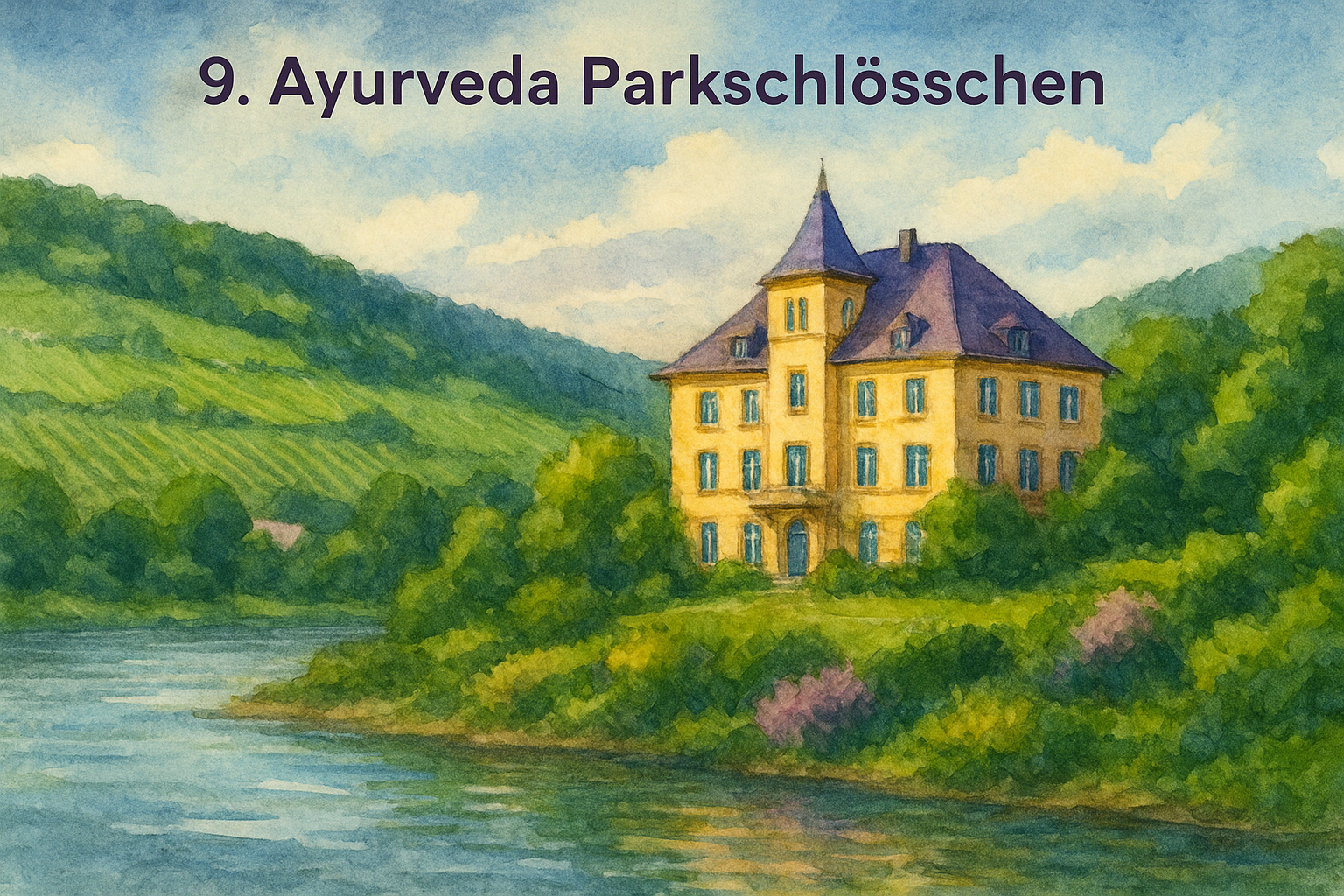
Ayurveda Parkschlösschen is a dedicated Ayurvedic wellness hotel located in Traben-Trarbach in the Moselle Valley, making it one of the more distinctive mindfulness retreat Germany options on this list. It pairs classical Ayurvedic medicine with structured rest and sensory reduction in a way that few European centers match.
Retreat style and setting
The property sits along the Moselle River, surrounded by vineyards and forested hillsides that reinforce a genuinely restorative atmosphere. Programs here follow classical Ayurvedic principles, integrating detoxification, nourishment, and mental quieting into a single therapeutic framework rather than treating them as separate modules.
What you actually do there
Your days center on personalized Ayurvedic treatments prescribed by an on-site physician after an initial consultation. These include herbal oil massages, dietary protocols, and body purification therapies alongside guided relaxation and meditation sessions that support the physical program.
The physician-led model sets this apart from most wellness retreats because your program adapts to your specific constitution rather than following a fixed group schedule.
Who it fits best
This retreat suits people dealing with chronic fatigue, digestive imbalance, or stress-related burnout who want a medically grounded recovery program rather than a purely contemplative experience.
Logistics to know before you book
Traben-Trarbach is reachable by train from Koblenz with one transfer. Most programs run a minimum of seven nights, and booking well in advance is necessary given limited availability.
Typical price range
Week-long programs typically start at €2,000 and go above €3,500, covering accommodation, meals, treatments, and medical consultations.
10. Ganden Tashi Choeling
Ganden Tashi Choeling is a Tibetan Buddhist center based in Germany that offers structured retreat programs rooted in the Gelug tradition of Tibetan Buddhism. It serves as both a teaching center and a place for residential practice, bringing authentic lineage teachings to a European audience.
Retreat style and setting
The center runs programs in a quiet, focused environment built around Tibetan Buddhist philosophy and meditation practice. As a mindfulness retreat Germany option, it stands out for maintaining a direct connection to traditional Tibetan teachings rather than adapting them into a secular wellness format. The atmosphere is studious and contemplative, oriented toward genuine practice rather than relaxation.
What you actually do there
Programs combine guided Tibetan meditation practices, analytical meditation, and dharma teachings delivered by qualified teachers within the Gelug lineage. You follow a structured daily schedule that alternates between sitting practice and instructional sessions, with time set aside for personal reflection and questions.
The analytical meditation component here actively trains the mind to investigate the nature of experience, which goes well beyond simple breath-based awareness techniques.
Who it fits best
This center suits practitioners drawn to Tibetan Buddhism who want structured teaching alongside meditation practice. It also works well for those seeking a philosophically grounded retreat rather than a primarily somatic or body-based program.
Logistics to know before you book
Programs vary in length from single weekends to week-long intensives, and you register directly through the center’s website. Check their current schedule for German-language and English-accessible programs.
Typical price range
Most programs run between €50 and €90 per day, with meals and accommodation included in residential formats.
11. Kloster Arenberg
Kloster Arenberg is a Franciscan monastery perched on a hillside above Koblenz in the Rhine-Moselle region that has welcomed retreat guests alongside its resident religious community for decades. It offers one of the most genuinely grounded mindfulness retreat Germany experiences on this list, stripped of commercial polish and built entirely around contemplative practice.
Retreat style and setting
The monastery sits on elevated ground with views over the Rhine valley, creating a naturally meditative backdrop that reinforces the silence the programs ask of you. Programs here root themselves in Christian contemplative tradition, centered on prayer, guided reflection, and stillness rather than yoga, Zen forms, or secular mindfulness techniques.
What you actually do there
Your days follow the monastery’s liturgical rhythm, which includes morning and evening prayer, simple communal meals taken in silence, and long stretches of unstructured quiet for personal reflection. Individual spiritual guidance sessions with a resident friar are available on request, which gives the experience a personal dimension that group programs often skip.
Living inside an active religious community rather than a purpose-built retreat center gives the practice a lived depth that is hard to replicate elsewhere.
Who it fits best
This retreat suits people drawn to Christian contemplative frameworks, those who find secular meditation formats incomplete, and anyone in a period of significant personal transition who needs genuine quiet more than structured instruction.
Logistics to know before you book
Koblenz is well-connected by train from Frankfurt and Cologne. Programs range from one night to a full week, and you register directly through the monastery’s own website.
Typical price range
Stays typically run between €50 and €80 per day, covering simple accommodation and communal meals.
12. A Black Forest silent retreat
The Black Forest region in Baden-Württemberg offers several independent venues running structured silent retreat programs across different seasons, making it a flexible final entry on this mindfulness retreat Germany list. Rather than a single fixed center, this entry covers the category of silent retreats held within the forest itself, typically organized by established teachers or small Buddhist groups.
Retreat style and setting
These programs take place in guesthouses, former farmhouses, and small retreat properties embedded within the forest landscape, using the natural surroundings as part of the practice itself. The setting enforces a natural quieting of the nervous system that structured instruction alone rarely achieves, and extended time among trees and elevation amplifies the effect of silent sitting.
What you actually do there
Participants spend most of each day in seated and walking meditation, with meals taken in silence and evenings reserved for brief optional group sittings. Facilitators typically offer one daily dharma talk or guidance session, but the rest of the schedule stays open and unstructured.
The lack of a fixed group agenda here is intentional; it trains you to sustain practice through your own motivation rather than external scheduling.
Who it fits best
This format works best for experienced meditators who have already completed at least one structured residential retreat and want deeper, less guided immersion.
Logistics to know before you book
Programs are announced seasonally through teacher networks and Buddhist centers. Nearest transport hubs include Freiburg and Baden-Baden, both well-connected by rail.
Typical price range
Most programs cost between €60 and €100 per day, including simple accommodation and vegetarian meals.
Your next step
Every mindfulness retreat Germany option on this list offers something genuinely different, so the right choice comes down to what you actually need right now. If you want structured silence and traditional teaching, the monastery-based programs deliver that. If you need somatic support and movement alongside meditation, the yoga ashrams and holistic centers cover that ground well.
Once you finish your retreat, the work does not stop at the gates. Many people find that the deeper their experience, the more care the integration phase requires. Your nervous system, sleep quality, and mood all need attention after intensive inner work. If your journey involves psychedelics or consciousness-expanding practices, the recovery period is especially important to support with the right nutrition and supplementation.
Explore the Afterglow Recovery Protocol to see how a structured, science-backed approach can help you hold onto what the retreat opened up.
Lukas Nelpela
writes on neuroscience, mental health, and mindful exploration. With a passion in research-driven wellness and years focused on set & setting, integration, and recovery, he turns complex ideas into clear, usable insight.
Sleep quality shapes how you think, feel, and recover, whether you’re bouncing back from a tough week or integrating a psychedelic experience. The Harvard sleep hygiene guidelines, developed by researchers at Harvard Medical School, remain some of the most cited and practical recommendations for improving rest. They’re not trendy hacks
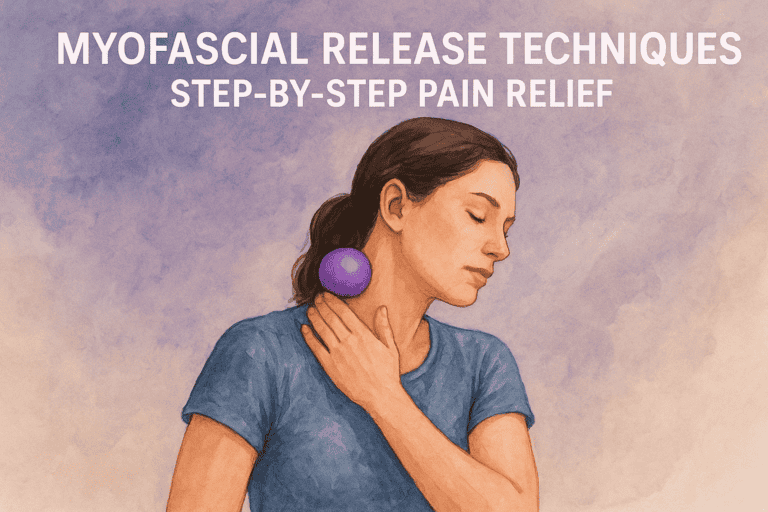
If you’ve ever woken up after a psychedelic experience with a locked jaw, tight shoulders, or a neck that barely turns, you already know the toll that sustained muscle tension can take on your body. That tightness doesn’t just sit on the surface, it often lives deeper, in the connective
Your mitochondria produce roughly 90% of the energy your body runs on. Every thought, every heartbeat, every moment of focus or fatigue traces back to these tiny organelles inside your cells. When they’re thriving, you feel sharp, resilient, and recharged. When they’re not, you feel it, brain fog, sluggish recovery,
Stiff hips, locked-up shoulders, a jaw that still feels like a vice grip from last weekend, your body keeps a receipt for everything you put it through. Whether you’re recovering from a heavy festival, an intense psychedelic session, or just sitting at a desk for ten hours straight, mobility work
You already know the drill: you’re lying in bed after a long day (or a long night), scrolling your phone, and sleep feels miles away. Your brain won’t shut off, your eyes sting, and that melatonin you took 40 minutes ago hasn’t kicked in. One of the simplest fixes? Blue
We use various cookies on our website. Some are essential for the website to function properly, while others we may only use with your consent. You can find more information about cookies on our website here.
This website uses cookies to improve your experience while you navigate through the website. Out of these cookies, the cookies that are categorized as necessary are stored on your browser as they are essential for the working of basic functionalities of the website. We also use third-party cookies that help us analyze and understand how you use this website. These cookies will be stored on your browser only with your consent. You also have the option to opt-out of these cookies. However, opting out of some of these cookies may have an impact on your browsing experience.
Necessary cookies are absolutely essential for the website to function properly. These cookies anonymously ensure basic functionalities and security features of the website.
Cookie
Duration
Description
cookielawinfo-checkbox-advertisement
1 year
Set by the GDPR Cookie Consent plugin, this cookie records the user consent for the cookies in the "Advertisement" category.
cookielawinfo-checkbox-analytics
11 months
This cookie is set by GDPR Cookie Consent plugin. The cookie is used to store the user consent for the cookies in the category "Analytics".
cookielawinfo-checkbox-functional
11 months
The cookie is set by GDPR cookie consent to record the user consent for the cookies in the category "Functional".
cookielawinfo-checkbox-necessary
11 months
This cookie is set by GDPR Cookie Consent plugin. The cookies is used to store the user consent for the cookies in the category "Necessary".
cookielawinfo-checkbox-others
11 months
This cookie is set by GDPR Cookie Consent plugin. The cookie is used to store the user consent for the cookies in the category "Other.
cookielawinfo-checkbox-performance
11 months
This cookie is set by GDPR Cookie Consent plugin. The cookie is used to store the user consent for the cookies in the category "Performance".
CookieLawInfoConsent
1 year
CookieYes sets this cookie to record the default button state of the corresponding category and the status of CCPA. It works only in coordination with the primary cookie.
elementor
never
The website's WordPress theme uses this cookie. It allows the website owner to implement or change the website's content in real-time.
fb_event_id_atc
30 minutes
Used to match client and server events for Meta Conversion API deduplication. Contains only anonymous technical IDs; no personal data stored.
fb_event_id_ic
30 minutes
Used to match client and server events for Meta Conversion API deduplication. Contains only anonymous technical IDs; no personal data stored.
fb_event_id_pur
30 minutes
Used to match client and server events for Meta Conversion API deduplication. Contains only anonymous technical IDs; no personal data stored.
fb_event_id_vc
30 minutes
Used to match client and server events for Meta Conversion API deduplication. Contains only anonymous technical IDs; no personal data stored.
rc::a
never
This cookie is set by the Google recaptcha service to identify bots to protect the website against malicious spam attacks.
rc::c
session
This cookie is set by the Google recaptcha service to identify bots to protect the website against malicious spam attacks.
viewed_cookie_policy
11 months
The cookie is set by the GDPR Cookie Consent plugin and is used to store whether or not user has consented to the use of cookies. It does not store any personal data.
VISITOR_PRIVACY_METADATA
6 months
YouTube sets this cookie to store the user's cookie consent state for the current domain.
wpEmojiSettingsSupports
session
WordPress sets this cookie when a user interacts with emojis on a WordPress site. It helps determine if the user's browser can display emojis properly.
Functional cookies help to perform certain functions, such as sharing website content on social media platforms, collecting feedback, and other third-party functions.
Cookie
Duration
Description
sib_cuid
6 months
SendinBlue sets this cookie to store unique visits.
VISITOR_INFO1_LIVE
6 months
A cookie set by YouTube to measure bandwidth that determines whether the user gets the new or old player interface.
yt-remote-cast-available
session
The yt-remote-cast-available cookie is used to store the user's preferences regarding whether casting is available on their YouTube video player.
yt-remote-cast-installed
session
The yt-remote-cast-installed cookie is used to store the user's video player preferences using embedded YouTube video.
yt-remote-connected-devices
never
YouTube sets this cookie to store the user's video preferences using embedded YouTube videos.
yt-remote-device-id
never
YouTube sets this cookie to store the user's video preferences using embedded YouTube videos.
yt-remote-fast-check-period
session
The yt-remote-fast-check-period cookie is used by YouTube to store the user's video player preferences for embedded YouTube videos.
yt-remote-session-app
session
The yt-remote-session-app cookie is used by YouTube to store user preferences and information about the interface of the embedded YouTube video player.
yt-remote-session-name
session
The yt-remote-session-name cookie is used by YouTube to store the user's video player preferences using embedded YouTube video.
ytidb::LAST_RESULT_ENTRY_KEY
never
The cookie ytidb::LAST_RESULT_ENTRY_KEY is used by YouTube to store the last search result entry that was clicked by the user. This information is used to improve the user experience by providing more relevant search results in the future.
Performance cookies are used to understand and analyze key website performance indexes, which helps in providing a better user experience for visitors.
Cookie
Duration
Description
SRM_B
1 year 24 days
Used by Microsoft Advertising as a unique ID for visitors.
Analytical cookies are used to understand how visitors interact with the website. These cookies help provide information on metrics such as the number of visitors, bounce rate, traffic source, etc.
Cookie
Duration
Description
_clck
1 year
Microsoft Clarity sets this cookie to retain the browser's Clarity User ID and settings exclusive to that website. This guarantees that actions taken during subsequent visits to the same website will be linked to the same user ID.
_clsk
1 day
Microsoft Clarity sets this cookie to store and consolidate a user's pageviews into a single session recording.
_fbp
3 months
Facebook sets this cookie to display advertisements when either on Facebook or on a digital platform powered by Facebook advertising after visiting the website.
_ga
1 year 1 month 4 days
Google Analytics sets this cookie to calculate visitor, session and campaign data and track site usage for the site's analytics report. The cookie stores information anonymously and assigns a randomly generated number to recognise unique visitors.
_ga_*
1 year 1 month 4 days
Google Analytics sets this cookie to store and count page views.
_gcl_au
3 months
Google Tag Manager sets the cookie to experiment advertisement efficiency of websites using their services.
_hjSession_*
1 hour
Hotjar sets this cookie to ensure data from subsequent visits to the same site is attributed to the same user ID, which persists in the Hotjar User ID, which is unique to that site.
_hjSessionUser_*
1 year
Hotjar sets this cookie to ensure data from subsequent visits to the same site is attributed to the same user ID, which persists in the Hotjar User ID, which is unique to that site.
_hjTLDTest
session
To determine the most generic cookie path that has to be used instead of the page hostname, Hotjar sets the _hjTLDTest cookie to store different URL substring alternatives until it fails.
CLID
1 year
Microsoft Clarity set this cookie to store information about how visitors interact with the website. The cookie helps to provide an analysis report. The data collection includes the number of visitors, where they visit the website, and the pages visited.
MR
7 days
This cookie, set by Bing, is used to collect user information for analytics purposes.
sbjs_current
session
Sourcebuster sets this cookie to identify the source of a visit and stores user action information in cookies. This analytical and behavioural cookie is used to enhance the visitor experience on the website.
sbjs_current_add
session
Sourcebuster sets this cookie to identify the source of a visit and stores user action information in cookies. This analytical and behavioural cookie is used to enhance the visitor experience on the website.
sbjs_first
session
Sourcebuster sets this cookie to identify the source of a visit and stores user action information in cookies. This analytical and behavioural cookie is used to enhance the visitor experience on the website.
sbjs_first_add
session
Sourcebuster sets this cookie to identify the source of a visit and stores user action information in cookies. This analytical and behavioural cookie is used to enhance the visitor experience on the website.
sbjs_migrations
session
Sourcebuster sets this cookie to identify the source of a visit and stores user action information in cookies. This analytical and behavioural cookie is used to enhance the visitor experience on the website.
sbjs_session
1 hour
Sourcebuster sets this cookie to identify the source of a visit and stores user action information in cookies. This analytical and behavioural cookie is used to enhance the visitor experience on the website.
sbjs_udata
session
Sourcebuster sets this cookie to identify the source of a visit and stores user action information in cookies. This analytical and behavioural cookie is used to enhance the visitor experience on the website.
SM
session
Microsoft Clarity cookie set this cookie for synchronizing the MUID across Microsoft domains.
YSC
session
YSC cookie is set by Youtube and is used to track the views of embedded videos on Youtube pages.
Advertising cookies are used to deliver relevant advertisements and marketing campaigns to visitors. These cookies track visitors across websites and collect information to deliver tailored advertisements.
Cookie
Duration
Description
_rdt_uuid
3 months
Reddit sets this cookie to build a profile of your interests and show you relevant ads.
ANONCHK
10 minutes
The ANONCHK cookie, set by Bing, is used to store a user's session ID and verify ads' clicks on the Bing search engine. The cookie helps in reporting and personalization as well.
MUID
1 year 24 days
Bing sets this cookie to recognise unique web browsers visiting Microsoft sites. This cookie is used for advertising, site analytics, and other operations.
test_cookie
15 minutes
doubleclick.net sets this cookie to determine if the user's browser supports cookies.
yt.innertube::nextId
never
YouTube sets this cookie to register a unique ID to store data on what videos from YouTube the user has seen.
yt.innertube::requests
never
YouTube sets this cookie to register a unique ID to store data on what videos from YouTube the user has seen.