Harvard Sleep Hygiene: 5 Evidence-Based Tips For Better Rest
9 min read
Sleep quality shapes how you think, feel, and recover, whether you’re bouncing back from a tough week or integrating a psychedelic experience. The Harvard sleep hygiene guidelines, developed by researchers at Harvard Medical School, remain some of the most cited and practical recommendations for improving rest. They’re not trendy hacks or gimmicks. They’re evidence-based habits that actually move the needle.
At Afterglow Supplements, sleep is a core pillar of our recovery protocol. We’ve seen firsthand how poor sleep amplifies post-experience side effects, mood dips, brain fog, anxiety. That’s exactly why we built our formulas with ingredients like melatonin, magnesium bisglycinate, and L-theanine to support the body’s natural wind-down process. But supplements only go so far. Your sleep environment and habits matter just as much, if not more.
This article breaks down five key tips rooted in Harvard’s research, each one actionable and backed by science. Whether you’re optimizing your nightly routine or preparing for recovery after a psychedelic journey, these strategies will help you build a foundation of rest that actually restores. Let’s get into it.
1. Use Afterglow to support post-trip sleep
Psychedelic experiences put real demands on your body. Serotonin fluctuations, muscle tension, and heightened nervous system activity make falling asleep genuinely hard after a session, even when you feel completely drained. A targeted supplement protocol gives you a concrete first step before you touch your bedroom setup or your daily schedule.
How it supports sleep hygiene after psychedelics
Afterglow’s formula targets post-experience physiology directly. The sleep-phase packet includes melatonin to signal your brain it’s time to sleep, magnesium bisglycinate to relax muscles and calm your nervous system, and L-theanine to quiet mental noise without sedating you. Harvard sleep hygiene research consistently identifies nervous system regulation and a calm pre-sleep state as core requirements for quality rest, and these three ingredients address both at once.
Magnesium bisglycinate and L-theanine together help reduce the physical and mental tension that most commonly keeps people awake after intense psychedelic experiences.
Supporting those are compounds like N-Acetylcysteine (NAC) and phosphatidylserine, which work to reduce oxidative stress and cortisol levels that can spike after a session and actively delay sleep onset if left unaddressed.
How to use it within a same-night routine
Timing the packet correctly makes a real difference. Take your Afterglow sleep-phase packet around 60 minutes before you want to fall asleep, ideally alongside a light snack if your stomach feels sensitive. A repeatable same-night routine looks like this:
Eat a small, easy-to-digest snack
Take your sleep-phase packet with a full glass of water
Dim all lights and screens in your space
Lie down within the hour, even if sleep feels slow to arrive
Who it fits and when to skip it
Afterglow suits adults who want structured, supplement-supported recovery after occasional, therapeutic, or ceremonial psychedelic use. If you attend retreats or work with a facilitator, the protocol fits naturally into your post-session wind-down plan. Avoid it if you are pregnant, breastfeeding, under 18, or currently taking prescription medications without first consulting a healthcare provider. It is a recovery support tool, not a substitute for professional medical guidance.
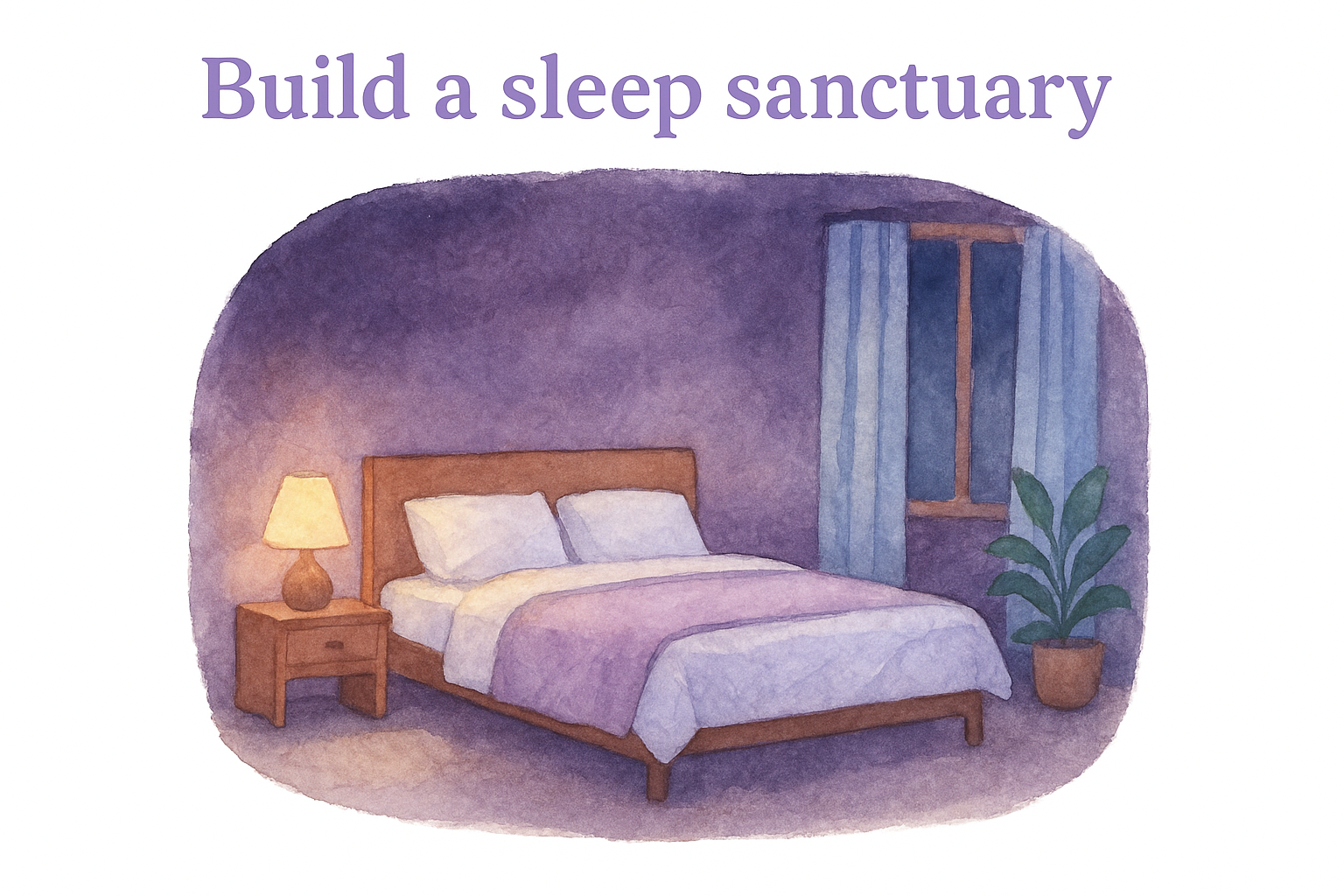
2. Build a sleep sanctuary
Your bedroom does more work than you probably give it credit for. Environmental cues signal your brain whether it’s time to rest or stay alert, and if those cues send the wrong message, no supplement or schedule fix will fully compensate.
What Harvard-style sleep hygiene prioritizes in a bedroom
Harvard sleep hygiene research consistently points to three environmental variables as most impactful: light, temperature, and noise. Your brain associates darkness with melatonin release, so even dim background light from a phone charger or a hallway gap can blunt that signal. Keep the room cool, ideally between 60 and 67 degrees Fahrenheit (15 to 19 Celsius), since your core body temperature needs to drop slightly for sleep to begin.
A dark, cool, quiet room is not a luxury. It is a physiological requirement your brain needs to transition into deep sleep.
Simple setup changes that make the biggest difference
You do not need to redesign your bedroom to see results. Blackout curtains or a sleep mask handle most light problems immediately, and they cost very little. A white noise machine or a basic fan addresses ambient sound without requiring soundproofing.
Removing your phone from the bedroom entirely, or at minimum charging it face-down across the room, cuts both light exposure and the temptation to scroll before sleep in one move.
Quick troubleshooting for noise, light, and temperature
If noise wakes you regularly, earplugs or a low-volume brown noise track often work better than a white noise machine for light sleepers. A cooling mattress pad also outperforms air conditioning for sustained temperature regulation through the night.
For persistent light issues, check your curtain edges and door gaps rather than just the main window. Those overlooked sources frequently matter more once the rest of the room is dark.
3. Time caffeine, alcohol, and meals
What you consume and when you consume it shapes your sleep architecture more than most people expect. Caffeine, alcohol, and food each interfere with sleep through different biological pathways, and getting their timing wrong fragments your rest even when the rest of your routine looks solid.
Why timing matters for falling asleep and staying asleep
Caffeine has a half-life of roughly five to six hours, meaning half of what you drank at 3 PM is still circulating at 9 PM. Alcohol is similarly deceptive: it may help you fall asleep faster, but it suppresses REM sleep in the second half of the night, leaving you groggy and unrestored by morning. Large meals raise your core body temperature and activate digestion, both of which compete with the physical conditions your body needs to enter deep sleep.
Harvard sleep hygiene guidelines consistently flag caffeine and alcohol timing as two of the most overlooked yet fixable contributors to poor sleep.
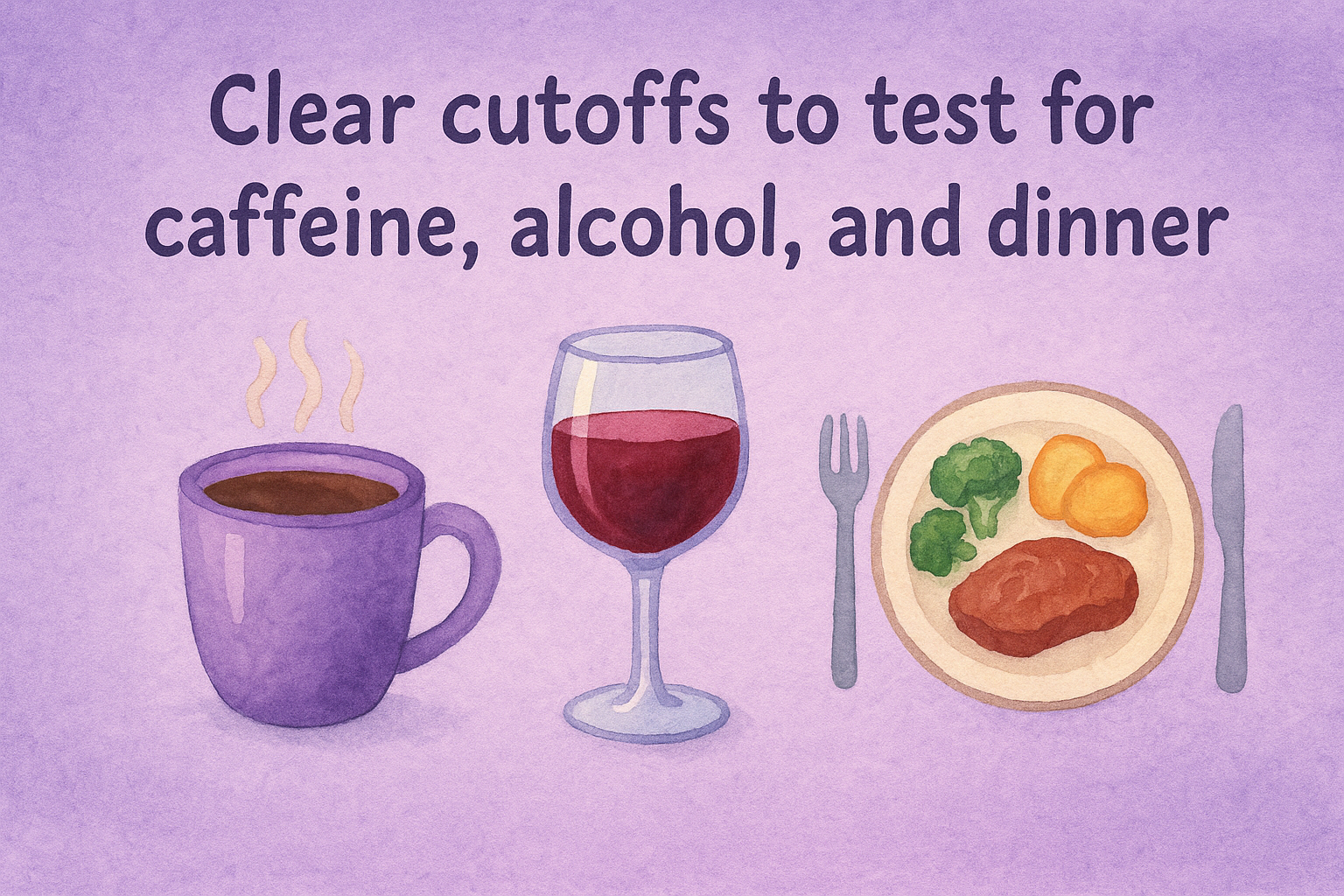
Clear cutoffs to test for caffeine, alcohol, and dinner
Start with these windows and adjust based on how you respond:
Caffeine: Stop by 2 PM, or earlier if you are sensitive
Alcohol: Finish at least three hours before bed
Dinner: Eat at least two to three hours before your target sleep time
What to do if hunger, reflux, or bathroom trips wake you
If hunger wakes you mid-night, a small protein-and-fat snack like plain yogurt or a handful of nuts before bed usually stabilizes blood sugar without triggering digestion issues. Reflux responds well to avoiding acidic foods in the evening and slightly elevating the head of your mattress. For frequent bathroom trips, reduce fluids after 7 PM rather than cutting them earlier in the day, which risks dehydration without solving the problem.
4. Protect the hour before bed
The 60 minutes before sleep function as a transition zone for your nervous system. What you do in that window either prepares your brain for rest or keeps it running at a pace that delays sleep onset. Harvard sleep hygiene guidelines treat this wind-down period as non-negotiable, and the research behind that position is consistent across decades of sleep science.
What to do in your wind-down window
Low-stimulation activities help your cortisol levels and heart rate drop naturally. A warm bath is particularly effective because the subsequent drop in skin temperature afterward triggers sleepiness as body heat dissipates. Other solid options include:
Reading a physical book
Light stretching or gentle yoga
Journaling or writing out tomorrow’s tasks to clear your head
10 minutes of slow, deliberate breathing
What to avoid that commonly backfires
Screens and work emails are the most common culprits, and both raise alertness right when you need the opposite. Blue light from phones and laptops suppresses melatonin production even at low brightness settings, and mentally activating tasks like planning, problem-solving, or consuming stressful news keep your prefrontal cortex firing when it should be slowing down.
Checking your phone one last time before bed is one of the most reliable ways to delay sleep onset by 20 to 30 minutes.
A sample low-effort bedtime routine you can repeat
Consistency matters more than complexity. A repeatable sequence of three to four steps trains your brain to associate the routine with sleep onset, so the ritual itself becomes a cue. Try this structure and keep it identical every night:
Take your Afterglow sleep packet with water
Dim all lights or switch to warm lighting
Read a physical book for 20 to 30 minutes
Set your alarm and place your phone across the room
5. Keep a steady schedule and fix what blocks sleep
Your body runs on a circadian rhythm, and that rhythm responds to consistency above almost everything else. Harvard sleep hygiene research repeatedly identifies a fixed sleep and wake time as one of the highest-leverage changes you can make, because it anchors your internal clock and reduces the time it takes to fall asleep each night.
How to set a realistic sleep and wake time you can keep
Pick a wake time you can hold seven days a week, including weekends, and work backward from there. If you need eight hours, your bedtime is automatic. The key is treating your wake time as fixed even if sleep was poor the night before, since sleeping in resets your clock in the wrong direction and creates a cycle that compounds over time.
Consistency on weekends matters as much as on weekdays. "Social jetlag" from sleeping in just two hours shifts your clock enough to fragment the following week’s sleep.
How exercise and naps affect sleep pressure and timing
Moderate aerobic exercise increases sleep pressure and shortens sleep onset, but timing it within three hours of bed raises your core body temperature and delays sleep instead. Morning or early afternoon sessions give you the benefit without the drawback. Short naps of 20 minutes or less before 3 PM preserve nighttime sleep pressure, while longer or later naps actively undermine it.
What to do when you cannot fall asleep and how to track patterns
If you lie awake for more than 20 minutes, get up and do something calm in dim light until sleepiness returns. Staying in bed while awake trains your brain to associate the bed with wakefulness. Keeping a simple sleep log for two weeks, just bedtime, wake time, and a rough quality rating, reveals patterns faster than memory alone.
Final thoughts
The harvard sleep hygiene framework works because it targets the root causes of poor sleep rather than patching the symptoms. Each of these five tips addresses a different layer of the problem: your physiology, your environment, your habits, and your timing. Stack them together, and the compounding effect on sleep quality is significant.
Recovery after a psychedelic experience adds another layer to manage. Serotonin fluctuations, muscle tension, and nervous system activation make sleep genuinely harder on those nights, which is exactly where a targeted protocol makes a real difference. The habits in this article give you a repeatable system you can rely on every night, not just after intense experiences.
Start with one or two changes this week, stay consistent, and build from there. If you want structured, science-backed support for your recovery nights specifically, learn more about the Afterglow Recovery Protocol and how it fits into your routine.
Lukas Nelpela
writes on neuroscience, mental health, and mindful exploration. With a passion in research-driven wellness and years focused on set & setting, integration, and recovery, he turns complex ideas into clear, usable insight.
You’re staring at your screen, reading the same sentence for the fourth time, and nothing sticks. Your thoughts feel like they’re wading through wet cement. So what is brain fog, exactly? It’s not a medical diagnosis, it’s a catch-all term for that frustrating state of mental cloudiness where focus, memory,
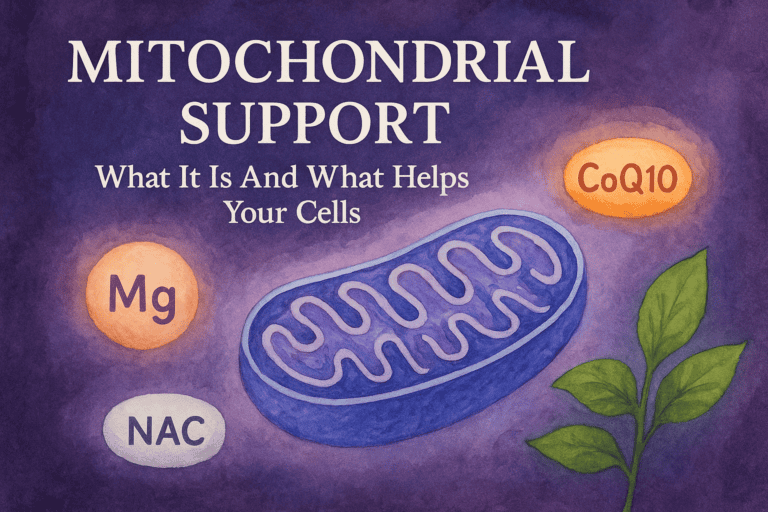
Every process in your body, thinking, moving, recovering, runs on energy produced inside your cells. That energy comes from mitochondria, and when they’re not functioning well, you feel it: brain fog, fatigue, slow recovery, and a general sense of running on empty. Mitochondrial support refers to the nutrients, habits, and
You sit down to focus, stare at your screen, and nothing clicks. Thoughts scatter, simple decisions feel impossible, and your mind moves like it’s stuck in wet concrete. If you’ve been looking up how to get rid of brain fog, you already know the frustration, that heavy, hazy state where
Working nights, rotating schedules, or pulling irregular hours throws your body’s internal clock into a constant state of confusion. Around 20% of the global workforce does some form of shift work, and the majority of those people report poor sleep as their number one complaint. Good sleep hygiene for shift
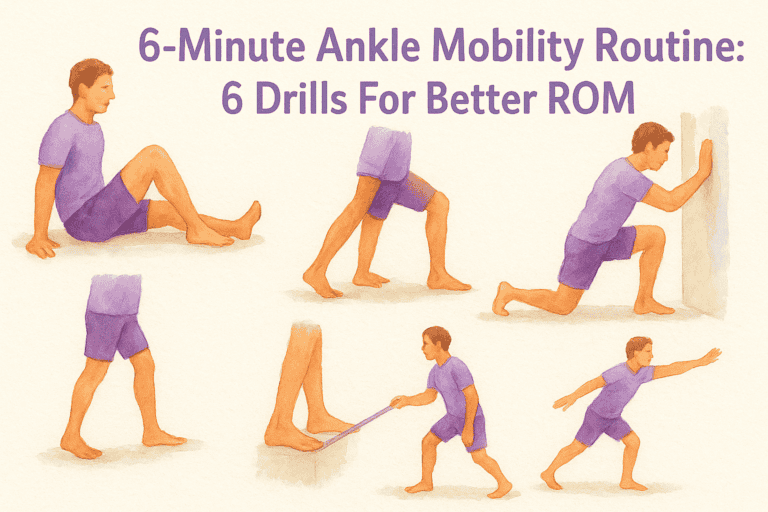
Stiff ankles affect more than just your squat depth. Limited ankle range of motion can mess with your knees, hips, and lower back, and if you spend long hours on your feet at festivals, retreats, or anywhere that keeps you moving, you’ll feel it. A solid ankle mobility routine takes
We use various cookies on our website. Some are essential for the website to function properly, while others we may only use with your consent. You can find more information about cookies on our website here.
This website uses cookies to improve your experience while you navigate through the website. Out of these cookies, the cookies that are categorized as necessary are stored on your browser as they are essential for the working of basic functionalities of the website. We also use third-party cookies that help us analyze and understand how you use this website. These cookies will be stored on your browser only with your consent. You also have the option to opt-out of these cookies. However, opting out of some of these cookies may have an impact on your browsing experience.
Necessary cookies are absolutely essential for the website to function properly. These cookies anonymously ensure basic functionalities and security features of the website.
Cookie
Duration
Description
cookielawinfo-checkbox-advertisement
1 year
Set by the GDPR Cookie Consent plugin, this cookie records the user consent for the cookies in the "Advertisement" category.
cookielawinfo-checkbox-analytics
11 months
This cookie is set by GDPR Cookie Consent plugin. The cookie is used to store the user consent for the cookies in the category "Analytics".
cookielawinfo-checkbox-functional
11 months
The cookie is set by GDPR cookie consent to record the user consent for the cookies in the category "Functional".
cookielawinfo-checkbox-necessary
11 months
This cookie is set by GDPR Cookie Consent plugin. The cookies is used to store the user consent for the cookies in the category "Necessary".
cookielawinfo-checkbox-others
11 months
This cookie is set by GDPR Cookie Consent plugin. The cookie is used to store the user consent for the cookies in the category "Other.
cookielawinfo-checkbox-performance
11 months
This cookie is set by GDPR Cookie Consent plugin. The cookie is used to store the user consent for the cookies in the category "Performance".
CookieLawInfoConsent
1 year
CookieYes sets this cookie to record the default button state of the corresponding category and the status of CCPA. It works only in coordination with the primary cookie.
elementor
never
The website's WordPress theme uses this cookie. It allows the website owner to implement or change the website's content in real-time.
fb_event_id_atc
30 minutes
Used to match client and server events for Meta Conversion API deduplication. Contains only anonymous technical IDs; no personal data stored.
fb_event_id_ic
30 minutes
Used to match client and server events for Meta Conversion API deduplication. Contains only anonymous technical IDs; no personal data stored.
fb_event_id_pur
30 minutes
Used to match client and server events for Meta Conversion API deduplication. Contains only anonymous technical IDs; no personal data stored.
fb_event_id_vc
30 minutes
Used to match client and server events for Meta Conversion API deduplication. Contains only anonymous technical IDs; no personal data stored.
rc::a
never
This cookie is set by the Google recaptcha service to identify bots to protect the website against malicious spam attacks.
rc::c
session
This cookie is set by the Google recaptcha service to identify bots to protect the website against malicious spam attacks.
viewed_cookie_policy
11 months
The cookie is set by the GDPR Cookie Consent plugin and is used to store whether or not user has consented to the use of cookies. It does not store any personal data.
VISITOR_PRIVACY_METADATA
6 months
YouTube sets this cookie to store the user's cookie consent state for the current domain.
wpEmojiSettingsSupports
session
WordPress sets this cookie when a user interacts with emojis on a WordPress site. It helps determine if the user's browser can display emojis properly.
Functional cookies help to perform certain functions, such as sharing website content on social media platforms, collecting feedback, and other third-party functions.
Cookie
Duration
Description
sib_cuid
6 months
SendinBlue sets this cookie to store unique visits.
VISITOR_INFO1_LIVE
6 months
A cookie set by YouTube to measure bandwidth that determines whether the user gets the new or old player interface.
yt-remote-cast-available
session
The yt-remote-cast-available cookie is used to store the user's preferences regarding whether casting is available on their YouTube video player.
yt-remote-cast-installed
session
The yt-remote-cast-installed cookie is used to store the user's video player preferences using embedded YouTube video.
yt-remote-connected-devices
never
YouTube sets this cookie to store the user's video preferences using embedded YouTube videos.
yt-remote-device-id
never
YouTube sets this cookie to store the user's video preferences using embedded YouTube videos.
yt-remote-fast-check-period
session
The yt-remote-fast-check-period cookie is used by YouTube to store the user's video player preferences for embedded YouTube videos.
yt-remote-session-app
session
The yt-remote-session-app cookie is used by YouTube to store user preferences and information about the interface of the embedded YouTube video player.
yt-remote-session-name
session
The yt-remote-session-name cookie is used by YouTube to store the user's video player preferences using embedded YouTube video.
ytidb::LAST_RESULT_ENTRY_KEY
never
The cookie ytidb::LAST_RESULT_ENTRY_KEY is used by YouTube to store the last search result entry that was clicked by the user. This information is used to improve the user experience by providing more relevant search results in the future.
Performance cookies are used to understand and analyze key website performance indexes, which helps in providing a better user experience for visitors.
Cookie
Duration
Description
SRM_B
1 year 24 days
Used by Microsoft Advertising as a unique ID for visitors.
Analytical cookies are used to understand how visitors interact with the website. These cookies help provide information on metrics such as the number of visitors, bounce rate, traffic source, etc.
Cookie
Duration
Description
_clck
1 year
Microsoft Clarity sets this cookie to retain the browser's Clarity User ID and settings exclusive to that website. This guarantees that actions taken during subsequent visits to the same website will be linked to the same user ID.
_clsk
1 day
Microsoft Clarity sets this cookie to store and consolidate a user's pageviews into a single session recording.
_fbp
3 months
Facebook sets this cookie to display advertisements when either on Facebook or on a digital platform powered by Facebook advertising after visiting the website.
_ga
1 year 1 month 4 days
Google Analytics sets this cookie to calculate visitor, session and campaign data and track site usage for the site's analytics report. The cookie stores information anonymously and assigns a randomly generated number to recognise unique visitors.
_ga_*
1 year 1 month 4 days
Google Analytics sets this cookie to store and count page views.
_gcl_au
3 months
Google Tag Manager sets the cookie to experiment advertisement efficiency of websites using their services.
_hjSession_*
1 hour
Hotjar sets this cookie to ensure data from subsequent visits to the same site is attributed to the same user ID, which persists in the Hotjar User ID, which is unique to that site.
_hjSessionUser_*
1 year
Hotjar sets this cookie to ensure data from subsequent visits to the same site is attributed to the same user ID, which persists in the Hotjar User ID, which is unique to that site.
_hjTLDTest
session
To determine the most generic cookie path that has to be used instead of the page hostname, Hotjar sets the _hjTLDTest cookie to store different URL substring alternatives until it fails.
CLID
1 year
Microsoft Clarity set this cookie to store information about how visitors interact with the website. The cookie helps to provide an analysis report. The data collection includes the number of visitors, where they visit the website, and the pages visited.
MR
7 days
This cookie, set by Bing, is used to collect user information for analytics purposes.
sbjs_current
session
Sourcebuster sets this cookie to identify the source of a visit and stores user action information in cookies. This analytical and behavioural cookie is used to enhance the visitor experience on the website.
sbjs_current_add
session
Sourcebuster sets this cookie to identify the source of a visit and stores user action information in cookies. This analytical and behavioural cookie is used to enhance the visitor experience on the website.
sbjs_first
session
Sourcebuster sets this cookie to identify the source of a visit and stores user action information in cookies. This analytical and behavioural cookie is used to enhance the visitor experience on the website.
sbjs_first_add
session
Sourcebuster sets this cookie to identify the source of a visit and stores user action information in cookies. This analytical and behavioural cookie is used to enhance the visitor experience on the website.
sbjs_migrations
session
Sourcebuster sets this cookie to identify the source of a visit and stores user action information in cookies. This analytical and behavioural cookie is used to enhance the visitor experience on the website.
sbjs_session
1 hour
Sourcebuster sets this cookie to identify the source of a visit and stores user action information in cookies. This analytical and behavioural cookie is used to enhance the visitor experience on the website.
sbjs_udata
session
Sourcebuster sets this cookie to identify the source of a visit and stores user action information in cookies. This analytical and behavioural cookie is used to enhance the visitor experience on the website.
SM
session
Microsoft Clarity cookie set this cookie for synchronizing the MUID across Microsoft domains.
YSC
session
YSC cookie is set by Youtube and is used to track the views of embedded videos on Youtube pages.
Advertising cookies are used to deliver relevant advertisements and marketing campaigns to visitors. These cookies track visitors across websites and collect information to deliver tailored advertisements.
Cookie
Duration
Description
_rdt_uuid
3 months
Reddit sets this cookie to build a profile of your interests and show you relevant ads.
ANONCHK
10 minutes
The ANONCHK cookie, set by Bing, is used to store a user's session ID and verify ads' clicks on the Bing search engine. The cookie helps in reporting and personalization as well.
MUID
1 year 24 days
Bing sets this cookie to recognise unique web browsers visiting Microsoft sites. This cookie is used for advertising, site analytics, and other operations.
test_cookie
15 minutes
doubleclick.net sets this cookie to determine if the user's browser supports cookies.
yt.innertube::nextId
never
YouTube sets this cookie to register a unique ID to store data on what videos from YouTube the user has seen.
yt.innertube::requests
never
YouTube sets this cookie to register a unique ID to store data on what videos from YouTube the user has seen.