Sleep Hygiene Definition: Habits For Better Sleep Explained
10 min read
The simplest sleep hygiene definition is this: a set of habits, behaviors, and environmental conditions that help you fall asleep faster, stay asleep longer, and wake up actually feeling rested. It’s not complicated, but it’s wildly undervalued, especially by people who push their minds and bodies through intense or altered-state experiences like psychedelic journeys.
At Afterglow Supplements, we built a full recovery protocol around what happens after a psychedelic experience. And one thing we see over and over is that sleep quality makes or breaks recovery. Serotonin depletion, racing thoughts, jaw tension, all of it gets worse when your sleep environment and habits are working against you. That’s why we include ingredients like melatonin and magnesium bisglycinate in our formulations: they directly support the biological side of restful sleep.
But supplements are only one piece. The habits surrounding your sleep matter just as much. This article breaks down what sleep hygiene actually means, which specific practices are backed by evidence, and how to build a routine that supports deeper, more restorative rest, whether you’re recovering from a trip or just trying to stop staring at the ceiling at 2 a.m.
What sleep hygiene means and what it does not
The sleep hygiene definition that most people encounter comes from clinical sleep research. It refers to a collection of daily behaviors, habits, and environmental conditions that influence your ability to fall asleep, stay asleep, and wake up feeling genuinely recovered. Think of it like dental hygiene: you don’t brush your teeth once and expect a lifetime of healthy gums. You do it consistently, and the results build over time. Sleep hygiene works the same way, through repetition and consistency rather than a single overnight fix.
What the term actually covers
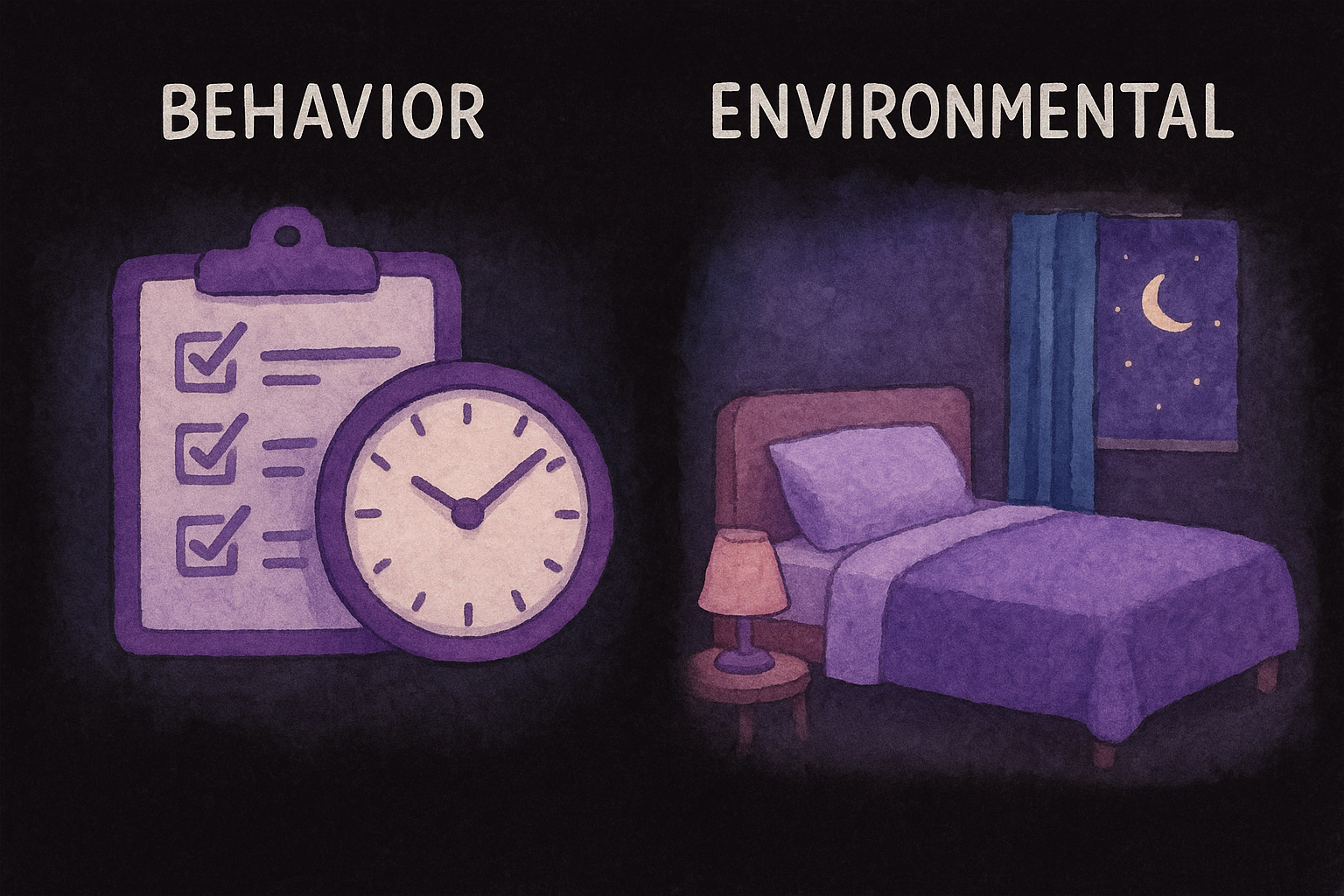
Sleep hygiene covers two broad categories: what you do and where you sleep. The behavioral side includes things like your bedtime and wake-up time, how much caffeine you consume and when, your exposure to light throughout the day, and how you wind down before bed. The environmental side covers the physical conditions of your bedroom: temperature, darkness, noise, and how comfortable your setup is. Both sides matter, and neglecting one while optimizing the other will limit your results.
Here is a quick breakdown of what falls under each category:
Behavioral factors:
Consistent sleep and wake times, including weekends
Limiting caffeine intake after early afternoon
Avoiding screens or bright light close to bedtime
Building a wind-down routine that signals your brain it is time to rest
Environmental factors:
Keeping your room cool, around 65-68°F or 18-20°C
Blocking out light with blackout curtains or a sleep mask
Reducing noise or using white noise to mask disruptions
Reserving your bed primarily for sleep and not for work or screens
What sleep hygiene is not
Sleep hygiene is not a cure for clinical sleep disorders. If you have insomnia disorder, sleep apnea, or restless legs syndrome, better habits will help at the margins, but they do not replace medical evaluation or treatment. Reducing your caffeine intake will not fix a structural airway issue, and a consistent bedtime will not resolve severe chronic insomnia on its own. Knowing this boundary matters because it keeps you from blaming habit failures on problems that actually need direct clinical attention.
Sleep hygiene is the foundation, not the ceiling. It gives your body the best possible conditions to sleep, but it does not override underlying physiological or psychological issues that require professional care.
Your sleep hygiene also does not need to match a generic checklist applied identically to everyone. Some people are biologically wired as night owls and function better on later schedules. Others are natural early risers. The real goal is to find the consistent patterns and environmental conditions that work for your biology, and then stick with them reliably enough that your nervous system learns what to expect each night.
Why sleep hygiene matters for sleep quality and health
Most people treat sleep as something that just happens, or doesn’t. But sleep quality is directly shaped by the conditions and behaviors you bring to it every night. The broader sleep hygiene definition exists because researchers kept finding the same pattern: people who practiced consistent sleep habits reported faster sleep onset, fewer nighttime awakenings, and better daytime function compared to those who didn’t. That pattern holds across age groups and lifestyles.
The biological case for consistent sleep habits
Your body runs on a circadian rhythm, an internal clock that regulates when you feel alert and when you feel drowsy. This clock responds to environmental cues, primarily light and temperature, and it performs best when your schedule is predictable. When you go to bed and wake up at consistent times, your brain starts releasing melatonin earlier and your core body temperature drops on cue, making it easier to fall asleep without effort.
Irregular sleep timing is one of the fastest ways to dysregulate your circadian rhythm, and the effects compound quickly.
Consistent habits also protect the architecture of your sleep itself. Your brain cycles through light sleep, deep sleep, and REM sleep in roughly 90-minute blocks. Disruptions to your schedule fragment these cycles, cutting into the deep and REM stages where physical recovery and memory consolidation actually happen.
What poor sleep does to your body and mind
When your sleep quality drops, the consequences show up fast. Cognitive performance, mood regulation, immune function, and appetite control all take hits within just a few nights of disrupted sleep. For anyone recovering from a demanding physical or psychological experience, these effects are amplified because your body is already under higher-than-normal stress.
Chronic sleep deprivation also raises cortisol levels, disrupts serotonin regulation, and slows the body’s ability to repair tissue and restore neurotransmitter balance. That means poor sleep hygiene doesn’t just leave you tired. It actively works against the recovery your body is trying to complete.
How to build a sleep hygiene routine that sticks
A routine only works if you can actually maintain it. The most common mistake people make with sleep hygiene is trying to overhaul everything at once: cutting caffeine, changing bedtime, installing blackout curtains, and downloading a meditation app all in the same week. That approach burns out fast. Start with two or three changes, let them become automatic before adding more, and your results will be far more durable than any short-term sprint.
Pick a fixed wake time first
Your wake time is the anchor of your circadian rhythm, and it is the single most effective starting point for building a consistent routine. Set an alarm for the same time every day, including weekends, and hold it regardless of when you fell asleep the night before. This one habit trains your brain to regulate sleep pressure more reliably than almost anything else in the full sleep hygiene definition.
Consistent wake times are more powerful than consistent bedtimes because they directly reinforce your body’s internal clock.
Build a wind-down window before bed
Your nervous system does not switch off on command. Give yourself 30 to 60 minutes before bed to signal that the day is winding down. This window should involve low-stimulation activities: dimming lights, avoiding screens, reading, or light stretching. The specific activity matters less than the consistency of the cue. When you repeat the same sequence night after night, your brain learns to associate it with sleep onset, and falling asleep starts to feel less like a struggle.
Stack habits to make them automatic
Habit stacking means linking a new behavior to something you already do reliably. For example, you might take your supplements right after brushing your teeth, or put your phone in another room the moment you turn off the kitchen lights. Pairing new sleep habits with existing behaviors reduces the mental load of remembering them and makes your routine far more likely to survive a stressful or irregular week.
How to set up a sleep-friendly bedroom
Your bedroom environment is one of the most controllable parts of the full sleep hygiene definition. External sensory inputs like light, temperature, and noise directly affect how quickly your brain transitions into sleep mode and how deeply you stay there. Most people overlook this side of the equation because behavioral changes feel more actionable, but a poorly set-up room can undermine even the best bedtime routine.
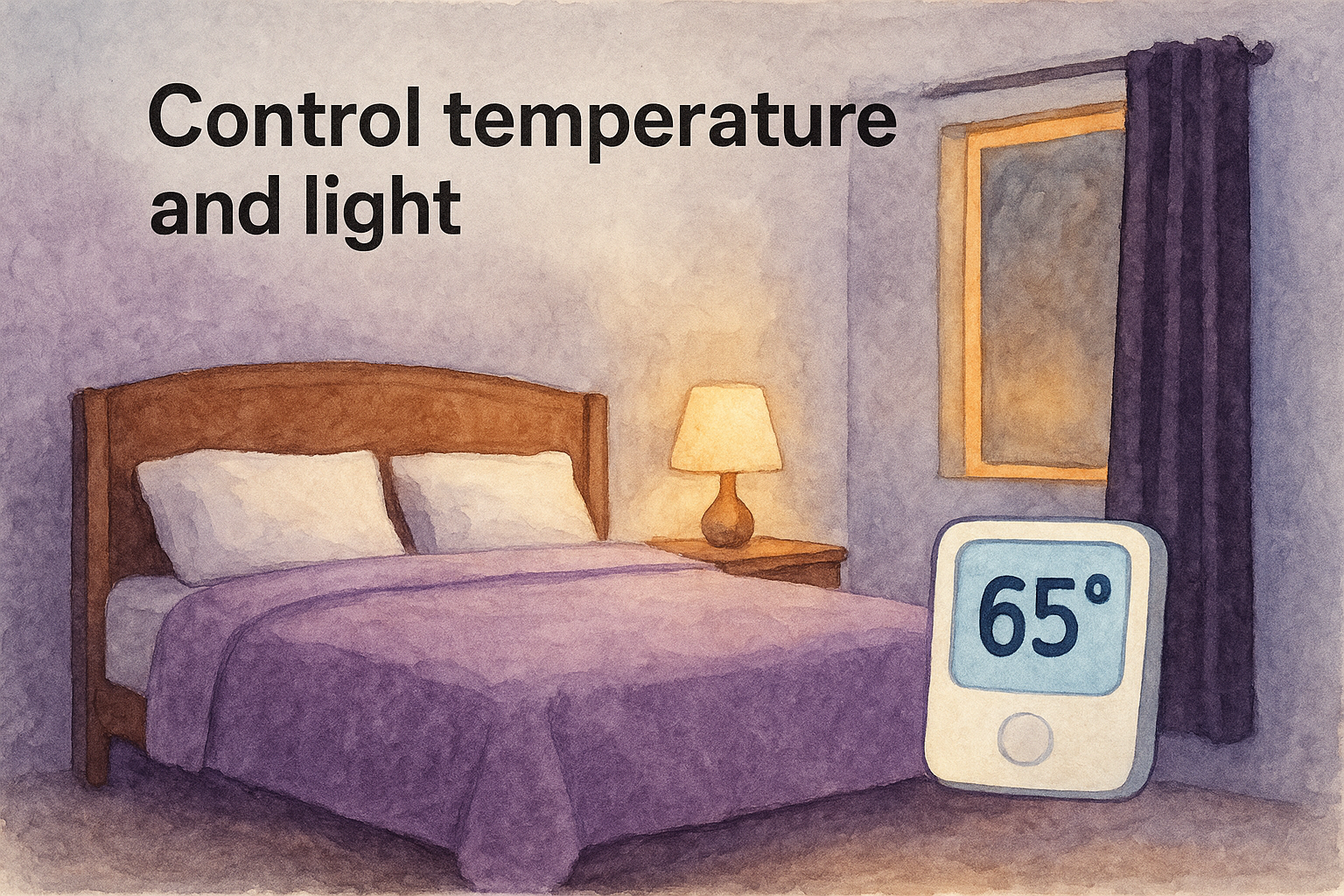
Control temperature and light
Your core body temperature needs to drop by roughly 1 to 2 degrees Fahrenheit to trigger sleep onset. A cool room accelerates that process. Set your bedroom temperature between 65 and 68°F (18 to 20°C) and use breathable bedding that does not trap excess heat overnight.
Even a room that is a few degrees too warm can delay sleep onset by 20 minutes or more, making temperature one of the highest-impact adjustments you can make.
Light exposure matters just as much. Blackout curtains block streetlights and early morning sunlight that can cut your sleep short before your alarm. If curtains are not an option, a sleep mask works just as well. Remove or cover any devices with indicator lights, since even small sources disrupt melatonin production while you sleep.
Reduce noise and remove distractions
Noise fragmentation is one of the most common causes of poor sleep quality that people do not connect to their bedroom setup. If your environment is loud, use a [white noise machine](https://feelafterglow.com/biohacking-tools/) or a fan to create a consistent background sound layer that masks unpredictable spikes like traffic or voices.
Removing work-related items and screens from your sleeping space matters more than most people expect. Your brain forms strong associations between environments and states of mind. When your bed is used only for sleep, your nervous system starts treating it as a clear signal to wind down rather than a place where stimulation happens.
Common sleep hygiene problems and quick fixes
Even when you understand the sleep hygiene definition and know what good habits look like, specific problems still get in the way. Recognizing the pattern behind each issue makes it far easier to fix quickly rather than guessing at the cause.
You can’t fall asleep when you get into bed
This is usually a stimulus control problem. Your brain has learned to associate your bed with wakefulness rather than sleep, often because you use it for scrolling, working, or watching shows. The fix requires consistency: get out of bed if you have not fallen asleep within 20 minutes, do something low-stimulation in dim light, and return only when you feel genuinely drowsy. Repeating this process retrains the mental association your brain holds for that space.
Staying in bed while wide awake reinforces the wrong connection and makes the problem harder to break over time.
You wake up in the middle of the night and can’t get back to sleep
Mid-night waking usually has one of three causes: a room that is too warm, alcohol consumed in the evening, or an irregular schedule that fragments your sleep cycles. Check your room temperature first since it is the fastest variable to adjust. Even moderate alcohol suppresses REM sleep and causes waking in the second half of the night as it metabolizes. Cutting alcohol within three hours of bedtime often resolves this on its own.
Too warm: lower the thermostat or swap to lighter bedding
Alcohol: stop drinking at least three hours before bed
Irregular schedule: anchor your wake time and hold it for two weeks
You feel tired even after a full night of sleep
Unrefreshing sleep points to poor sleep architecture, meaning your body is not spending enough time in deep or REM stages. Common drivers include inconsistent sleep timing, high stress before bed, or stimulants consumed too late in the day.
Fix the timing first by anchoring your wake time. Then assess your wind-down routine and check whether caffeine or stimulant use is pushing your sleep cycles later than you realize.
Next steps for better sleep
The full sleep hygiene definition comes down to this: consistent habits, a controlled environment, and the patience to let small changes compound into real results. You now have a clear picture of what good sleep hygiene actually covers, why biological consistency matters, and how to troubleshoot the specific problems that most commonly disrupt rest. The next move is to pick the two or three changes that feel most relevant to your situation and apply them this week rather than planning to start later.
If you are recovering from a psychedelic experience, your sleep needs extra physiological support beyond habit changes alone. Serotonin depletion and muscle tension actively work against restful sleep, and no bedtime routine fully compensates for that. The Afterglow Recovery Protocol includes melatonin, magnesium bisglycinate, and other targeted ingredients designed to support your body through exactly that kind of recovery, so your habits and your biology are working together.
Lukas Nelpela
writes on neuroscience, mental health, and mindful exploration. With a passion in research-driven wellness and years focused on set & setting, integration, and recovery, he turns complex ideas into clear, usable insight.
You’re staring at your screen, reading the same sentence for the fourth time, and nothing sticks. Your thoughts feel like they’re wading through wet cement. So what is brain fog, exactly? It’s not a medical diagnosis, it’s a catch-all term for that frustrating state of mental cloudiness where focus, memory,
Every process in your body, thinking, moving, recovering, runs on energy produced inside your cells. That energy comes from mitochondria, and when they’re not functioning well, you feel it: brain fog, fatigue, slow recovery, and a general sense of running on empty. Mitochondrial support refers to the nutrients, habits, and
You sit down to focus, stare at your screen, and nothing clicks. Thoughts scatter, simple decisions feel impossible, and your mind moves like it’s stuck in wet concrete. If you’ve been looking up how to get rid of brain fog, you already know the frustration, that heavy, hazy state where
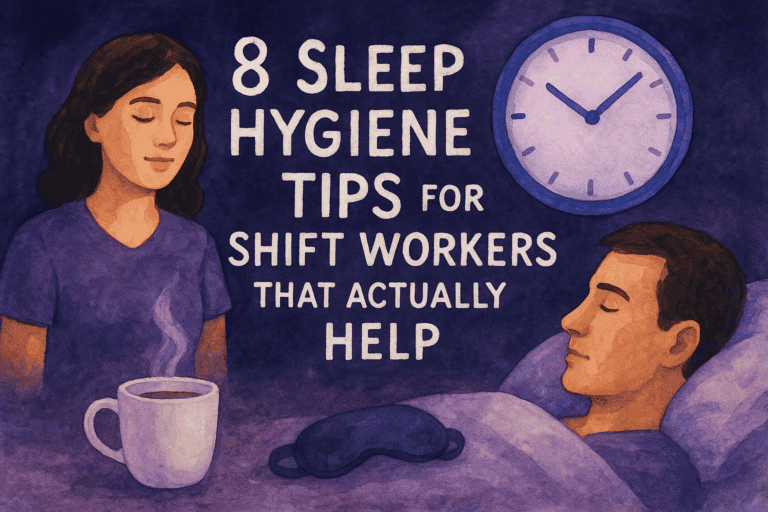
Working nights, rotating schedules, or pulling irregular hours throws your body’s internal clock into a constant state of confusion. Around 20% of the global workforce does some form of shift work, and the majority of those people report poor sleep as their number one complaint. Good sleep hygiene for shift
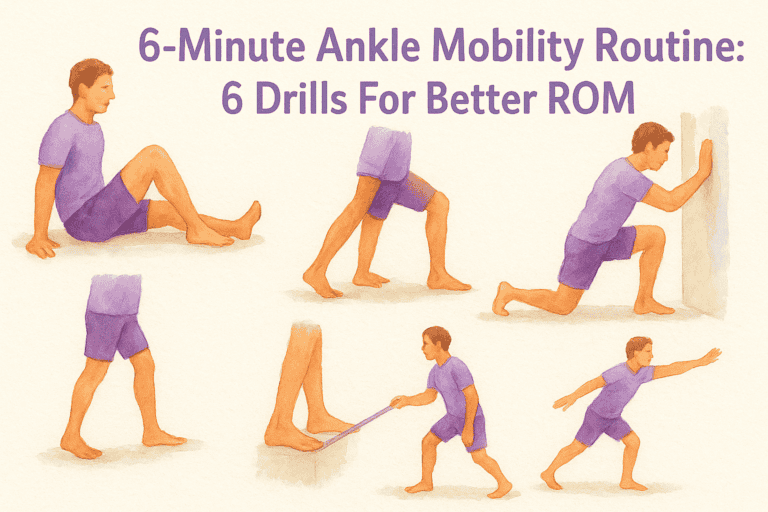
Stiff ankles affect more than just your squat depth. Limited ankle range of motion can mess with your knees, hips, and lower back, and if you spend long hours on your feet at festivals, retreats, or anywhere that keeps you moving, you’ll feel it. A solid ankle mobility routine takes
We use various cookies on our website. Some are essential for the website to function properly, while others we may only use with your consent. You can find more information about cookies on our website here.
This website uses cookies to improve your experience while you navigate through the website. Out of these cookies, the cookies that are categorized as necessary are stored on your browser as they are essential for the working of basic functionalities of the website. We also use third-party cookies that help us analyze and understand how you use this website. These cookies will be stored on your browser only with your consent. You also have the option to opt-out of these cookies. However, opting out of some of these cookies may have an impact on your browsing experience.
Necessary cookies are absolutely essential for the website to function properly. These cookies anonymously ensure basic functionalities and security features of the website.
Cookie
Duration
Description
cookielawinfo-checkbox-advertisement
1 year
Set by the GDPR Cookie Consent plugin, this cookie records the user consent for the cookies in the "Advertisement" category.
cookielawinfo-checkbox-analytics
11 months
This cookie is set by GDPR Cookie Consent plugin. The cookie is used to store the user consent for the cookies in the category "Analytics".
cookielawinfo-checkbox-functional
11 months
The cookie is set by GDPR cookie consent to record the user consent for the cookies in the category "Functional".
cookielawinfo-checkbox-necessary
11 months
This cookie is set by GDPR Cookie Consent plugin. The cookies is used to store the user consent for the cookies in the category "Necessary".
cookielawinfo-checkbox-others
11 months
This cookie is set by GDPR Cookie Consent plugin. The cookie is used to store the user consent for the cookies in the category "Other.
cookielawinfo-checkbox-performance
11 months
This cookie is set by GDPR Cookie Consent plugin. The cookie is used to store the user consent for the cookies in the category "Performance".
CookieLawInfoConsent
1 year
CookieYes sets this cookie to record the default button state of the corresponding category and the status of CCPA. It works only in coordination with the primary cookie.
elementor
never
The website's WordPress theme uses this cookie. It allows the website owner to implement or change the website's content in real-time.
fb_event_id_atc
30 minutes
Used to match client and server events for Meta Conversion API deduplication. Contains only anonymous technical IDs; no personal data stored.
fb_event_id_ic
30 minutes
Used to match client and server events for Meta Conversion API deduplication. Contains only anonymous technical IDs; no personal data stored.
fb_event_id_pur
30 minutes
Used to match client and server events for Meta Conversion API deduplication. Contains only anonymous technical IDs; no personal data stored.
fb_event_id_vc
30 minutes
Used to match client and server events for Meta Conversion API deduplication. Contains only anonymous technical IDs; no personal data stored.
rc::a
never
This cookie is set by the Google recaptcha service to identify bots to protect the website against malicious spam attacks.
rc::c
session
This cookie is set by the Google recaptcha service to identify bots to protect the website against malicious spam attacks.
viewed_cookie_policy
11 months
The cookie is set by the GDPR Cookie Consent plugin and is used to store whether or not user has consented to the use of cookies. It does not store any personal data.
VISITOR_PRIVACY_METADATA
6 months
YouTube sets this cookie to store the user's cookie consent state for the current domain.
wpEmojiSettingsSupports
session
WordPress sets this cookie when a user interacts with emojis on a WordPress site. It helps determine if the user's browser can display emojis properly.
Functional cookies help to perform certain functions, such as sharing website content on social media platforms, collecting feedback, and other third-party functions.
Cookie
Duration
Description
sib_cuid
6 months
SendinBlue sets this cookie to store unique visits.
VISITOR_INFO1_LIVE
6 months
A cookie set by YouTube to measure bandwidth that determines whether the user gets the new or old player interface.
yt-remote-cast-available
session
The yt-remote-cast-available cookie is used to store the user's preferences regarding whether casting is available on their YouTube video player.
yt-remote-cast-installed
session
The yt-remote-cast-installed cookie is used to store the user's video player preferences using embedded YouTube video.
yt-remote-connected-devices
never
YouTube sets this cookie to store the user's video preferences using embedded YouTube videos.
yt-remote-device-id
never
YouTube sets this cookie to store the user's video preferences using embedded YouTube videos.
yt-remote-fast-check-period
session
The yt-remote-fast-check-period cookie is used by YouTube to store the user's video player preferences for embedded YouTube videos.
yt-remote-session-app
session
The yt-remote-session-app cookie is used by YouTube to store user preferences and information about the interface of the embedded YouTube video player.
yt-remote-session-name
session
The yt-remote-session-name cookie is used by YouTube to store the user's video player preferences using embedded YouTube video.
ytidb::LAST_RESULT_ENTRY_KEY
never
The cookie ytidb::LAST_RESULT_ENTRY_KEY is used by YouTube to store the last search result entry that was clicked by the user. This information is used to improve the user experience by providing more relevant search results in the future.
Performance cookies are used to understand and analyze key website performance indexes, which helps in providing a better user experience for visitors.
Cookie
Duration
Description
SRM_B
1 year 24 days
Used by Microsoft Advertising as a unique ID for visitors.
Analytical cookies are used to understand how visitors interact with the website. These cookies help provide information on metrics such as the number of visitors, bounce rate, traffic source, etc.
Cookie
Duration
Description
_clck
1 year
Microsoft Clarity sets this cookie to retain the browser's Clarity User ID and settings exclusive to that website. This guarantees that actions taken during subsequent visits to the same website will be linked to the same user ID.
_clsk
1 day
Microsoft Clarity sets this cookie to store and consolidate a user's pageviews into a single session recording.
_fbp
3 months
Facebook sets this cookie to display advertisements when either on Facebook or on a digital platform powered by Facebook advertising after visiting the website.
_ga
1 year 1 month 4 days
Google Analytics sets this cookie to calculate visitor, session and campaign data and track site usage for the site's analytics report. The cookie stores information anonymously and assigns a randomly generated number to recognise unique visitors.
_ga_*
1 year 1 month 4 days
Google Analytics sets this cookie to store and count page views.
_gcl_au
3 months
Google Tag Manager sets the cookie to experiment advertisement efficiency of websites using their services.
_hjSession_*
1 hour
Hotjar sets this cookie to ensure data from subsequent visits to the same site is attributed to the same user ID, which persists in the Hotjar User ID, which is unique to that site.
_hjSessionUser_*
1 year
Hotjar sets this cookie to ensure data from subsequent visits to the same site is attributed to the same user ID, which persists in the Hotjar User ID, which is unique to that site.
_hjTLDTest
session
To determine the most generic cookie path that has to be used instead of the page hostname, Hotjar sets the _hjTLDTest cookie to store different URL substring alternatives until it fails.
CLID
1 year
Microsoft Clarity set this cookie to store information about how visitors interact with the website. The cookie helps to provide an analysis report. The data collection includes the number of visitors, where they visit the website, and the pages visited.
MR
7 days
This cookie, set by Bing, is used to collect user information for analytics purposes.
sbjs_current
session
Sourcebuster sets this cookie to identify the source of a visit and stores user action information in cookies. This analytical and behavioural cookie is used to enhance the visitor experience on the website.
sbjs_current_add
session
Sourcebuster sets this cookie to identify the source of a visit and stores user action information in cookies. This analytical and behavioural cookie is used to enhance the visitor experience on the website.
sbjs_first
session
Sourcebuster sets this cookie to identify the source of a visit and stores user action information in cookies. This analytical and behavioural cookie is used to enhance the visitor experience on the website.
sbjs_first_add
session
Sourcebuster sets this cookie to identify the source of a visit and stores user action information in cookies. This analytical and behavioural cookie is used to enhance the visitor experience on the website.
sbjs_migrations
session
Sourcebuster sets this cookie to identify the source of a visit and stores user action information in cookies. This analytical and behavioural cookie is used to enhance the visitor experience on the website.
sbjs_session
1 hour
Sourcebuster sets this cookie to identify the source of a visit and stores user action information in cookies. This analytical and behavioural cookie is used to enhance the visitor experience on the website.
sbjs_udata
session
Sourcebuster sets this cookie to identify the source of a visit and stores user action information in cookies. This analytical and behavioural cookie is used to enhance the visitor experience on the website.
SM
session
Microsoft Clarity cookie set this cookie for synchronizing the MUID across Microsoft domains.
YSC
session
YSC cookie is set by Youtube and is used to track the views of embedded videos on Youtube pages.
Advertising cookies are used to deliver relevant advertisements and marketing campaigns to visitors. These cookies track visitors across websites and collect information to deliver tailored advertisements.
Cookie
Duration
Description
_rdt_uuid
3 months
Reddit sets this cookie to build a profile of your interests and show you relevant ads.
ANONCHK
10 minutes
The ANONCHK cookie, set by Bing, is used to store a user's session ID and verify ads' clicks on the Bing search engine. The cookie helps in reporting and personalization as well.
MUID
1 year 24 days
Bing sets this cookie to recognise unique web browsers visiting Microsoft sites. This cookie is used for advertising, site analytics, and other operations.
test_cookie
15 minutes
doubleclick.net sets this cookie to determine if the user's browser supports cookies.
yt.innertube::nextId
never
YouTube sets this cookie to register a unique ID to store data on what videos from YouTube the user has seen.
yt.innertube::requests
never
YouTube sets this cookie to register a unique ID to store data on what videos from YouTube the user has seen.