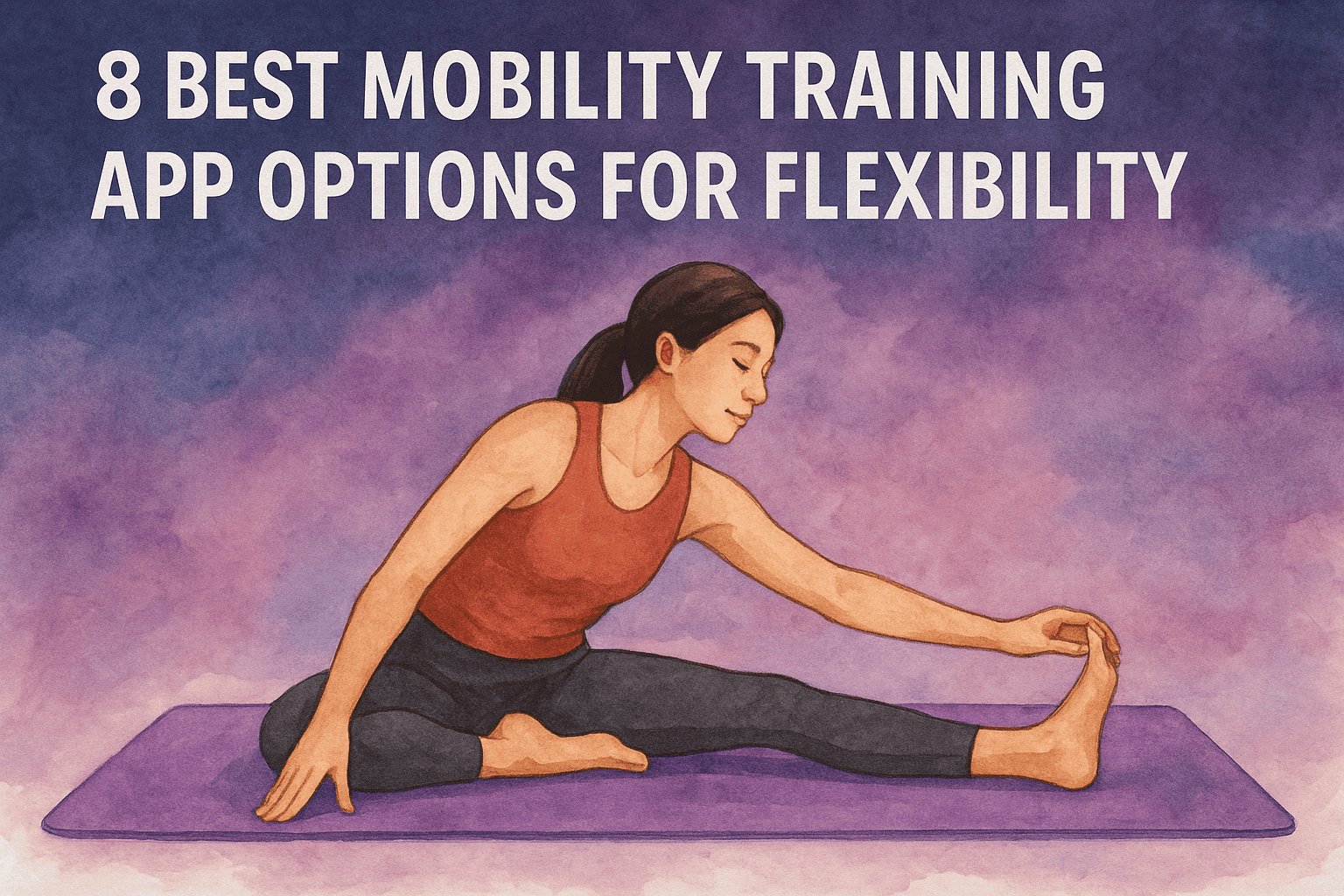
8 Best Mobility Training App Options for Flexibility
12 min read
Stiff hips, locked-up shoulders, a jaw that still feels like a vice grip from last weekend, your body keeps a receipt for everything you put it through. Whether you’re recovering from a heavy festival, an intense psychedelic session, or just sitting at a desk for ten hours straight, mobility work is one of the fastest ways to feel human again. Finding the best mobility training app can turn your phone into a personal coach that guides you through stretches, routines, and recovery flows without needing a gym or a physio appointment.
But with dozens of apps claiming to unlock your flexibility, picking the right one isn’t straightforward. Some are built for athletes chasing range of motion, others focus on daily stretch routines for beginners, and a few go deep into corrective movement and injury prevention. Your goals, budget, and experience level all matter.
At Afterglow Supplements, we think about recovery as a full picture, our protocol handles the neurochemical side after psychedelic experiences, but physical recovery deserves equal attention. That’s why we put together this breakdown of eight mobility training apps worth your time in 2026, comparing their features, pricing, and ideal use cases so you can pick the one that actually fits your life.
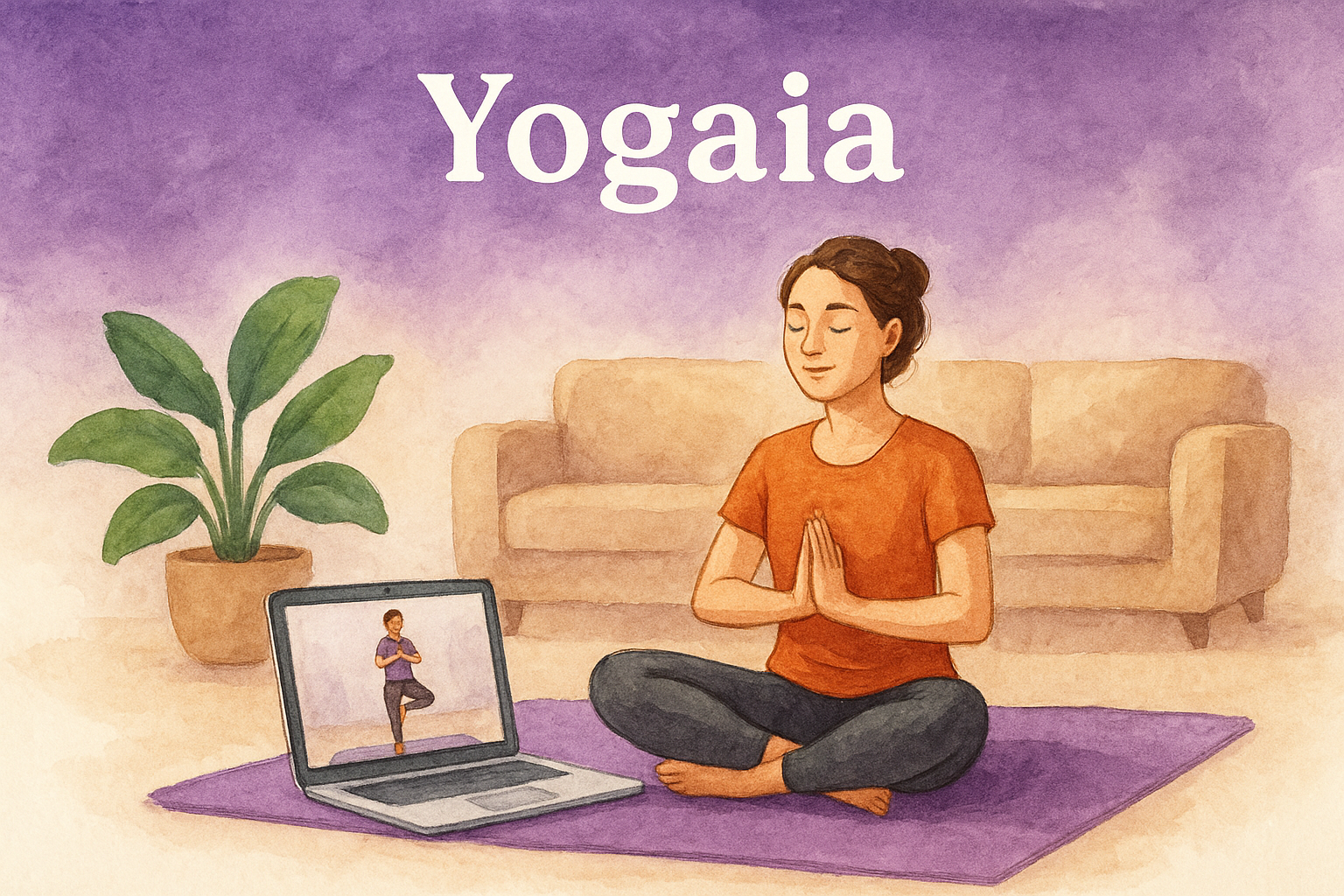
1. Yogaia
Yogaia is a live and on-demand yoga and flexibility platform that stands out in the mobility app space for one specific reason: the instructors can actually see you. Unlike most apps that deliver pre-recorded content with no interaction, Yogaia streams live classes with real instructors who offer real-time corrections during the session.
What it is and how it works
Yogaia runs on a class-based model combining scheduled live sessions with a growing on-demand library. You open your mat space, enable your camera, and instructors give personalized cues based on what they observe in real time. The library covers a range of styles including:
Beginner flexibility flows
Deep stretch and yin yoga
Mobility-focused recovery sessions
Breathwork and relaxation classes
Best for
Yogaia works best for people who need accountability and real-time correction to stay consistent. If pre-recorded videos feel disconnected or you tend to skip solo sessions, the live format changes that dynamic quickly. It’s also a strong pick for beginners who want guided instruction rather than guessing whether their form is right.
The live feedback element genuinely separates Yogaia from most competitors, where you practice in isolation with no way to know if your alignment is off.
Standout features
The clearest differentiator is the two-way camera access during live classes, which is rare among mobility and yoga apps. You also get flexible class lengths ranging from 15 to 60 minutes, letting you fit mobility work around your schedule rather than rearranging your day. The instructor quality is generally high, and sessions feel more like a small group class than a broadcast.
Limitations to know
Yogaia is primarily yoga-focused, so if you want sports-specific mobility protocols or structured athletic recovery programming, the library will feel narrow. Live classes also require scheduling around time zones, which creates friction if you’re not in a compatible region.
Pricing and free trial
Yogaia offers a 14-day free trial with full access to both live and on-demand content. Paid plans run approximately $14.99 per month, with a lower rate available on annual billing.
2. Pliability
Pliability (formerly RomWod) is a dedicated mobility and flexibility app built around deep stretching, breathing techniques, and recovery-focused movement. It targets athletes and active individuals who want to improve range of motion systematically rather than just stretching casually after a workout.
What it is and how it works
Pliability delivers daily guided stretch routines through video-based programming, with sessions typically running between 10 and 45 minutes. You select your activity level and goals during onboarding, and the app builds a personalized routine schedule around your inputs. Sessions combine long-hold passive stretching with breathwork to gradually loosen connective tissue over time.
Best for
This app suits athletes, CrossFit practitioners, and anyone doing high-intensity training who wants a structured recovery layer. If your body takes a beating regularly, Pliability gives you a consistent protocol to maintain mobility without adding more strain.
The focus on breathwork alongside stretching makes Pliability particularly useful for calming the nervous system during recovery periods, not just loosening muscles.
Standout features
Pliability includes body-part-specific programs so you can target hips, shoulders, or spine independently. It also offers sport-specific routines and integrates with Apple Health and Garmin for activity-aware recovery suggestions.
Limitations to know
The app leans heavily toward passive, long-hold stretching and doesn’t include strength-based mobility work or active movement training. Beginners may find the pacing slow.
Pricing and free trial
Pliability offers a 7-day free trial, with paid plans starting at around $13.99 per month.
3. Bend
Bend positions itself as one of the most beginner-friendly options in the flexibility space, offering a clean, structured approach to mobility training through short daily routines. If you’re new to stretching or have struggled to stay consistent, Bend’s simplified format removes most of the friction that kills follow-through.
What it is and how it works
Bend delivers short, guided flexibility sessions built around your current range of motion and target goals. During onboarding, you answer a quick assessment about problem areas and experience level, and the app generates a personalized daily routine that typically runs between 5 and 20 minutes. Sessions use video demonstrations with clear cues, making it easy to follow along without prior knowledge.
Best for
Bend works best for complete beginners and desk workers looking to build a daily flexibility habit from scratch. If you want a low-barrier entry point into the best mobility training app category without feeling overwhelmed by complex programming, Bend delivers exactly that.
Its short session lengths make it realistic to actually use every day, which matters more than any single feature.
Standout features
Bend includes progress tracking and streak features to reinforce the daily habit, plus a solid library of targeted programs for hips, back, and shoulders.
Limitations to know
Bend lacks sport-specific programming and doesn’t offer the depth that intermediate or advanced athletes typically need.
Pricing and free trial
Bend offers a free version with limited content, and the premium plan costs around $9.99 per month.
4. PhysiApp
PhysiApp takes a clinically grounded approach to mobility and rehabilitation, sitting in a different category from most consumer apps. Rather than being something you download and configure yourself, PhysiApp is a practitioner-facing platform that physiotherapists use to prescribe and monitor exercise programs for their patients.
What it is and how it works
PhysiApp connects physical therapists and clinicians with their patients through a shared digital platform. Your physio builds a custom program with video-guided exercises, sets reps and holds, and tracks your adherence remotely. You receive the program on your phone and follow along with clear video demonstrations at your own pace.
Best for
People currently working with a physiotherapist or rehabilitation specialist get the most value from this app. If you’re recovering from an injury or dealing with chronic mobility restrictions, a clinician-designed program delivered through the app gives you structure that general consumer apps simply can’t match.
The clinical oversight behind PhysiApp makes it one of the most targeted tools for structured rehabilitation, provided your provider uses the platform.
Standout features
The video-guided exercise library is thorough and professionally produced. Clinicians can annotate and customize programs to match your specific needs, and the platform tracks your completion so your provider can adjust the plan over time.
Limitations to know
Without a participating physiotherapist, you cannot use this app independently. There is no self-service option or consumer-facing entry point, which puts it out of reach for most people browsing the best mobility training app category on their own.
Pricing and access
PhysiApp is free for patients whose provider uses the platform. Clinicians pay a subscription fee to access the full practitioner toolset and patient management features.
5. Down Dog
Down Dog is a highly customizable yoga app that lets you build sessions from scratch rather than following a fixed library. If you find most yoga apps too rigid, Down Dog’s modular structure gives you control over duration, difficulty, focus area, and voice style every time you open it.
What it is and how it works
Down Dog generates unique yoga sequences on demand using a large pool of poses and transitions. You set your preferences before each session, including length, intensity, and body focus, and the app assembles a fresh routine each time. This means you never repeat the exact same session twice.
Best for
Down Dog suits intermediate practitioners and anyone who gets bored with repetitive routines. It also works well as a mobility-focused complement to strength or cardio training, especially for targeting hip and shoulder flexibility.
The variety engine makes Down Dog one of the more replayable options in the best mobility training app space, which helps with long-term consistency.
Standout features
The app includes seven practice styles such as Vinyasa, Restorative, and Yin, plus a dedicated HIIT and Barre app bundle available under the same subscription. Voice and music customization let you shape the session experience to your preference.
Limitations to know
Down Dog has no live classes or instructor feedback, so form correction is entirely on you. The app also lacks structured progression tracking over time.
Pricing and free option
Down Dog offers a generous free tier with access to a limited session range, and the full subscription costs around $9.99 per month.
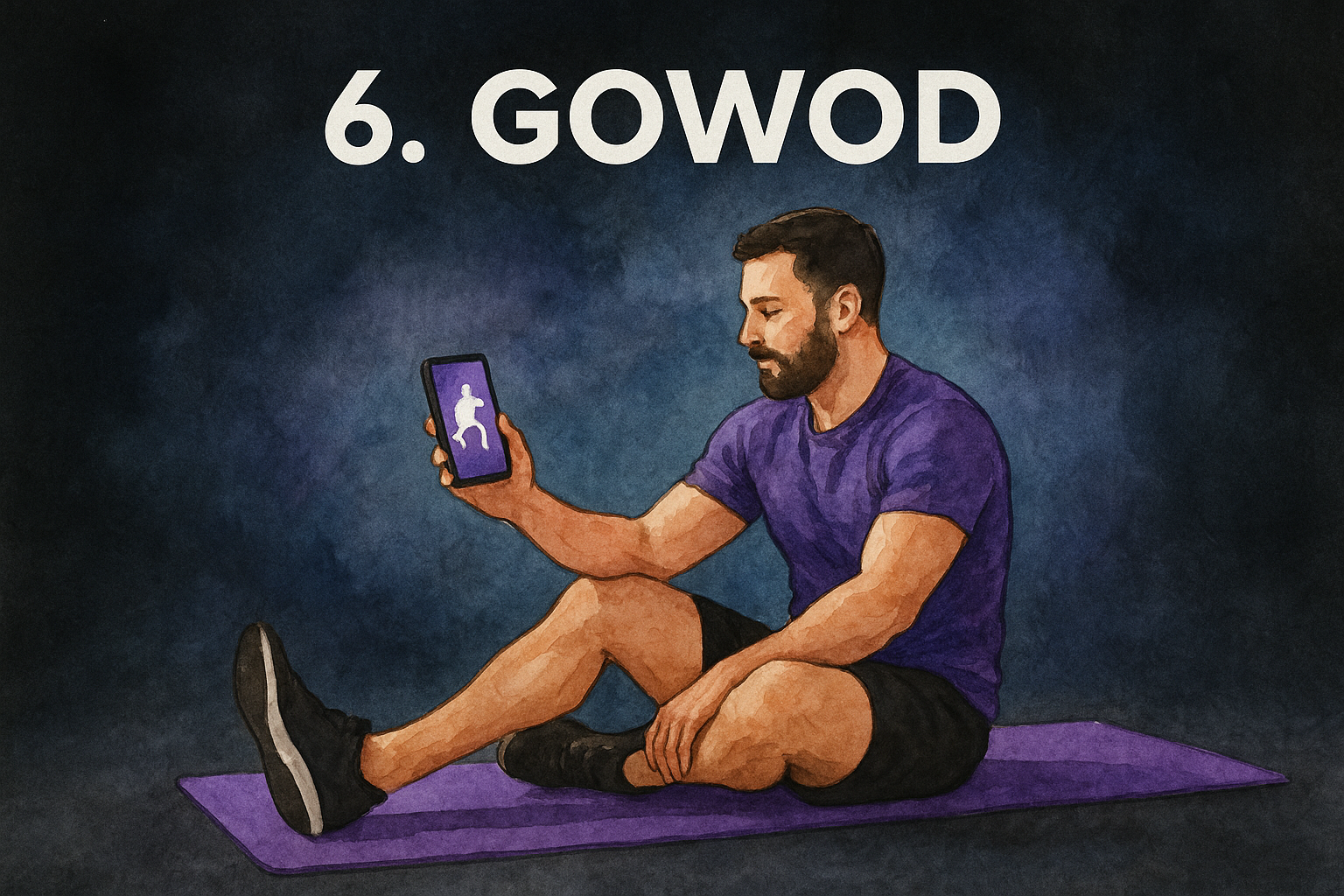
6. GOWOD
GOWOD is a mobility-first app built specifically for CrossFit athletes and strength-focused movers who want targeted flexibility work integrated into their training cycle. It takes a data-driven approach, starting with an in-depth mobility assessment before prescribing any routines.
What it is and how it works
GOWOD opens with a comprehensive flexibility test that measures your range of motion across key joints and movement patterns. From those results, the app builds a personalized daily mobility program designed to address your specific weak points. Sessions range from 5 to 30 minutes and use guided video routines you can fit in before a workout, after training, or as a standalone recovery session.
Best for
GOWOD suits CrossFit athletes, weightlifters, and functional fitness enthusiasts who want mobility work that directly supports performance rather than general wellness. If you search for the best mobility training app within a strength sports context, GOWOD ranks among the most targeted options available.
The initial assessment gives you a concrete baseline, which makes it easier to track real progress over weeks and months rather than guessing whether your flexibility is improving.
Standout features
The app includes WOD-specific warm-up routines tied to common CrossFit movements, plus athlete-verified programming developed with input from professional coaches.
Limitations to know
GOWOD is heavily CrossFit-centric, so runners, cyclists, and general users may find the framing and exercise selection less relevant to their training context.
Pricing and free trial
GOWOD offers a 7-day free trial, with paid plans starting at around $13.99 per month.
7. SilverSneakers GO
SilverSneakers GO is a fitness and mobility app designed specifically for adults over 65, built around low-impact movement, gentle stretching, and joint-friendly flexibility work. It takes a completely different angle from every other app in this best mobility training app roundup, putting accessibility and safety at the center of its design.
What it is and how it works
SilverSneakers GO delivers short, guided workout and mobility sessions through a library of video-based routines categorized by intensity and body focus. Sessions typically run between 10 and 20 minutes, covering balance, flexibility, strength, and functional movement, all designed to reduce fall risk and improve day-to-day range of motion.
Best for
This app is built for older adults and seniors who need low-impact, joint-safe mobility routines. If you’re supporting an aging parent or looking for gentle daily movement that reduces stiffness without any risk of overexertion, SilverSneakers GO fits that need directly.
The age-appropriate programming makes it one of the few apps where the content is genuinely built around the physical limitations of older adults, not just scaled down from a younger athlete’s routine.
Standout features
The app includes chair-based workout options for users with limited standing endurance, plus balance-specific training that targets fall prevention directly.
Limitations to know
SilverSneakers GO lacks advanced progression and won’t serve anyone under 60 looking for serious flexibility gains.
Pricing and eligibility
The app is free for eligible Medicare Advantage members through the SilverSneakers benefit program. Users without coverage can access the app through a paid membership tied to the broader SilverSneakers network.
8. The Movement Athlete
The Movement Athlete takes a different angle from most flexibility tools by combining mobility training with calisthenics-based skill progression. Rather than treating stretching as a standalone practice, the app builds your flexibility alongside real movement goals like handstands, splits, and back bridges.
What it is and how it works
The Movement Athlete opens with a structured assessment that tests your current capacity across key movement patterns. From those results, the app builds a personalized training plan that progresses you through both mobility and bodyweight skill work simultaneously. Sessions typically run between 20 and 45 minutes and focus on building usable range of motion, not just passive flexibility scores.
Best for
This app suits intermediate to advanced movers and calisthenics practitioners who want to develop concrete skills alongside better flexibility. If you’re chasing specific targets like the front splits or a full shoulder bridge, The Movement Athlete maps out a clear progression path toward those goals rather than offering generic conditioning.
The skill-based structure sets The Movement Athlete apart from most options in the best mobility training app space, where flexibility is typically treated as a passive, isolated practice.
Standout features
Every exercise includes detailed video instruction and coaching cues that explain the mechanics behind each movement. The app also tracks your progress across individual skills, so you can see exactly how your mobility is developing over time.
Limitations to know
The Movement Athlete requires consistent effort and a baseline level of fitness, making it a poor fit for complete beginners or anyone looking for light daily stretching.
Pricing and free trial
The Movement Athlete offers a 7-day free trial, with subscription plans starting at approximately $13.99 per month.
Your next step
Every app on this list solves a real problem, but the best mobility training app for you depends on where you’re starting and what you actually want to achieve. If you need live instruction and accountability, go with Yogaia. If you’re a CrossFit athlete, GOWOD fits your training context directly. If you want skill-based progression alongside flexibility, The Movement Athlete gives you both in one place.
Picking the right app is only part of the recovery equation, though. Physical mobility work addresses the structural side, but your body also needs neurochemical and nutritional support to fully bounce back after intense experiences. That’s exactly what Afterglow was built for.
If you’re serious about recovering smarter after psychedelic sessions, the Afterglow Recovery Protocol pairs directly with the physical work you do on your mat, covering the biological side so you can show up to every session feeling genuinely restored.
Lukas Nelpela
writes on neuroscience, mental health, and mindful exploration. With a passion in research-driven wellness and years focused on set & setting, integration, and recovery, he turns complex ideas into clear, usable insight.
You’re staring at your screen, reading the same sentence for the fourth time, and nothing sticks. Your thoughts feel like they’re wading through wet cement. So what is brain fog, exactly? It’s not a medical diagnosis, it’s a catch-all term for that frustrating state of mental cloudiness where focus, memory,
Every process in your body, thinking, moving, recovering, runs on energy produced inside your cells. That energy comes from mitochondria, and when they’re not functioning well, you feel it: brain fog, fatigue, slow recovery, and a general sense of running on empty. Mitochondrial support refers to the nutrients, habits, and
You sit down to focus, stare at your screen, and nothing clicks. Thoughts scatter, simple decisions feel impossible, and your mind moves like it’s stuck in wet concrete. If you’ve been looking up how to get rid of brain fog, you already know the frustration, that heavy, hazy state where
Working nights, rotating schedules, or pulling irregular hours throws your body’s internal clock into a constant state of confusion. Around 20% of the global workforce does some form of shift work, and the majority of those people report poor sleep as their number one complaint. Good sleep hygiene for shift
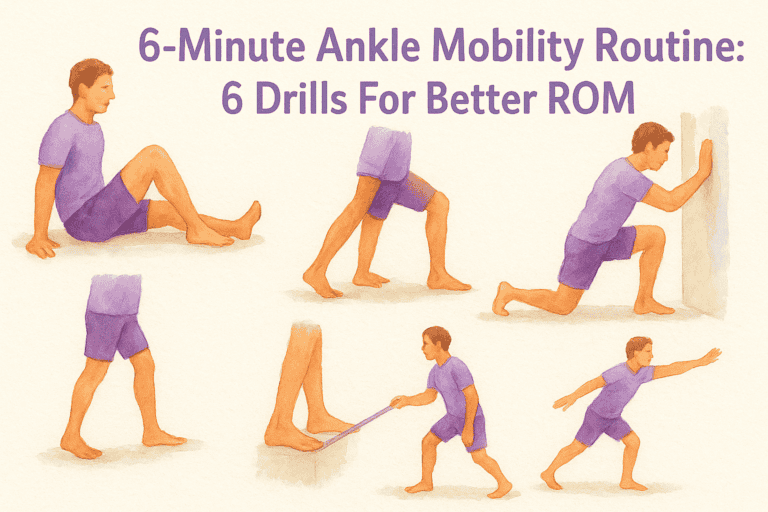
Stiff ankles affect more than just your squat depth. Limited ankle range of motion can mess with your knees, hips, and lower back, and if you spend long hours on your feet at festivals, retreats, or anywhere that keeps you moving, you’ll feel it. A solid ankle mobility routine takes
We use various cookies on our website. Some are essential for the website to function properly, while others we may only use with your consent. You can find more information about cookies on our website here.
This website uses cookies to improve your experience while you navigate through the website. Out of these cookies, the cookies that are categorized as necessary are stored on your browser as they are essential for the working of basic functionalities of the website. We also use third-party cookies that help us analyze and understand how you use this website. These cookies will be stored on your browser only with your consent. You also have the option to opt-out of these cookies. However, opting out of some of these cookies may have an impact on your browsing experience.
Necessary cookies are absolutely essential for the website to function properly. These cookies anonymously ensure basic functionalities and security features of the website.
Cookie
Duration
Description
cookielawinfo-checkbox-advertisement
1 year
Set by the GDPR Cookie Consent plugin, this cookie records the user consent for the cookies in the "Advertisement" category.
cookielawinfo-checkbox-analytics
11 months
This cookie is set by GDPR Cookie Consent plugin. The cookie is used to store the user consent for the cookies in the category "Analytics".
cookielawinfo-checkbox-functional
11 months
The cookie is set by GDPR cookie consent to record the user consent for the cookies in the category "Functional".
cookielawinfo-checkbox-necessary
11 months
This cookie is set by GDPR Cookie Consent plugin. The cookies is used to store the user consent for the cookies in the category "Necessary".
cookielawinfo-checkbox-others
11 months
This cookie is set by GDPR Cookie Consent plugin. The cookie is used to store the user consent for the cookies in the category "Other.
cookielawinfo-checkbox-performance
11 months
This cookie is set by GDPR Cookie Consent plugin. The cookie is used to store the user consent for the cookies in the category "Performance".
CookieLawInfoConsent
1 year
CookieYes sets this cookie to record the default button state of the corresponding category and the status of CCPA. It works only in coordination with the primary cookie.
elementor
never
The website's WordPress theme uses this cookie. It allows the website owner to implement or change the website's content in real-time.
fb_event_id_atc
30 minutes
Used to match client and server events for Meta Conversion API deduplication. Contains only anonymous technical IDs; no personal data stored.
fb_event_id_ic
30 minutes
Used to match client and server events for Meta Conversion API deduplication. Contains only anonymous technical IDs; no personal data stored.
fb_event_id_pur
30 minutes
Used to match client and server events for Meta Conversion API deduplication. Contains only anonymous technical IDs; no personal data stored.
fb_event_id_vc
30 minutes
Used to match client and server events for Meta Conversion API deduplication. Contains only anonymous technical IDs; no personal data stored.
rc::a
never
This cookie is set by the Google recaptcha service to identify bots to protect the website against malicious spam attacks.
rc::c
session
This cookie is set by the Google recaptcha service to identify bots to protect the website against malicious spam attacks.
viewed_cookie_policy
11 months
The cookie is set by the GDPR Cookie Consent plugin and is used to store whether or not user has consented to the use of cookies. It does not store any personal data.
VISITOR_PRIVACY_METADATA
6 months
YouTube sets this cookie to store the user's cookie consent state for the current domain.
wpEmojiSettingsSupports
session
WordPress sets this cookie when a user interacts with emojis on a WordPress site. It helps determine if the user's browser can display emojis properly.
Functional cookies help to perform certain functions, such as sharing website content on social media platforms, collecting feedback, and other third-party functions.
Cookie
Duration
Description
sib_cuid
6 months
SendinBlue sets this cookie to store unique visits.
VISITOR_INFO1_LIVE
6 months
A cookie set by YouTube to measure bandwidth that determines whether the user gets the new or old player interface.
yt-remote-cast-available
session
The yt-remote-cast-available cookie is used to store the user's preferences regarding whether casting is available on their YouTube video player.
yt-remote-cast-installed
session
The yt-remote-cast-installed cookie is used to store the user's video player preferences using embedded YouTube video.
yt-remote-connected-devices
never
YouTube sets this cookie to store the user's video preferences using embedded YouTube videos.
yt-remote-device-id
never
YouTube sets this cookie to store the user's video preferences using embedded YouTube videos.
yt-remote-fast-check-period
session
The yt-remote-fast-check-period cookie is used by YouTube to store the user's video player preferences for embedded YouTube videos.
yt-remote-session-app
session
The yt-remote-session-app cookie is used by YouTube to store user preferences and information about the interface of the embedded YouTube video player.
yt-remote-session-name
session
The yt-remote-session-name cookie is used by YouTube to store the user's video player preferences using embedded YouTube video.
ytidb::LAST_RESULT_ENTRY_KEY
never
The cookie ytidb::LAST_RESULT_ENTRY_KEY is used by YouTube to store the last search result entry that was clicked by the user. This information is used to improve the user experience by providing more relevant search results in the future.
Performance cookies are used to understand and analyze key website performance indexes, which helps in providing a better user experience for visitors.
Cookie
Duration
Description
SRM_B
1 year 24 days
Used by Microsoft Advertising as a unique ID for visitors.
Analytical cookies are used to understand how visitors interact with the website. These cookies help provide information on metrics such as the number of visitors, bounce rate, traffic source, etc.
Cookie
Duration
Description
_clck
1 year
Microsoft Clarity sets this cookie to retain the browser's Clarity User ID and settings exclusive to that website. This guarantees that actions taken during subsequent visits to the same website will be linked to the same user ID.
_clsk
1 day
Microsoft Clarity sets this cookie to store and consolidate a user's pageviews into a single session recording.
_fbp
3 months
Facebook sets this cookie to display advertisements when either on Facebook or on a digital platform powered by Facebook advertising after visiting the website.
_ga
1 year 1 month 4 days
Google Analytics sets this cookie to calculate visitor, session and campaign data and track site usage for the site's analytics report. The cookie stores information anonymously and assigns a randomly generated number to recognise unique visitors.
_ga_*
1 year 1 month 4 days
Google Analytics sets this cookie to store and count page views.
_gcl_au
3 months
Google Tag Manager sets the cookie to experiment advertisement efficiency of websites using their services.
_hjSession_*
1 hour
Hotjar sets this cookie to ensure data from subsequent visits to the same site is attributed to the same user ID, which persists in the Hotjar User ID, which is unique to that site.
_hjSessionUser_*
1 year
Hotjar sets this cookie to ensure data from subsequent visits to the same site is attributed to the same user ID, which persists in the Hotjar User ID, which is unique to that site.
_hjTLDTest
session
To determine the most generic cookie path that has to be used instead of the page hostname, Hotjar sets the _hjTLDTest cookie to store different URL substring alternatives until it fails.
CLID
1 year
Microsoft Clarity set this cookie to store information about how visitors interact with the website. The cookie helps to provide an analysis report. The data collection includes the number of visitors, where they visit the website, and the pages visited.
MR
7 days
This cookie, set by Bing, is used to collect user information for analytics purposes.
sbjs_current
session
Sourcebuster sets this cookie to identify the source of a visit and stores user action information in cookies. This analytical and behavioural cookie is used to enhance the visitor experience on the website.
sbjs_current_add
session
Sourcebuster sets this cookie to identify the source of a visit and stores user action information in cookies. This analytical and behavioural cookie is used to enhance the visitor experience on the website.
sbjs_first
session
Sourcebuster sets this cookie to identify the source of a visit and stores user action information in cookies. This analytical and behavioural cookie is used to enhance the visitor experience on the website.
sbjs_first_add
session
Sourcebuster sets this cookie to identify the source of a visit and stores user action information in cookies. This analytical and behavioural cookie is used to enhance the visitor experience on the website.
sbjs_migrations
session
Sourcebuster sets this cookie to identify the source of a visit and stores user action information in cookies. This analytical and behavioural cookie is used to enhance the visitor experience on the website.
sbjs_session
1 hour
Sourcebuster sets this cookie to identify the source of a visit and stores user action information in cookies. This analytical and behavioural cookie is used to enhance the visitor experience on the website.
sbjs_udata
session
Sourcebuster sets this cookie to identify the source of a visit and stores user action information in cookies. This analytical and behavioural cookie is used to enhance the visitor experience on the website.
SM
session
Microsoft Clarity cookie set this cookie for synchronizing the MUID across Microsoft domains.
YSC
session
YSC cookie is set by Youtube and is used to track the views of embedded videos on Youtube pages.
Advertising cookies are used to deliver relevant advertisements and marketing campaigns to visitors. These cookies track visitors across websites and collect information to deliver tailored advertisements.
Cookie
Duration
Description
_rdt_uuid
3 months
Reddit sets this cookie to build a profile of your interests and show you relevant ads.
ANONCHK
10 minutes
The ANONCHK cookie, set by Bing, is used to store a user's session ID and verify ads' clicks on the Bing search engine. The cookie helps in reporting and personalization as well.
MUID
1 year 24 days
Bing sets this cookie to recognise unique web browsers visiting Microsoft sites. This cookie is used for advertising, site analytics, and other operations.
test_cookie
15 minutes
doubleclick.net sets this cookie to determine if the user's browser supports cookies.
yt.innertube::nextId
never
YouTube sets this cookie to register a unique ID to store data on what videos from YouTube the user has seen.
yt.innertube::requests
never
YouTube sets this cookie to register a unique ID to store data on what videos from YouTube the user has seen.