How To Build Stress Resilience: 7 Science-Backed Habits
11 min read
Stress doesn’t just ruin your mood, it rewires your brain. Chronic cortisol exposure shrinks your prefrontal cortex, disrupts serotonin production, and erodes your capacity to think clearly, sleep well, and regulate emotions. Learning how to build stress resilience isn’t about avoiding hard things. It’s about training your nervous system to recover faster and take less damage each time.
This matters double if you’re someone who actively works on expanding your consciousness, through psychedelics, breathwork, meditation, or any form of inner work. Stress drains the same neurochemical resources your brain depends on to process and integrate meaningful experiences. When resilience is low, you walk into those pivotal moments already depleted, and recovery takes longer than it should.
At Afterglow Supplements, we build products that help your brain rebalance after intense psychedelic experiences. But real recovery doesn’t start the morning after, it starts with how you live day to day. Below are 7 science-backed habits that strengthen your stress response at the biological level, from neurotransmitter support to nervous system regulation. Think of them as the foundation your brain needs to handle whatever you put it through.
1. Follow a post-psychedelic recovery protocol
A psychedelic experience draws heavily on your brain’s serotonin and dopamine systems, and if you don’t actively support recovery afterward, the deficit shows up as heightened stress reactivity, low mood, and poor sleep for days. This is where a structured post-psychedelic protocol fits directly into the broader picture of how to build stress resilience: your baseline neurochemistry determines how much buffer you have before stress tips into overwhelm.
Why recovery habits affect stress resilience
Your body doesn’t separate "psychedelic recovery" from "stress recovery." Both processes rely on the same neurotransmitters, the same sleep architecture, and the same nutritional inputs. When serotonin and magnesium are depleted, your threat-detection system runs hot. That means smaller stressors land harder, and your nervous system takes longer to return to baseline after each one.
The faster you restore neurochemical balance after an intense experience, the more resilient your stress response stays in the days that follow.
How to run a simple pre to post protocol
A solid recovery protocol covers four windows: preparation (days before), the experience itself, the night of, and the days after. Before the experience, prioritize sleep, hydrate well, and reduce alcohol. During, stay on top of electrolytes and water to offset physical depletion. That night, support serotonin synthesis with L-Tryptophan and ease your nervous system down with magnesium bisglycinate and L-Theanine. In the days following, keep your schedule light, eat protein-rich meals, and protect your sleep window aggressively.
Afterglow’s 4-step supplement protocol maps directly onto these windows, supplying targeted ingredients like N-Acetylcysteine for neuroprotection, Phosphatidylserine for cortisol regulation, and melatonin for sleep onset so you’re not guessing at what your brain actually needs.
How to keep it safer and avoid overcorrecting
More supplements do not mean faster recovery. Stacking high doses of serotonergic compounds without understanding interactions can overshoot and create new imbalances. Stick to evidence-based doses, space out your experiences to allow full neurochemical recovery (most researchers suggest a minimum of four to six weeks between sessions), and treat the recovery protocol as consistent maintenance rather than a one-time fix.
2. Track your triggers and early stress signals
Most people only notice stress when it’s already overwhelming. Catching it earlier, at the first physical or behavioral signal, gives you room to respond before your nervous system locks into high-alert mode. This is a core part of how to build stress resilience: you can’t regulate what you haven’t noticed.
What stress looks like in your body and behavior
Your body sends signals before your mind does. Tight shoulders, shallow breathing, a shorter attention span, or a sudden urge to check your phone are all early indicators that your threat system is activating. Behavioral signals like snapping at small inconveniences or avoiding tasks you normally handle well are equally telling.
How to map triggers without overthinking it
You don’t need a detailed journal. A simple note at the end of the day asking "what felt hard today, and when did I first notice tension?" is enough. Over one to two weeks, patterns emerge: a particular type of meeting, a time of day, or a specific relationship dynamic that reliably precedes stress spikes.
Awareness of your triggers removes their power to catch you off guard.
How to act on patterns before stress spikes
Once you know your triggers, you can intervene upstream. If afternoon meetings drain you, block fifteen minutes before them to reset. If certain conversations raise your cortisol, prepare a brief mental script in advance. Small preemptive actions consistently outperform reactive coping when it comes to maintaining resilience over time.
3. Use slow breathing to shift out of fight or flight
Breathing is the fastest lever you have over your autonomic nervous system. Unlike most stress responses, it’s bidirectional: stress changes how you breathe, but you can also use breathing to change your stress state. That’s what makes it a core tool for anyone learning how to build stress resilience.
How breath changes your stress response
When you’re stressed, breathing becomes fast and shallow, keeping your sympathetic nervous system active. Slowing your exhale activates the vagus nerve, which signals your parasympathetic system to take over. Heart rate drops, cortisol output slows, and your prefrontal cortex comes back online.
Even one minute of slow, deliberate breathing measurably lowers the physiological markers associated with acute stress.
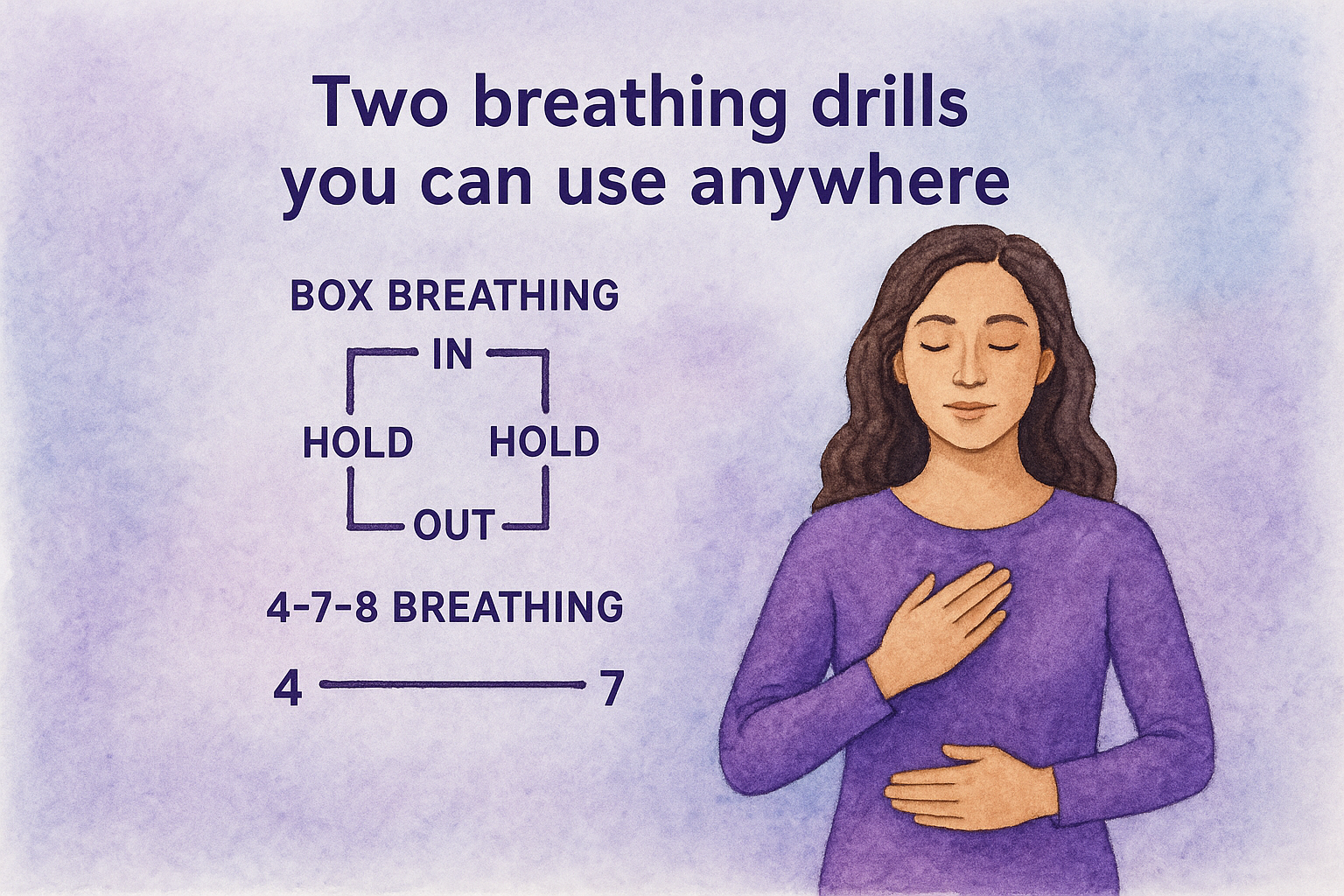
Two breathing drills you can use anywhere
Both of these take under three minutes and require no equipment:
Box breathing: Inhale for 4 counts, hold for 4, exhale for 4, hold for 4. Used by military personnel and first responders to stay composed under pressure.
4-7-8 breathing: Inhale for 4, hold for 7, exhale for 8. The extended exhale produces a stronger parasympathetic response and works particularly well before sleep.
How to use breathing in high-pressure moments
The key is to practice these drills when you’re calm, so they become automatic under real pressure. Running one drill every morning builds the habit faster than waiting until you need it.
Apply breathing at the first sign of tension, a tight jaw or shortened fuse, rather than waiting until you’re fully overwhelmed. Early intervention consistently outperforms reactive coping.
4. Protect sleep with a consistent wind-down routine
Sleep is where your brain clears cortisol, consolidates memory, and rebuilds emotional regulation capacity. If you treat it as optional, every other habit in this list underperforms. Learning how to build stress resilience requires treating sleep as active neurological recovery, not just downtime.
Why sleep drives recovery and emotional control
During deep sleep, your brain reduces cortisol output and restores prefrontal cortex function, which governs your ability to stay calm under pressure. Research shows that poor sleep amplifies the amygdala’s threat response significantly, meaning you enter each day more reactive and less able to regulate difficult emotions before they escalate.
Consistently poor sleep doesn’t just leave you tired, it structurally degrades your resilience at the neurological level.
A wind-down routine you can repeat every night
Start dimming lights and avoiding screens 60 minutes before bed. Use that window for low-stimulation activities: reading, light stretching, or writing down three things that went well. Keep your sleep and wake times fixed, even on weekends, to anchor your circadian rhythm and reduce cortisol variability across the week.
What to do when stress blocks sleep
When your mind races at bedtime, lying there fighting it makes things worse. Get up and move to a dim room, then run 4-7-8 breathing until you feel drowsy. Magnesium bisglycinate and L-Theanine support GABA activity and calm nervous system output, making them practical tools for nights when stress is running high and sleep onset feels out of reach.
5. Move your body to burn off stress chemistry
Physical movement is one of the most direct ways to clear the biological residue of stress. When your threat system activates, your body floods with cortisol and adrenaline, and those compounds don’t disappear on their own. Movement gives your body a legitimate metabolic exit for that chemistry, and that’s why it belongs in any honest guide on how to build stress resilience.
How movement improves stress tolerance
Exercise increases brain-derived neurotrophic factor (BDNF), which promotes neuroplasticity and makes your stress response more flexible over time. Regular movement also lowers your baseline cortisol, meaning you start each day with more buffer before stress tips into overwhelm. Even moderate exercise improves serotonin and dopamine regulation, which directly supports mood stability and emotional recovery.
Your resilience ceiling rises with consistent movement, not because you become tougher, but because your nervous system becomes more efficient at returning to baseline.
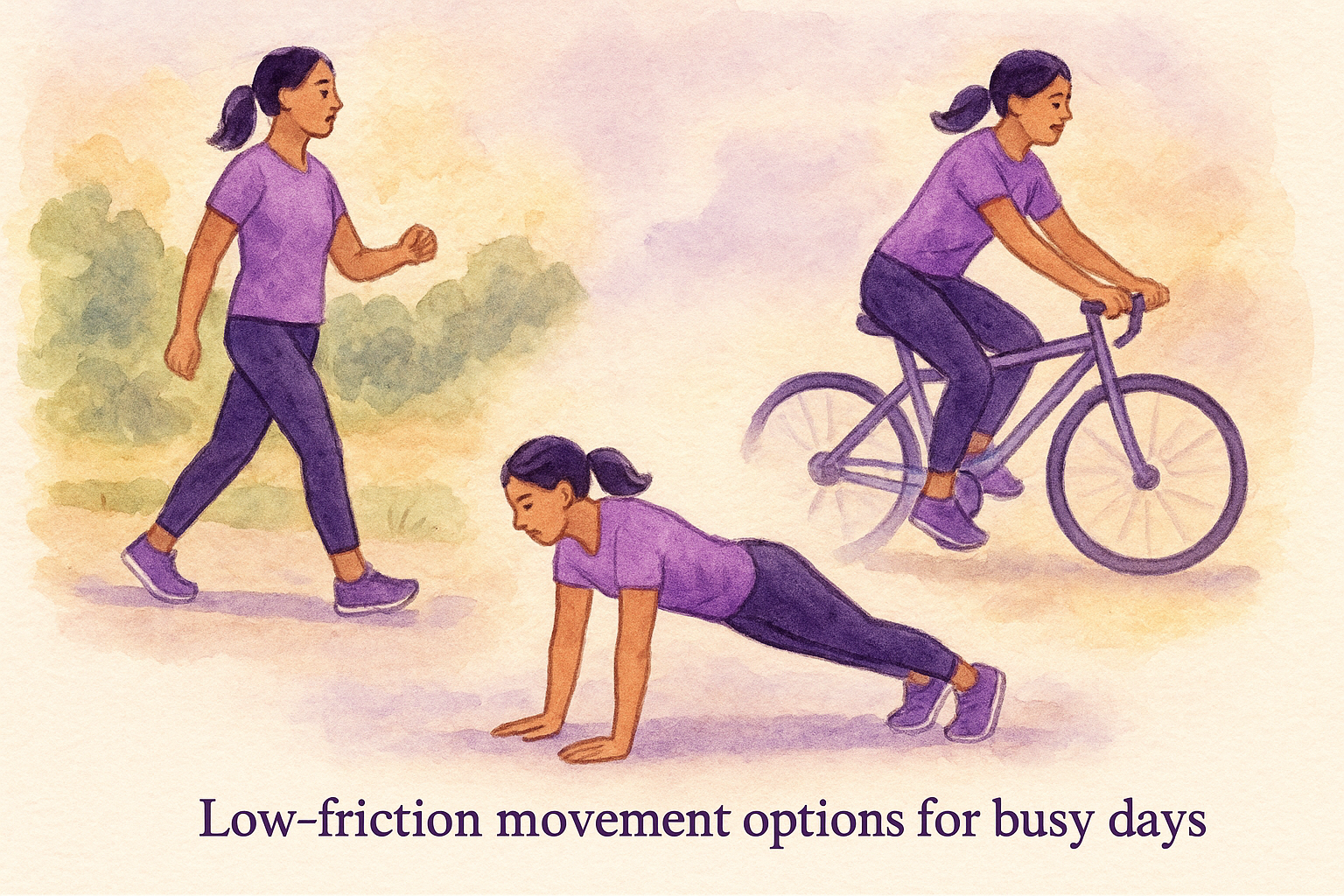
Low-friction movement options for busy days
You don’t need a gym or a long session to get the benefit. A 20-minute walk, a short bodyweight circuit, or cycling to a meeting all count. The goal is moving your body enough to metabolize the stress hormones circulating in your bloodstream, not hitting a performance target.
How to avoid all-or-nothing training cycles
Skipping movement entirely during high-stress periods is one of the most common patterns that erodes resilience over time. Setting a floor of ten minutes of movement per day, regardless of energy levels, keeps the habit intact and prevents the crash that follows long breaks.
6. Reframe problems and focus on what you can control
How you interpret a stressor shapes your physiological response to it more than the stressor itself does. This is called cognitive appraisal, and it’s a core mechanism in how to build stress resilience over the long term. Changing your appraisal doesn’t mean pretending problems aren’t real; it means directing your energy toward what you can actually move.
How appraisal and rumination amplify stress
When your brain locks onto a problem without resolution, cortisol stays elevated well past the original trigger. Rumination keeps your threat system active on a loop, which depletes the same neurochemical resources you need for clear thinking and emotional regulation. The stress isn’t just from the event, it’s from replaying it without taking any action.
The most damaging stress often isn’t the situation itself, but the mental replay you run afterward.
A practical reframing script for real life
When a stressor hits, run through three quick questions: What part of this can I actually influence? What part sits outside my control? What’s one small action I can take right now? This sequence interrupts the rumination loop and redirects mental energy toward something concrete, which lowers cortisol faster than any passive waiting does.
When acceptance works better than problem-solving
Some stressors have no actionable solution, and treating them like problems to fix generates more distress. Acceptance isn’t passive resignation; it’s recognizing that continuing to fight an unchangeable situation costs you neurological resources you need elsewhere. Letting go of those loops frees up capacity for genuine recovery.
7. Strengthen your support network and boundaries
Isolation amplifies stress. When you carry everything alone, your nervous system treats each challenge as a solo survival problem, which keeps cortisol elevated far longer than necessary. Building strong connections and clear limits is a foundational piece of how to build stress resilience that most people underestimate compared to individual habits like sleep or exercise.
Why connection builds resilience faster than willpower
Social support directly reduces cortisol output and lowers blood pressure during and after stressful events. People with strong, trusted relationships recover faster from acute stress because their nervous systems get genuine co-regulation signals from others. Feeling understood by someone you trust activates the same calming pathways as breathing exercises, but with a stronger and longer-lasting effect.
Resilience is not a solo skill. It grows faster in relationships than in isolation.
How to ask for help without dumping your stress
Venting without direction rarely helps either party. Instead, tell the person specifically what you need: a listening ear, practical advice, or just company. This framing keeps the conversation productive and preserves the relationship rather than draining it. Most people in your life want to help; they just need a clear signal about how.
How to set boundaries that reduce repeat stress
Many chronic stressors are repeating situations you haven’t yet named or addressed. Identifying which relationships or commitments consistently drain you, and then saying no clearly, removes those drains before they compound. A boundary doesn’t require a long explanation, just a direct, calm statement of what you will and won’t take on going forward.
A simple plan for this week
You don’t need to adopt all seven habits at once. Start with two: pick the habit that addresses your biggest current gap, then add one that fits easily into your existing routine. Most people find that sleep protection and trigger tracking give the fastest early returns because they affect every other habit on this list.
Run that pairing for seven days before layering anything else in. Knowing how to build stress resilience comes down to consistent small actions, not dramatic overhauls. Each habit reinforces the next, so the compounding effect builds quickly once you have a stable base.
If you’ve recently had an intense psychedelic experience or have one planned, your neurochemistry needs targeted support on top of these daily habits. The Afterglow Recovery Protocol gives your brain the specific ingredients it needs to rebalance faster, so your stress buffer stays intact when it matters most.
Lukas Nelpela
writes on neuroscience, mental health, and mindful exploration. With a passion in research-driven wellness and years focused on set & setting, integration, and recovery, he turns complex ideas into clear, usable insight.
You’re staring at your screen, reading the same sentence for the fourth time, and nothing sticks. Your thoughts feel like they’re wading through wet cement. So what is brain fog, exactly? It’s not a medical diagnosis, it’s a catch-all term for that frustrating state of mental cloudiness where focus, memory,
Every process in your body, thinking, moving, recovering, runs on energy produced inside your cells. That energy comes from mitochondria, and when they’re not functioning well, you feel it: brain fog, fatigue, slow recovery, and a general sense of running on empty. Mitochondrial support refers to the nutrients, habits, and
You sit down to focus, stare at your screen, and nothing clicks. Thoughts scatter, simple decisions feel impossible, and your mind moves like it’s stuck in wet concrete. If you’ve been looking up how to get rid of brain fog, you already know the frustration, that heavy, hazy state where
Working nights, rotating schedules, or pulling irregular hours throws your body’s internal clock into a constant state of confusion. Around 20% of the global workforce does some form of shift work, and the majority of those people report poor sleep as their number one complaint. Good sleep hygiene for shift
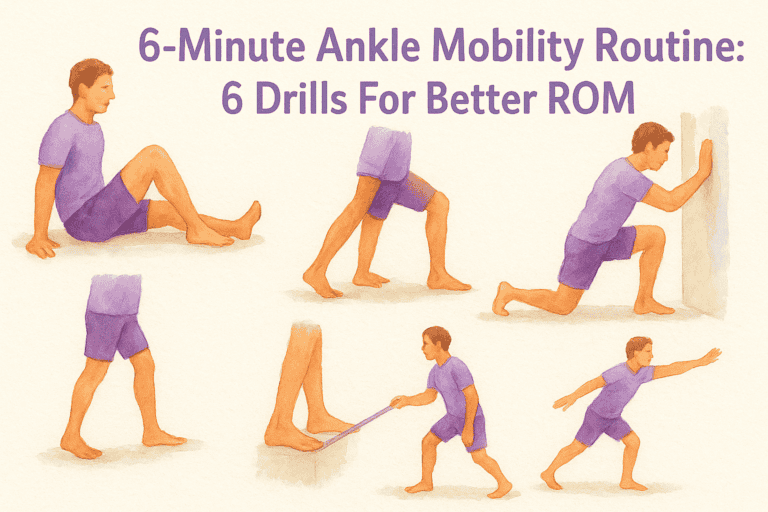
Stiff ankles affect more than just your squat depth. Limited ankle range of motion can mess with your knees, hips, and lower back, and if you spend long hours on your feet at festivals, retreats, or anywhere that keeps you moving, you’ll feel it. A solid ankle mobility routine takes
We use various cookies on our website. Some are essential for the website to function properly, while others we may only use with your consent. You can find more information about cookies on our website here.
This website uses cookies to improve your experience while you navigate through the website. Out of these cookies, the cookies that are categorized as necessary are stored on your browser as they are essential for the working of basic functionalities of the website. We also use third-party cookies that help us analyze and understand how you use this website. These cookies will be stored on your browser only with your consent. You also have the option to opt-out of these cookies. However, opting out of some of these cookies may have an impact on your browsing experience.
Necessary cookies are absolutely essential for the website to function properly. These cookies anonymously ensure basic functionalities and security features of the website.
Cookie
Duration
Description
cookielawinfo-checkbox-advertisement
1 year
Set by the GDPR Cookie Consent plugin, this cookie records the user consent for the cookies in the "Advertisement" category.
cookielawinfo-checkbox-analytics
11 months
This cookie is set by GDPR Cookie Consent plugin. The cookie is used to store the user consent for the cookies in the category "Analytics".
cookielawinfo-checkbox-functional
11 months
The cookie is set by GDPR cookie consent to record the user consent for the cookies in the category "Functional".
cookielawinfo-checkbox-necessary
11 months
This cookie is set by GDPR Cookie Consent plugin. The cookies is used to store the user consent for the cookies in the category "Necessary".
cookielawinfo-checkbox-others
11 months
This cookie is set by GDPR Cookie Consent plugin. The cookie is used to store the user consent for the cookies in the category "Other.
cookielawinfo-checkbox-performance
11 months
This cookie is set by GDPR Cookie Consent plugin. The cookie is used to store the user consent for the cookies in the category "Performance".
CookieLawInfoConsent
1 year
CookieYes sets this cookie to record the default button state of the corresponding category and the status of CCPA. It works only in coordination with the primary cookie.
elementor
never
The website's WordPress theme uses this cookie. It allows the website owner to implement or change the website's content in real-time.
fb_event_id_atc
30 minutes
Used to match client and server events for Meta Conversion API deduplication. Contains only anonymous technical IDs; no personal data stored.
fb_event_id_ic
30 minutes
Used to match client and server events for Meta Conversion API deduplication. Contains only anonymous technical IDs; no personal data stored.
fb_event_id_pur
30 minutes
Used to match client and server events for Meta Conversion API deduplication. Contains only anonymous technical IDs; no personal data stored.
fb_event_id_vc
30 minutes
Used to match client and server events for Meta Conversion API deduplication. Contains only anonymous technical IDs; no personal data stored.
rc::a
never
This cookie is set by the Google recaptcha service to identify bots to protect the website against malicious spam attacks.
rc::c
session
This cookie is set by the Google recaptcha service to identify bots to protect the website against malicious spam attacks.
viewed_cookie_policy
11 months
The cookie is set by the GDPR Cookie Consent plugin and is used to store whether or not user has consented to the use of cookies. It does not store any personal data.
VISITOR_PRIVACY_METADATA
6 months
YouTube sets this cookie to store the user's cookie consent state for the current domain.
wpEmojiSettingsSupports
session
WordPress sets this cookie when a user interacts with emojis on a WordPress site. It helps determine if the user's browser can display emojis properly.
Functional cookies help to perform certain functions, such as sharing website content on social media platforms, collecting feedback, and other third-party functions.
Cookie
Duration
Description
sib_cuid
6 months
SendinBlue sets this cookie to store unique visits.
VISITOR_INFO1_LIVE
6 months
A cookie set by YouTube to measure bandwidth that determines whether the user gets the new or old player interface.
yt-remote-cast-available
session
The yt-remote-cast-available cookie is used to store the user's preferences regarding whether casting is available on their YouTube video player.
yt-remote-cast-installed
session
The yt-remote-cast-installed cookie is used to store the user's video player preferences using embedded YouTube video.
yt-remote-connected-devices
never
YouTube sets this cookie to store the user's video preferences using embedded YouTube videos.
yt-remote-device-id
never
YouTube sets this cookie to store the user's video preferences using embedded YouTube videos.
yt-remote-fast-check-period
session
The yt-remote-fast-check-period cookie is used by YouTube to store the user's video player preferences for embedded YouTube videos.
yt-remote-session-app
session
The yt-remote-session-app cookie is used by YouTube to store user preferences and information about the interface of the embedded YouTube video player.
yt-remote-session-name
session
The yt-remote-session-name cookie is used by YouTube to store the user's video player preferences using embedded YouTube video.
ytidb::LAST_RESULT_ENTRY_KEY
never
The cookie ytidb::LAST_RESULT_ENTRY_KEY is used by YouTube to store the last search result entry that was clicked by the user. This information is used to improve the user experience by providing more relevant search results in the future.
Performance cookies are used to understand and analyze key website performance indexes, which helps in providing a better user experience for visitors.
Cookie
Duration
Description
SRM_B
1 year 24 days
Used by Microsoft Advertising as a unique ID for visitors.
Analytical cookies are used to understand how visitors interact with the website. These cookies help provide information on metrics such as the number of visitors, bounce rate, traffic source, etc.
Cookie
Duration
Description
_clck
1 year
Microsoft Clarity sets this cookie to retain the browser's Clarity User ID and settings exclusive to that website. This guarantees that actions taken during subsequent visits to the same website will be linked to the same user ID.
_clsk
1 day
Microsoft Clarity sets this cookie to store and consolidate a user's pageviews into a single session recording.
_fbp
3 months
Facebook sets this cookie to display advertisements when either on Facebook or on a digital platform powered by Facebook advertising after visiting the website.
_ga
1 year 1 month 4 days
Google Analytics sets this cookie to calculate visitor, session and campaign data and track site usage for the site's analytics report. The cookie stores information anonymously and assigns a randomly generated number to recognise unique visitors.
_ga_*
1 year 1 month 4 days
Google Analytics sets this cookie to store and count page views.
_gcl_au
3 months
Google Tag Manager sets the cookie to experiment advertisement efficiency of websites using their services.
_hjSession_*
1 hour
Hotjar sets this cookie to ensure data from subsequent visits to the same site is attributed to the same user ID, which persists in the Hotjar User ID, which is unique to that site.
_hjSessionUser_*
1 year
Hotjar sets this cookie to ensure data from subsequent visits to the same site is attributed to the same user ID, which persists in the Hotjar User ID, which is unique to that site.
_hjTLDTest
session
To determine the most generic cookie path that has to be used instead of the page hostname, Hotjar sets the _hjTLDTest cookie to store different URL substring alternatives until it fails.
CLID
1 year
Microsoft Clarity set this cookie to store information about how visitors interact with the website. The cookie helps to provide an analysis report. The data collection includes the number of visitors, where they visit the website, and the pages visited.
MR
7 days
This cookie, set by Bing, is used to collect user information for analytics purposes.
sbjs_current
session
Sourcebuster sets this cookie to identify the source of a visit and stores user action information in cookies. This analytical and behavioural cookie is used to enhance the visitor experience on the website.
sbjs_current_add
session
Sourcebuster sets this cookie to identify the source of a visit and stores user action information in cookies. This analytical and behavioural cookie is used to enhance the visitor experience on the website.
sbjs_first
session
Sourcebuster sets this cookie to identify the source of a visit and stores user action information in cookies. This analytical and behavioural cookie is used to enhance the visitor experience on the website.
sbjs_first_add
session
Sourcebuster sets this cookie to identify the source of a visit and stores user action information in cookies. This analytical and behavioural cookie is used to enhance the visitor experience on the website.
sbjs_migrations
session
Sourcebuster sets this cookie to identify the source of a visit and stores user action information in cookies. This analytical and behavioural cookie is used to enhance the visitor experience on the website.
sbjs_session
1 hour
Sourcebuster sets this cookie to identify the source of a visit and stores user action information in cookies. This analytical and behavioural cookie is used to enhance the visitor experience on the website.
sbjs_udata
session
Sourcebuster sets this cookie to identify the source of a visit and stores user action information in cookies. This analytical and behavioural cookie is used to enhance the visitor experience on the website.
SM
session
Microsoft Clarity cookie set this cookie for synchronizing the MUID across Microsoft domains.
YSC
session
YSC cookie is set by Youtube and is used to track the views of embedded videos on Youtube pages.
Advertising cookies are used to deliver relevant advertisements and marketing campaigns to visitors. These cookies track visitors across websites and collect information to deliver tailored advertisements.
Cookie
Duration
Description
_rdt_uuid
3 months
Reddit sets this cookie to build a profile of your interests and show you relevant ads.
ANONCHK
10 minutes
The ANONCHK cookie, set by Bing, is used to store a user's session ID and verify ads' clicks on the Bing search engine. The cookie helps in reporting and personalization as well.
MUID
1 year 24 days
Bing sets this cookie to recognise unique web browsers visiting Microsoft sites. This cookie is used for advertising, site analytics, and other operations.
test_cookie
15 minutes
doubleclick.net sets this cookie to determine if the user's browser supports cookies.
yt.innertube::nextId
never
YouTube sets this cookie to register a unique ID to store data on what videos from YouTube the user has seen.
yt.innertube::requests
never
YouTube sets this cookie to register a unique ID to store data on what videos from YouTube the user has seen.