XPT Life Breathing: What It Is, Benefits, And App Routines
7 min read
Breathwork has become a go-to tool for people who want to sharpen focus, calm anxiety, and recover faster, whether from intense physical training or transformative psychedelic experiences. XPT Life Breathing, developed by big-wave surfer Laird Hamilton and former pro volleyball player Gabby Reece, is one of the more structured systems out there, blending performance-driven techniques with accessible app-based routines.
At Afterglow Supplements, we build recovery protocols for people who take their experiences seriously, and breathwork fits right into that picture. Controlled breathing supports the same goals our supplements target: nervous system regulation, better sleep, and a smoother return to baseline after peak states.
This article breaks down what XPT Life Breathing actually is, how the techniques work, what benefits you can expect, and how to use the app’s guided routines. Whether you’re exploring breathwork for the first time or looking to add structure to your existing practice, you’ll find what you need below.
What XPT Life Performance Breathing is
XPT Life Breathing is a structured breathwork system built around the principle that how you breathe directly shapes how your body and mind perform. Founded by Laird Hamilton and Gabby Reece, two athletes who spent decades pushing physical limits in open water and professional sports, XPT (Extreme Performance Training) grew from their personal practices into a formalized program. The breathing component sits alongside cold exposure and pool-based training as one of its three core pillars.
Where XPT breathing comes from
Laird Hamilton developed much of his breathwork practice through freediving and big-wave surfing, environments where controlled breathing is a survival skill, not a wellness trend. That real-world pressure shaped the techniques XPT now teaches, drawing from CO2 tolerance training, box breathing, and power breathing methods used by elite athletes and military personnel. The system is not built on theory. It comes from repeated physical necessity in some of the most demanding conditions a human being can encounter.
When a breathing protocol is forged under a 60-foot wave, it tends to work reliably in a gym or living room too.
What the system covers
XPT Life Breathing organizes its methods into specific protocols tied to different goals. Each one uses a combination of breathing rhythm, breath retention, and conscious relaxation to guide your body toward a target physiological state. The app delivers these as guided audio sessions you can run at home, before training, or during a recovery window.
The protocols address four main areas:
Energy and focus – activating breathing patterns to sharpen alertness before demanding tasks
Calm and recovery – slowing nervous system activity after physical or psychological stress
Sleep preparation – deep relaxation techniques designed to ease the transition into rest
Breath-hold capacity – progressive CO2 tolerance work to expand your overall breathing fitness
Why XPT breathing matters for performance and calm
Your breathing pattern is one of the fastest levers you have for shifting your physiological state. Within seconds, a change in breathing rhythm signals your nervous system to either ramp up or stand down. XPT Life Breathing builds on this biological reality by giving you precise, repeatable tools to control that signal on demand.
The nervous system connection
Most people cycle between sympathetic (fight-or-flight) and parasympathetic (rest-and-digest) states reactively, driven by external stressors, poor sleep, or stimulants. Controlled breathing lets you steer that cycle deliberately, which matters whether you’re preparing for a hard training session or recovering from a psychologically demanding experience. That deliberate control is exactly why breathwork appears consistently in both athletic performance research and clinical recovery settings.
Breathing is the only autonomic function you can consciously override, which makes it a direct line into your nervous system.
Performance under pressure
Breath-hold training and CO2 tolerance work improve your body’s capacity to stay composed when stress spikes. Over time, that capacity translates into sharper focus, lower baseline anxiety, and faster physical recovery across a wide range of situations, from competition floors to high-intensity mental work.
Key techniques XPT teaches
XPT Life Breathing organizes its instruction around a handful of core methods, each targeting a specific physiological outcome. Understanding how these techniques differ helps you pick the right one for the moment.
Box breathing and CO2 tolerance
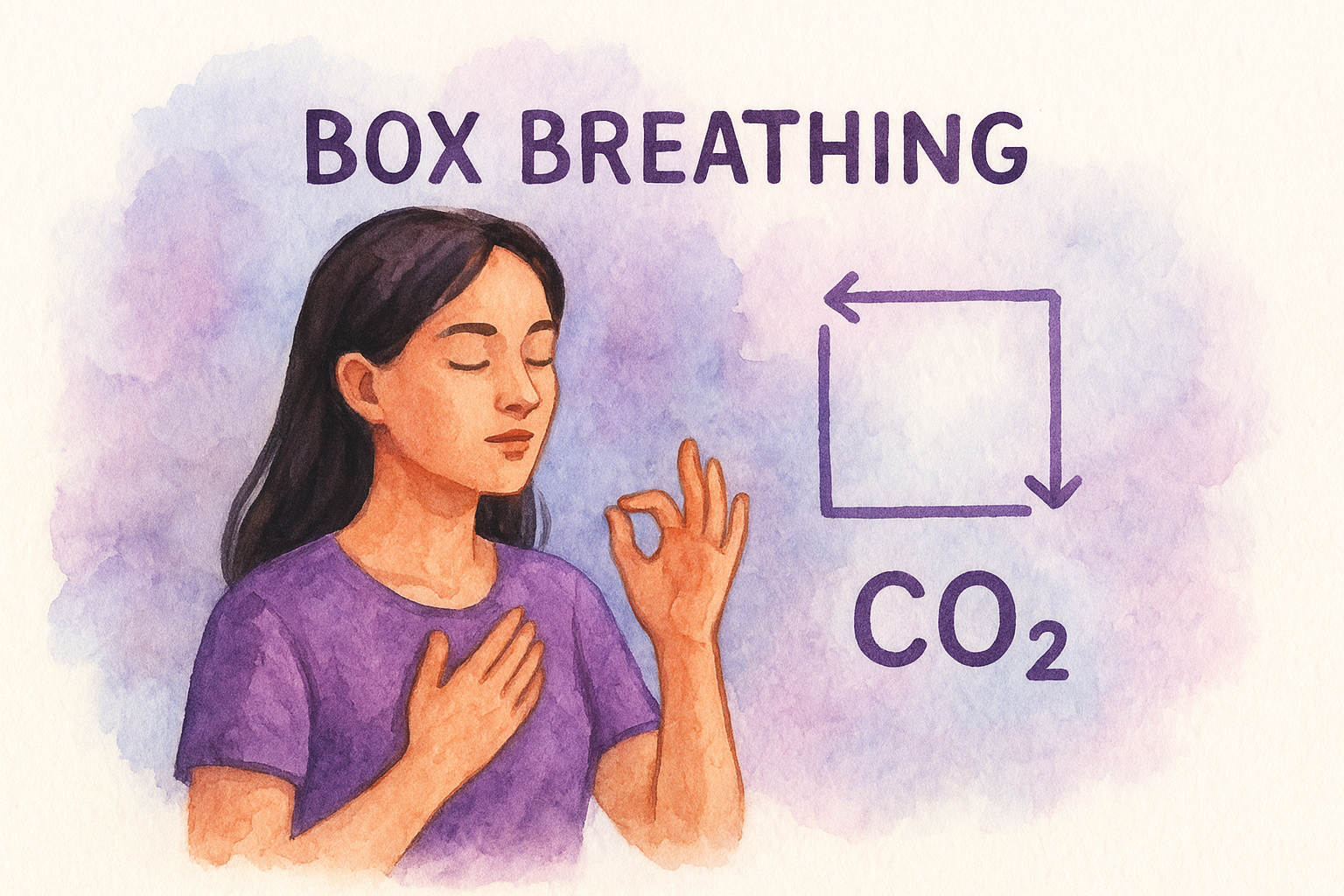
Box breathing uses equal counts for inhale, hold, exhale, and hold, typically four seconds each. This pattern slows your heart rate and pulls your nervous system toward a calm, focused state quickly. XPT pairs it with CO2 tolerance drills, where you extend breath-hold durations progressively over time to train your body to stay relaxed under oxygen stress.
Your CO2 tolerance sets the ceiling for how composed you remain when things get difficult, whether that’s a tough workout or a rough mental state.
Power breathing and recovery breathing
Power breathing uses rapid, forceful exhales to spike alertness and prime your body for high-output effort. It draws on similar mechanics to Wim Hof-style hyperventilation but with tighter control and specific timing cues. Recovery breathing, by contrast, slows everything down through extended exhales that are roughly twice as long as your inhales, which activates your parasympathetic response and accelerates both physical and psychological recovery after demanding experiences.
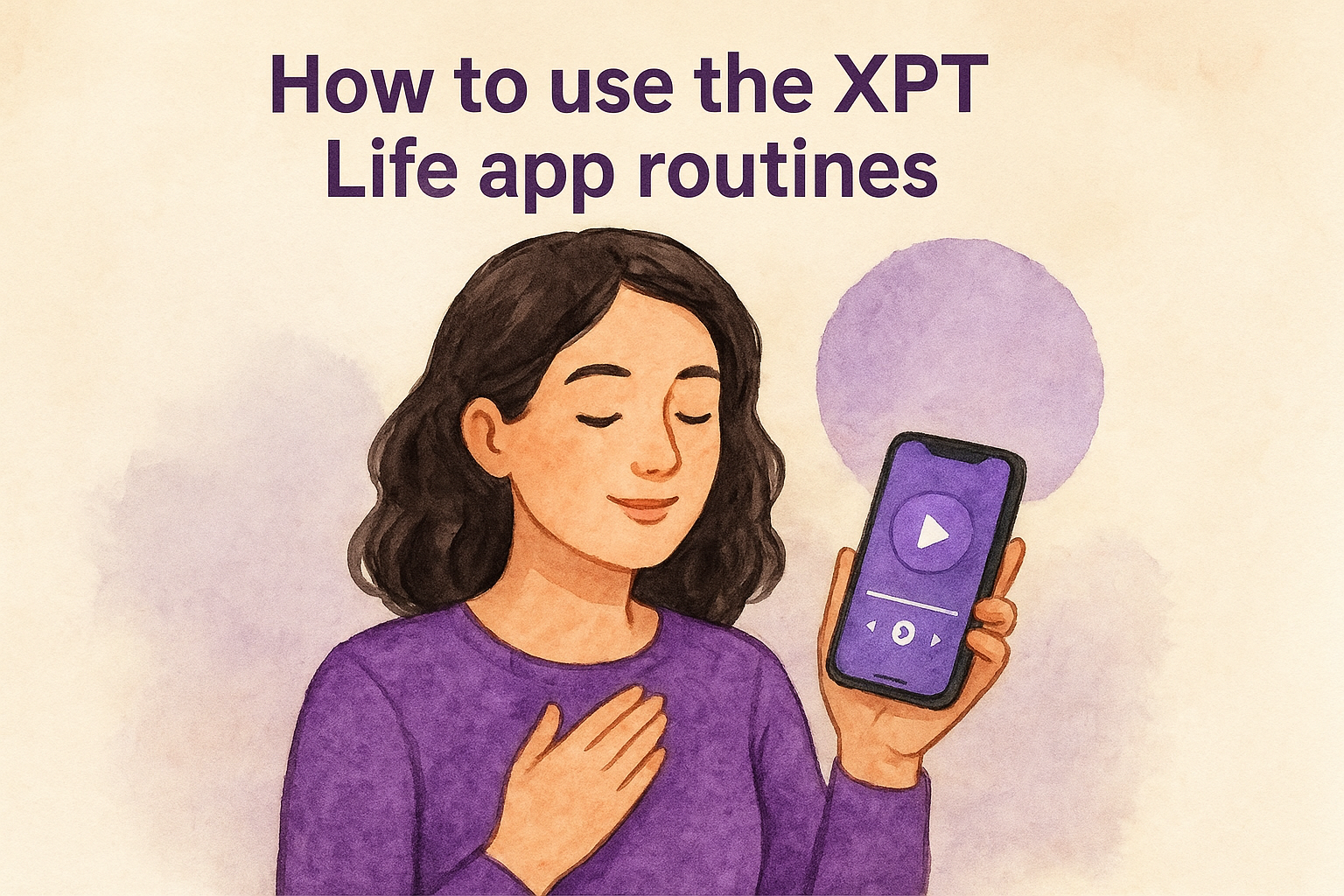
How to use the XPT Life app routines
The XPT Life app delivers guided audio sessions you can run without any equipment or prior experience. Each routine opens with a brief explanation of the target outcome, so you know whether you’re heading toward energy, calm, or sleep before you start. Download the app, set aside 5 to 20 minutes depending on the session, and follow the audio cues.
Consistency with short sessions beats occasional long ones, so treat these routines like a daily hygiene habit.
Picking a session that matches your goal
XPT life breathing sessions are organized by intended state, which makes selection straightforward. Use this as a quick reference:
Goal
Session type
Best timing
Sharpen focus
Power breathing
Morning or pre-task
Reduce anxiety
Recovery breathing
Afternoon or post-stress
Improve sleep
Sleep preparation
30 minutes before bed
Build breath fitness
CO2 tolerance drills
After physical training
Building a consistent habit
Start with one session per day in the same time slot until the behavior locks in. Once you’ve repeated the same routine for a week, your body begins to anticipate the state shift, which makes each session more effective than the last.
Safety, contraindications, and common mistakes
XPT Life Breathing techniques are safe for most healthy adults, but a few specific situations call for caution before you start. Breath-hold exercises and power breathing can cause lightheadedness or temporary drops in blood pressure, which makes these practices risky for people with cardiovascular conditions, epilepsy, or chronic respiratory disorders. Always check with a doctor first if any of those conditions apply to you.
Never practice breath-hold techniques in water or while driving, as loss of consciousness is a real risk with extended holds.
Who should avoid intense breath-hold work
Pregnant individuals and people with uncontrolled hypertension or a history of fainting should skip CO2 tolerance drills and power breathing sessions entirely. Stick to slower, recovery-focused breathing patterns instead, which still deliver real benefits with far less physiological stress. As a general rule, avoid intense breath-hold work if any of the following apply:
Active pregnancy
Epilepsy or seizure history
Unmanaged heart conditions
Common mistakes that limit results
Most beginners make two errors that undercut their progress from the start. Both are easy to fix once you recognize them:
Rushing the exhale and skipping breath retention phases, which removes the core nervous system training stimulus
Practicing power breathing while seated upright without back support, which increases fall risk if dizziness hits
Start every power breathing session lying down until you understand how your body responds.
A simple way to start today
XPT Life Breathing doesn’t require special equipment, a certification, or hours of free time to start. Pick one session from the app, lie down, and run a single recovery breathing routine tonight before bed. That one session sends your nervous system a clear signal to shift out of high-alert mode and move toward genuine rest.
Consistency over a few days is what separates people who feel a difference from those who don’t. Set a reminder, return to the same session type at the same time each day, and let the practice build. Your baseline anxiety and recovery speed will both shift noticeably within a week if you stay consistent.
Recovery from any intense experience, whether hard physical training or a psychedelic journey, works better when you layer your tools. Breathwork addresses the nervous system, but your body also needs targeted nutritional support to restore balance. If you want to cover both angles, explore the Afterglow Recovery Protocol, a science-backed supplement system built for deep, complete recovery.
Lukas Nelpela
writes on neuroscience, mental health, and mindful exploration. With a passion in research-driven wellness and years focused on set & setting, integration, and recovery, he turns complex ideas into clear, usable insight.
You’re staring at your screen, reading the same sentence for the fourth time, and nothing sticks. Your thoughts feel like they’re wading through wet cement. So what is brain fog, exactly? It’s not a medical diagnosis, it’s a catch-all term for that frustrating state of mental cloudiness where focus, memory,
Every process in your body, thinking, moving, recovering, runs on energy produced inside your cells. That energy comes from mitochondria, and when they’re not functioning well, you feel it: brain fog, fatigue, slow recovery, and a general sense of running on empty. Mitochondrial support refers to the nutrients, habits, and
You sit down to focus, stare at your screen, and nothing clicks. Thoughts scatter, simple decisions feel impossible, and your mind moves like it’s stuck in wet concrete. If you’ve been looking up how to get rid of brain fog, you already know the frustration, that heavy, hazy state where
Working nights, rotating schedules, or pulling irregular hours throws your body’s internal clock into a constant state of confusion. Around 20% of the global workforce does some form of shift work, and the majority of those people report poor sleep as their number one complaint. Good sleep hygiene for shift
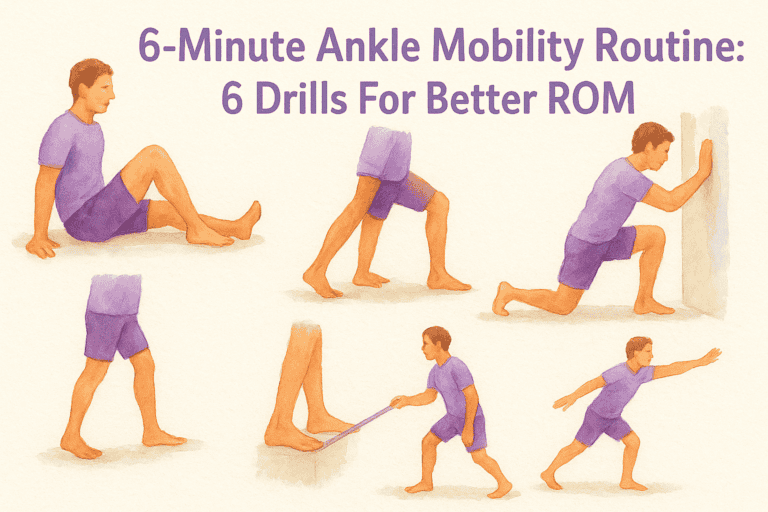
Stiff ankles affect more than just your squat depth. Limited ankle range of motion can mess with your knees, hips, and lower back, and if you spend long hours on your feet at festivals, retreats, or anywhere that keeps you moving, you’ll feel it. A solid ankle mobility routine takes
We use various cookies on our website. Some are essential for the website to function properly, while others we may only use with your consent. You can find more information about cookies on our website here.
This website uses cookies to improve your experience while you navigate through the website. Out of these cookies, the cookies that are categorized as necessary are stored on your browser as they are essential for the working of basic functionalities of the website. We also use third-party cookies that help us analyze and understand how you use this website. These cookies will be stored on your browser only with your consent. You also have the option to opt-out of these cookies. However, opting out of some of these cookies may have an impact on your browsing experience.
Necessary cookies are absolutely essential for the website to function properly. These cookies anonymously ensure basic functionalities and security features of the website.
Cookie
Duration
Description
cookielawinfo-checkbox-advertisement
1 year
Set by the GDPR Cookie Consent plugin, this cookie records the user consent for the cookies in the "Advertisement" category.
cookielawinfo-checkbox-analytics
11 months
This cookie is set by GDPR Cookie Consent plugin. The cookie is used to store the user consent for the cookies in the category "Analytics".
cookielawinfo-checkbox-functional
11 months
The cookie is set by GDPR cookie consent to record the user consent for the cookies in the category "Functional".
cookielawinfo-checkbox-necessary
11 months
This cookie is set by GDPR Cookie Consent plugin. The cookies is used to store the user consent for the cookies in the category "Necessary".
cookielawinfo-checkbox-others
11 months
This cookie is set by GDPR Cookie Consent plugin. The cookie is used to store the user consent for the cookies in the category "Other.
cookielawinfo-checkbox-performance
11 months
This cookie is set by GDPR Cookie Consent plugin. The cookie is used to store the user consent for the cookies in the category "Performance".
CookieLawInfoConsent
1 year
CookieYes sets this cookie to record the default button state of the corresponding category and the status of CCPA. It works only in coordination with the primary cookie.
elementor
never
The website's WordPress theme uses this cookie. It allows the website owner to implement or change the website's content in real-time.
fb_event_id_atc
30 minutes
Used to match client and server events for Meta Conversion API deduplication. Contains only anonymous technical IDs; no personal data stored.
fb_event_id_ic
30 minutes
Used to match client and server events for Meta Conversion API deduplication. Contains only anonymous technical IDs; no personal data stored.
fb_event_id_pur
30 minutes
Used to match client and server events for Meta Conversion API deduplication. Contains only anonymous technical IDs; no personal data stored.
fb_event_id_vc
30 minutes
Used to match client and server events for Meta Conversion API deduplication. Contains only anonymous technical IDs; no personal data stored.
rc::a
never
This cookie is set by the Google recaptcha service to identify bots to protect the website against malicious spam attacks.
rc::c
session
This cookie is set by the Google recaptcha service to identify bots to protect the website against malicious spam attacks.
viewed_cookie_policy
11 months
The cookie is set by the GDPR Cookie Consent plugin and is used to store whether or not user has consented to the use of cookies. It does not store any personal data.
VISITOR_PRIVACY_METADATA
6 months
YouTube sets this cookie to store the user's cookie consent state for the current domain.
wpEmojiSettingsSupports
session
WordPress sets this cookie when a user interacts with emojis on a WordPress site. It helps determine if the user's browser can display emojis properly.
Functional cookies help to perform certain functions, such as sharing website content on social media platforms, collecting feedback, and other third-party functions.
Cookie
Duration
Description
sib_cuid
6 months
SendinBlue sets this cookie to store unique visits.
VISITOR_INFO1_LIVE
6 months
A cookie set by YouTube to measure bandwidth that determines whether the user gets the new or old player interface.
yt-remote-cast-available
session
The yt-remote-cast-available cookie is used to store the user's preferences regarding whether casting is available on their YouTube video player.
yt-remote-cast-installed
session
The yt-remote-cast-installed cookie is used to store the user's video player preferences using embedded YouTube video.
yt-remote-connected-devices
never
YouTube sets this cookie to store the user's video preferences using embedded YouTube videos.
yt-remote-device-id
never
YouTube sets this cookie to store the user's video preferences using embedded YouTube videos.
yt-remote-fast-check-period
session
The yt-remote-fast-check-period cookie is used by YouTube to store the user's video player preferences for embedded YouTube videos.
yt-remote-session-app
session
The yt-remote-session-app cookie is used by YouTube to store user preferences and information about the interface of the embedded YouTube video player.
yt-remote-session-name
session
The yt-remote-session-name cookie is used by YouTube to store the user's video player preferences using embedded YouTube video.
ytidb::LAST_RESULT_ENTRY_KEY
never
The cookie ytidb::LAST_RESULT_ENTRY_KEY is used by YouTube to store the last search result entry that was clicked by the user. This information is used to improve the user experience by providing more relevant search results in the future.
Performance cookies are used to understand and analyze key website performance indexes, which helps in providing a better user experience for visitors.
Cookie
Duration
Description
SRM_B
1 year 24 days
Used by Microsoft Advertising as a unique ID for visitors.
Analytical cookies are used to understand how visitors interact with the website. These cookies help provide information on metrics such as the number of visitors, bounce rate, traffic source, etc.
Cookie
Duration
Description
_clck
1 year
Microsoft Clarity sets this cookie to retain the browser's Clarity User ID and settings exclusive to that website. This guarantees that actions taken during subsequent visits to the same website will be linked to the same user ID.
_clsk
1 day
Microsoft Clarity sets this cookie to store and consolidate a user's pageviews into a single session recording.
_fbp
3 months
Facebook sets this cookie to display advertisements when either on Facebook or on a digital platform powered by Facebook advertising after visiting the website.
_ga
1 year 1 month 4 days
Google Analytics sets this cookie to calculate visitor, session and campaign data and track site usage for the site's analytics report. The cookie stores information anonymously and assigns a randomly generated number to recognise unique visitors.
_ga_*
1 year 1 month 4 days
Google Analytics sets this cookie to store and count page views.
_gcl_au
3 months
Google Tag Manager sets the cookie to experiment advertisement efficiency of websites using their services.
_hjSession_*
1 hour
Hotjar sets this cookie to ensure data from subsequent visits to the same site is attributed to the same user ID, which persists in the Hotjar User ID, which is unique to that site.
_hjSessionUser_*
1 year
Hotjar sets this cookie to ensure data from subsequent visits to the same site is attributed to the same user ID, which persists in the Hotjar User ID, which is unique to that site.
_hjTLDTest
session
To determine the most generic cookie path that has to be used instead of the page hostname, Hotjar sets the _hjTLDTest cookie to store different URL substring alternatives until it fails.
CLID
1 year
Microsoft Clarity set this cookie to store information about how visitors interact with the website. The cookie helps to provide an analysis report. The data collection includes the number of visitors, where they visit the website, and the pages visited.
MR
7 days
This cookie, set by Bing, is used to collect user information for analytics purposes.
sbjs_current
session
Sourcebuster sets this cookie to identify the source of a visit and stores user action information in cookies. This analytical and behavioural cookie is used to enhance the visitor experience on the website.
sbjs_current_add
session
Sourcebuster sets this cookie to identify the source of a visit and stores user action information in cookies. This analytical and behavioural cookie is used to enhance the visitor experience on the website.
sbjs_first
session
Sourcebuster sets this cookie to identify the source of a visit and stores user action information in cookies. This analytical and behavioural cookie is used to enhance the visitor experience on the website.
sbjs_first_add
session
Sourcebuster sets this cookie to identify the source of a visit and stores user action information in cookies. This analytical and behavioural cookie is used to enhance the visitor experience on the website.
sbjs_migrations
session
Sourcebuster sets this cookie to identify the source of a visit and stores user action information in cookies. This analytical and behavioural cookie is used to enhance the visitor experience on the website.
sbjs_session
1 hour
Sourcebuster sets this cookie to identify the source of a visit and stores user action information in cookies. This analytical and behavioural cookie is used to enhance the visitor experience on the website.
sbjs_udata
session
Sourcebuster sets this cookie to identify the source of a visit and stores user action information in cookies. This analytical and behavioural cookie is used to enhance the visitor experience on the website.
SM
session
Microsoft Clarity cookie set this cookie for synchronizing the MUID across Microsoft domains.
YSC
session
YSC cookie is set by Youtube and is used to track the views of embedded videos on Youtube pages.
Advertising cookies are used to deliver relevant advertisements and marketing campaigns to visitors. These cookies track visitors across websites and collect information to deliver tailored advertisements.
Cookie
Duration
Description
_rdt_uuid
3 months
Reddit sets this cookie to build a profile of your interests and show you relevant ads.
ANONCHK
10 minutes
The ANONCHK cookie, set by Bing, is used to store a user's session ID and verify ads' clicks on the Bing search engine. The cookie helps in reporting and personalization as well.
MUID
1 year 24 days
Bing sets this cookie to recognise unique web browsers visiting Microsoft sites. This cookie is used for advertising, site analytics, and other operations.
test_cookie
15 minutes
doubleclick.net sets this cookie to determine if the user's browser supports cookies.
yt.innertube::nextId
never
YouTube sets this cookie to register a unique ID to store data on what videos from YouTube the user has seen.
yt.innertube::requests
never
YouTube sets this cookie to register a unique ID to store data on what videos from YouTube the user has seen.