Patrick McKeown Breathing: Oxygen Advantage & Buteyko Guide
10 min read
Patrick McKeown breathing methods have changed how thousands of people think about something most of us never question: how we breathe. As the creator of the Oxygen Advantage program and a leading teacher of the Buteyko Method, McKeown has spent decades showing that breathing less, not more, unlocks better health, sharper focus, and stronger physical performance.
If you’re part of the Afterglow community, this matters. Breathwork is one of the most powerful tools for psychedelic integration and recovery, calming the nervous system, reducing post-experience anxiety, and helping the body return to baseline. It pairs naturally with proper nutritional support to give your mind and body the full reset they need.
This guide covers McKeown’s background, his core techniques, the science behind nasal and low-volume breathing, specific exercises you can start using today, and the books and tools he recommends. Whether you’re an athlete, a biohacker, or someone focused on mental clarity after deep experiences, there’s something here for you.
Who Patrick McKeown is and what he teaches
Patrick McKeown is an Irish author, educator, and breathing coach based in Galway, Ireland. He has trained thousands of practitioners across medicine, sports science, and wellness, and his work sits at the intersection of respiratory physiology and practical self-improvement. His approach to breathing is rooted in decades of clinical research and personal experience, not guesswork, which is what separates his methods from generic wellness trends.
From asthma sufferer to breathing expert
McKeown did not start his career as a health professional. He grew up struggling with chronic asthma and sleep problems, conditions that pushed him to search for alternatives when conventional medicine offered limited relief. In the 1990s, he discovered the Buteyko Method, developed by Russian physiologist Dr. Konstantin Buteyko, and began training directly under its practitioners. That personal transformation became the foundation of everything he teaches today.
His story matters because Patrick McKeown breathing techniques are not theoretical. He tested them on himself first. After resolving his own breathing dysfunction, he trained formally in the Buteyko Method and became one of its most recognized instructors worldwide, eventually certifying practitioners across more than 30 countries and building a curriculum that bridges clinical rehabilitation and everyday performance.
When someone builds a teaching system on lived experience backed by published physiology, the result tends to be far more practical and trustworthy than methods developed purely in a lab.
What he actually teaches
McKeown’s core message is straightforward: most people chronically over-breathe, taking in more air than their body actually needs. This seems counterintuitive since breathing is tied to oxygen delivery, but the mechanism that releases oxygen from red blood cells into tissues depends on carbon dioxide levels. When you breathe too much, you blow off too much CO2, and your tissues receive less usable oxygen at the cellular level, not more.
His teaching is built around two main frameworks. The first is the Buteyko Method, a clinically studied protocol originally developed to address asthma and respiratory dysfunction. The second is the Oxygen Advantage, a system he created to extend these principles into athletic performance, sleep quality, and cognitive function. Both systems share the same underlying physiology but are packaged differently depending on your goals and starting point.
His books, tools, and reach
McKeown has written several widely read books, including "The Oxygen Advantage," "Atomic Focus," and "The Breathing Cure," which cover everything from sleep apnea to high-altitude sports training. He also developed the MyoTape mouth-taping product and the BOLT score (Body Oxygen Level Test), a simple self-assessment that measures your current breathing efficiency in under two minutes. His work has reached mainstream audiences through major media coverage and collaborations with elite sports organizations and medical clinics, making him one of the most cited breathing educators working today.
Why nasal, light breathing matters
Most people don’t think about how they breathe, only that they do. But the route air takes into your body and the volume you draw in with each breath have measurable effects on oxygen delivery, nervous system tone, and cognitive function. The core insight behind patrick mckeown breathing work is that breathing through your nose, at a lower volume, consistently outperforms mouth breathing in nearly every measurable way.
The nose does more than you think
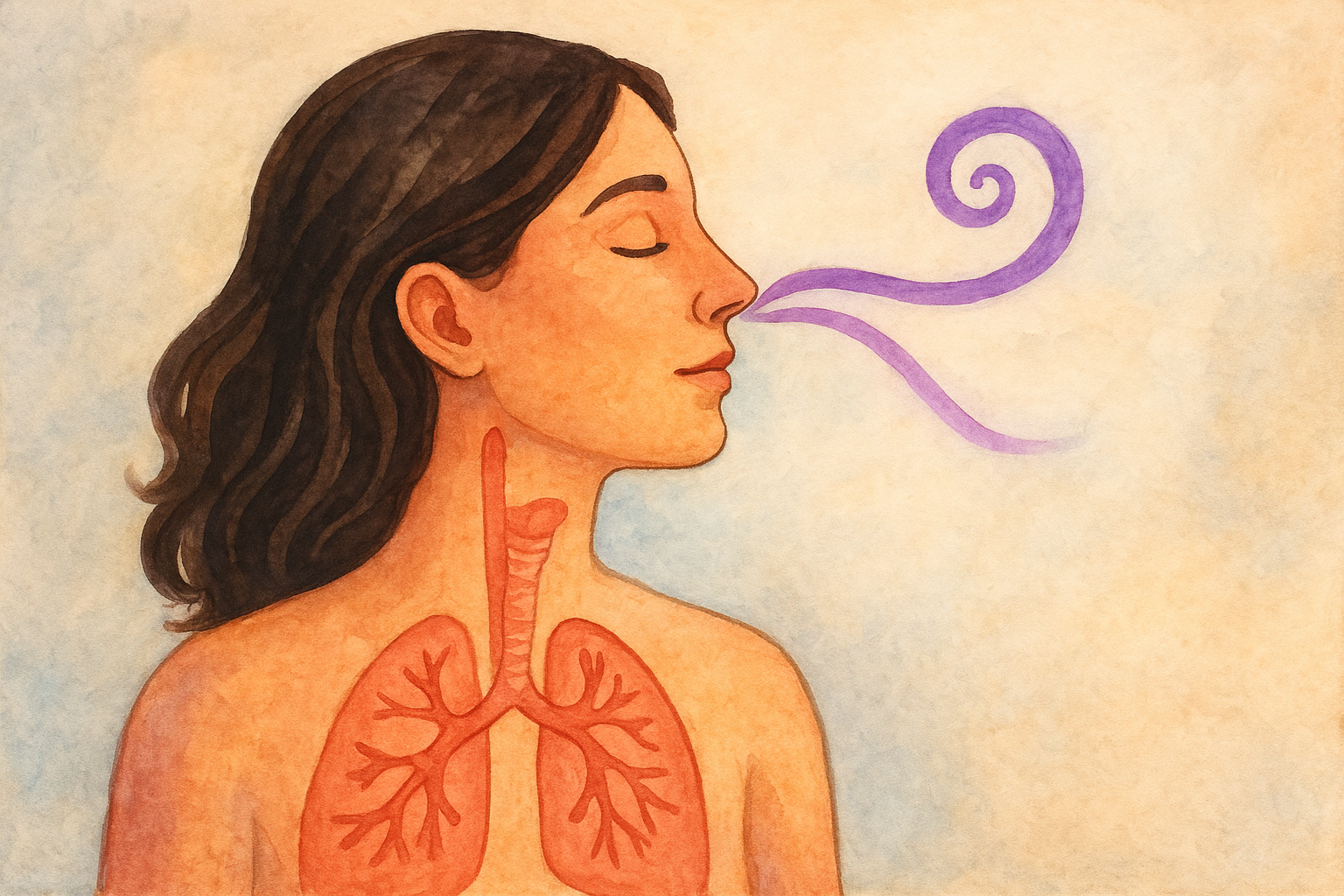
Your nose is not simply an air intake tube. It filters, humidifies, and warms incoming air before it reaches your lungs, reducing the load on your airways and making gas exchange more efficient. Nasal breathing also triggers nitric oxide production, a compound that widens blood vessels, improves circulation, and helps regulate blood pressure. When you breathe through your mouth instead, you bypass all of that.
Nasal breathing also activates the diaphragm more consistently, which sends a signal to your parasympathetic nervous system that conditions are stable. This is directly relevant if you are managing anxiety or trying to return to baseline after intense physical or psychological experiences. Mouth breathing, by contrast, tends to shift the breath to the upper chest, which keeps your nervous system in a mild stress state for hours at a time.
Why breathing volume changes everything
Breathing more does not mean your cells get more oxygen. It often means the opposite.
The relationship between breathing and oxygen delivery runs through carbon dioxide. CO2 acts as a trigger for the Bohr effect, the process by which hemoglobin releases oxygen into your tissues. When you over-breathe, you exhale too much CO2, which stiffens hemoglobin’s grip on oxygen, meaning less of it actually reaches your muscles and brain. Reducing your breathing volume raises CO2 tolerance and improves how efficiently your body uses the oxygen already circulating in your blood.
People who breathe lightly and slowly through their nose often report sharper mental clarity and steadier energy rather than the foggy fatigue that comes with habitual over-breathing. Understanding this mechanism is the first step toward making real, lasting changes.
Oxygen Advantage and Buteyko basics
Patrick McKeown breathing work draws from two systems that share the same physiological core but target different starting points and goals. Knowing how they differ helps you choose the right entry point and understand why the techniques work the way they do.
Buteyko: the clinical foundation
The Buteyko Method was developed in the 1950s by Dr. Konstantin Buteyko, a Soviet physician who observed that sick patients consistently breathed faster and more heavily than healthy ones. His hypothesis was that chronic over-breathing caused or worsened many common conditions by depleting CO2 below functional levels. The method focuses on reducing breathing volume through nasal breathing, breath holds, and relaxed, gentle inhalations that let CO2 normalize over time.
Clinical trials have tested Buteyko primarily for asthma and sleep-disordered breathing, with several studies showing measurable reductions in medication use and symptom frequency. The method is not a cure but a way to correct the dysfunctional patterns that aggravate these conditions. McKeown trained directly in this system and built his early teaching career around delivering it to people with breathing-related health issues.
Oxygen Advantage: extending the principles
If you can fix how you breathe at rest, you can dramatically change how your body performs under load.
The Oxygen Advantage takes the same CO2 tolerance framework and applies it to athletic training, sleep quality, and cognitive performance. McKeown designed it for people who are not necessarily unwell but want to optimize how their body uses oxygen. The system includes breath-hold drills called simulation altitude training, which temporarily reduce oxygen saturation in a controlled way to stimulate adaptations similar to training at high altitude.
Your breathing at rest and under exertion are connected. When you build higher CO2 tolerance through consistent practice, your body becomes more efficient at delivering oxygen to working muscles and the brain during both exercise and recovery. This is why the Oxygen Advantage has attracted interest from sports coaches, military trainers, and biohackers looking for evidence-based performance gains without complex equipment or protocols.
Step-by-step exercises to try safely
Before adding any new technique, you need a reference point. Patrick McKeown breathing methods always begin with measurement, not effort, so you can track real change rather than just feeling like you’re doing something useful. These three exercises build a solid, safe foundation.
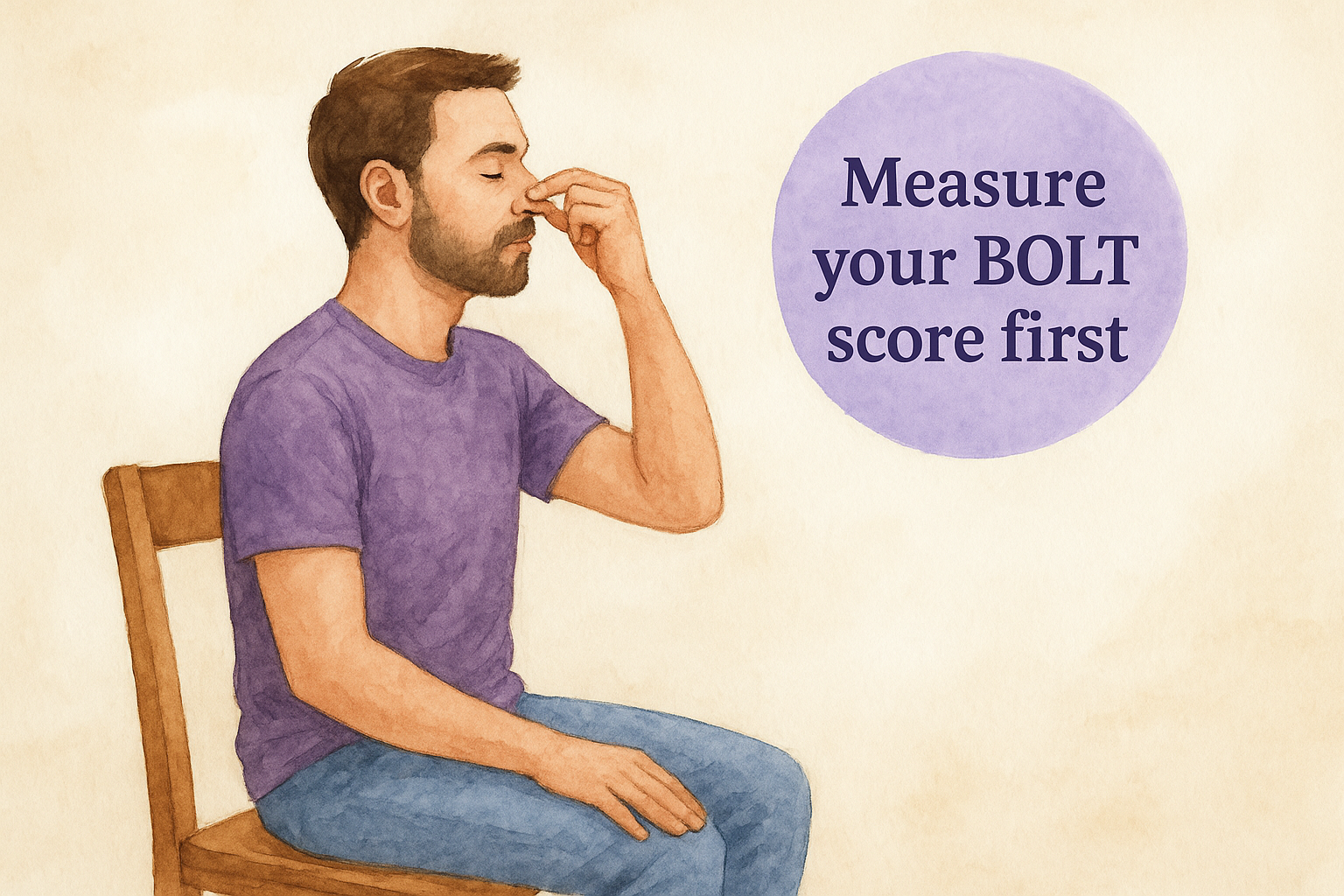
Measure your BOLT score first
The Body Oxygen Level Test gives you an honest snapshot of your current CO2 tolerance. Sit quietly for ten minutes, breathe out normally through your nose (not a forced exhale), and pinch your nostrils shut. Time how long until you feel the first urge to breathe, not the maximum you can hold. Then release and breathe normally.
Your BOLT score is your most accurate baseline because it measures functional breathing efficiency, not perceived fitness.
Use these ranges to interpret your result:
Below 20 seconds: start with nasal breathing and reduced breathing exercises only
20 to 30 seconds: add breath-hold walking at low intensity
Above 40 seconds: suitable for more demanding simulation altitude drills
Practice reduced breathing at rest
Sit upright and breathe in gently through your nose. After exhaling, allow a natural pause before your next inhale rather than forcing anything. The aim is mild air hunger, a slight sense that you could breathe more, without discomfort. Maintain this for three to five minutes per session.
Repeat this two to three times daily. Within two weeks, most people notice a measurable rise in their BOLT score and calmer baseline breathing throughout the day, even outside of practice sessions.
Add breath-hold walking
Exhale normally through your nose, pinch your nostrils closed, and walk at a comfortable pace until you feel a moderate air hunger. Release, breathe only through your nose, and wait for full recovery before repeating. Do four to six repetitions per session.
Keep your breathing calm between holds, no gasping or rushing
Stop if you feel dizzy or cannot recover within a few normal breaths
Testing progress and fixing common issues
Patrick McKeown breathing practice works best when you track it objectively rather than rely on how you feel on any given day. Your BOLT score is the most reliable indicator of real progress, and retesting it once per week under the same conditions (same time of day, after ten minutes of seated rest, before eating or exercise) gives you a clean and honest comparison. Most people see their score rise by two to five seconds per week in the early stages when they are consistent.
Reading your progress accurately
Keep a simple log of your weekly BOLT scores alongside short notes on sleep quality, energy levels, and any anxiety you notice. Small, steady gains across weeks are a far better sign than a sudden jump, which usually reflects a measurement error rather than genuine adaptation.
Progress in breathing retraining is non-linear. A plateau does not mean the approach has stopped working; it often means your nervous system is consolidating gains before the next shift happens.
Fixing the most common problems
The issues that come up most often in reduced breathing and breath-hold practice are straightforward to correct once you identify what is actually happening. Working through them early prevents the frustration that causes most people to abandon the practice before the real improvements arrive.
Air hunger feels too intense: You are reducing breathing volume too aggressively. Back off slightly and aim for mild, manageable discomfort rather than strain. The sensation should be noticeable but never distressing.
BOLT score not improving after two weeks: Check whether you are mouth breathing during sleep. Nighttime mouth breathing undoes most of your daytime work. Taping the lips closed during sleep (using a purpose-made product like McKeown’s MyoTape) corrects this quickly.
Dizziness during breath holds: This signals that your CO2 tolerance is still low and you are pushing holds further than your baseline supports. Shorten the hold duration and prioritize reduced breathing exercises until your BOLT score climbs above 20 seconds before attempting longer holds again.
Where to go from here
Patrick McKeown breathing methods give you a clear, testable path to better oxygen efficiency, calmer nervous system function, and stronger mental focus. You now have everything you need to measure your baseline with the BOLT score, practice reduced breathing, and build CO2 tolerance through breath-hold walking. Start with one session per day, track your weekly scores honestly, and fix the common issues early rather than pushing through them blindly.
Breathwork is only one part of what your body needs after intense physical or psychological experiences. Nutritional support matters equally, especially when your nervous system is working hard to return to balance. If you use psychedelics for therapeutic, spiritual, or recreational purposes and want to give your body the full recovery it deserves, the Afterglow Recovery Protocol pairs science-backed supplements directly with the kind of reset that breathwork alone cannot provide.
Lukas Nelpela
writes on neuroscience, mental health, and mindful exploration. With a passion in research-driven wellness and years focused on set & setting, integration, and recovery, he turns complex ideas into clear, usable insight.
You’re staring at your screen, reading the same sentence for the fourth time, and nothing sticks. Your thoughts feel like they’re wading through wet cement. So what is brain fog, exactly? It’s not a medical diagnosis, it’s a catch-all term for that frustrating state of mental cloudiness where focus, memory,
Every process in your body, thinking, moving, recovering, runs on energy produced inside your cells. That energy comes from mitochondria, and when they’re not functioning well, you feel it: brain fog, fatigue, slow recovery, and a general sense of running on empty. Mitochondrial support refers to the nutrients, habits, and
You sit down to focus, stare at your screen, and nothing clicks. Thoughts scatter, simple decisions feel impossible, and your mind moves like it’s stuck in wet concrete. If you’ve been looking up how to get rid of brain fog, you already know the frustration, that heavy, hazy state where
Working nights, rotating schedules, or pulling irregular hours throws your body’s internal clock into a constant state of confusion. Around 20% of the global workforce does some form of shift work, and the majority of those people report poor sleep as their number one complaint. Good sleep hygiene for shift
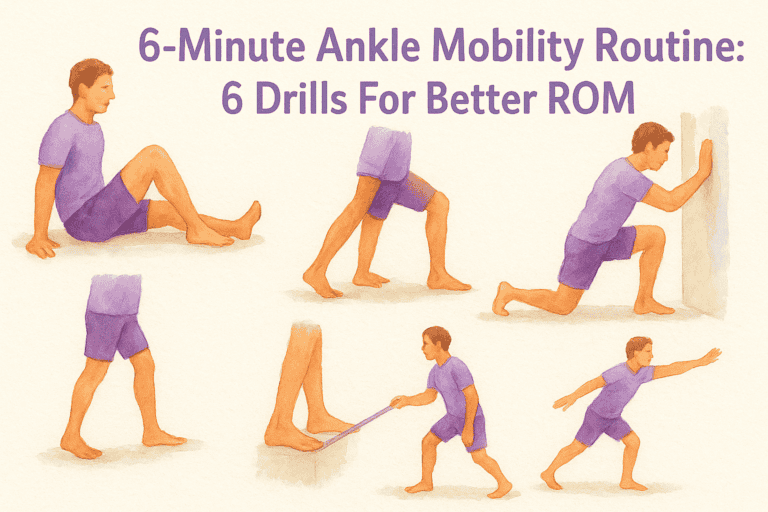
Stiff ankles affect more than just your squat depth. Limited ankle range of motion can mess with your knees, hips, and lower back, and if you spend long hours on your feet at festivals, retreats, or anywhere that keeps you moving, you’ll feel it. A solid ankle mobility routine takes
We use various cookies on our website. Some are essential for the website to function properly, while others we may only use with your consent. You can find more information about cookies on our website here.
This website uses cookies to improve your experience while you navigate through the website. Out of these cookies, the cookies that are categorized as necessary are stored on your browser as they are essential for the working of basic functionalities of the website. We also use third-party cookies that help us analyze and understand how you use this website. These cookies will be stored on your browser only with your consent. You also have the option to opt-out of these cookies. However, opting out of some of these cookies may have an impact on your browsing experience.
Necessary cookies are absolutely essential for the website to function properly. These cookies anonymously ensure basic functionalities and security features of the website.
Cookie
Duration
Description
cookielawinfo-checkbox-advertisement
1 year
Set by the GDPR Cookie Consent plugin, this cookie records the user consent for the cookies in the "Advertisement" category.
cookielawinfo-checkbox-analytics
11 months
This cookie is set by GDPR Cookie Consent plugin. The cookie is used to store the user consent for the cookies in the category "Analytics".
cookielawinfo-checkbox-functional
11 months
The cookie is set by GDPR cookie consent to record the user consent for the cookies in the category "Functional".
cookielawinfo-checkbox-necessary
11 months
This cookie is set by GDPR Cookie Consent plugin. The cookies is used to store the user consent for the cookies in the category "Necessary".
cookielawinfo-checkbox-others
11 months
This cookie is set by GDPR Cookie Consent plugin. The cookie is used to store the user consent for the cookies in the category "Other.
cookielawinfo-checkbox-performance
11 months
This cookie is set by GDPR Cookie Consent plugin. The cookie is used to store the user consent for the cookies in the category "Performance".
CookieLawInfoConsent
1 year
CookieYes sets this cookie to record the default button state of the corresponding category and the status of CCPA. It works only in coordination with the primary cookie.
elementor
never
The website's WordPress theme uses this cookie. It allows the website owner to implement or change the website's content in real-time.
fb_event_id_atc
30 minutes
Used to match client and server events for Meta Conversion API deduplication. Contains only anonymous technical IDs; no personal data stored.
fb_event_id_ic
30 minutes
Used to match client and server events for Meta Conversion API deduplication. Contains only anonymous technical IDs; no personal data stored.
fb_event_id_pur
30 minutes
Used to match client and server events for Meta Conversion API deduplication. Contains only anonymous technical IDs; no personal data stored.
fb_event_id_vc
30 minutes
Used to match client and server events for Meta Conversion API deduplication. Contains only anonymous technical IDs; no personal data stored.
rc::a
never
This cookie is set by the Google recaptcha service to identify bots to protect the website against malicious spam attacks.
rc::c
session
This cookie is set by the Google recaptcha service to identify bots to protect the website against malicious spam attacks.
viewed_cookie_policy
11 months
The cookie is set by the GDPR Cookie Consent plugin and is used to store whether or not user has consented to the use of cookies. It does not store any personal data.
VISITOR_PRIVACY_METADATA
6 months
YouTube sets this cookie to store the user's cookie consent state for the current domain.
wpEmojiSettingsSupports
session
WordPress sets this cookie when a user interacts with emojis on a WordPress site. It helps determine if the user's browser can display emojis properly.
Functional cookies help to perform certain functions, such as sharing website content on social media platforms, collecting feedback, and other third-party functions.
Cookie
Duration
Description
sib_cuid
6 months
SendinBlue sets this cookie to store unique visits.
VISITOR_INFO1_LIVE
6 months
A cookie set by YouTube to measure bandwidth that determines whether the user gets the new or old player interface.
yt-remote-cast-available
session
The yt-remote-cast-available cookie is used to store the user's preferences regarding whether casting is available on their YouTube video player.
yt-remote-cast-installed
session
The yt-remote-cast-installed cookie is used to store the user's video player preferences using embedded YouTube video.
yt-remote-connected-devices
never
YouTube sets this cookie to store the user's video preferences using embedded YouTube videos.
yt-remote-device-id
never
YouTube sets this cookie to store the user's video preferences using embedded YouTube videos.
yt-remote-fast-check-period
session
The yt-remote-fast-check-period cookie is used by YouTube to store the user's video player preferences for embedded YouTube videos.
yt-remote-session-app
session
The yt-remote-session-app cookie is used by YouTube to store user preferences and information about the interface of the embedded YouTube video player.
yt-remote-session-name
session
The yt-remote-session-name cookie is used by YouTube to store the user's video player preferences using embedded YouTube video.
ytidb::LAST_RESULT_ENTRY_KEY
never
The cookie ytidb::LAST_RESULT_ENTRY_KEY is used by YouTube to store the last search result entry that was clicked by the user. This information is used to improve the user experience by providing more relevant search results in the future.
Performance cookies are used to understand and analyze key website performance indexes, which helps in providing a better user experience for visitors.
Cookie
Duration
Description
SRM_B
1 year 24 days
Used by Microsoft Advertising as a unique ID for visitors.
Analytical cookies are used to understand how visitors interact with the website. These cookies help provide information on metrics such as the number of visitors, bounce rate, traffic source, etc.
Cookie
Duration
Description
_clck
1 year
Microsoft Clarity sets this cookie to retain the browser's Clarity User ID and settings exclusive to that website. This guarantees that actions taken during subsequent visits to the same website will be linked to the same user ID.
_clsk
1 day
Microsoft Clarity sets this cookie to store and consolidate a user's pageviews into a single session recording.
_fbp
3 months
Facebook sets this cookie to display advertisements when either on Facebook or on a digital platform powered by Facebook advertising after visiting the website.
_ga
1 year 1 month 4 days
Google Analytics sets this cookie to calculate visitor, session and campaign data and track site usage for the site's analytics report. The cookie stores information anonymously and assigns a randomly generated number to recognise unique visitors.
_ga_*
1 year 1 month 4 days
Google Analytics sets this cookie to store and count page views.
_gcl_au
3 months
Google Tag Manager sets the cookie to experiment advertisement efficiency of websites using their services.
_hjSession_*
1 hour
Hotjar sets this cookie to ensure data from subsequent visits to the same site is attributed to the same user ID, which persists in the Hotjar User ID, which is unique to that site.
_hjSessionUser_*
1 year
Hotjar sets this cookie to ensure data from subsequent visits to the same site is attributed to the same user ID, which persists in the Hotjar User ID, which is unique to that site.
_hjTLDTest
session
To determine the most generic cookie path that has to be used instead of the page hostname, Hotjar sets the _hjTLDTest cookie to store different URL substring alternatives until it fails.
CLID
1 year
Microsoft Clarity set this cookie to store information about how visitors interact with the website. The cookie helps to provide an analysis report. The data collection includes the number of visitors, where they visit the website, and the pages visited.
MR
7 days
This cookie, set by Bing, is used to collect user information for analytics purposes.
sbjs_current
session
Sourcebuster sets this cookie to identify the source of a visit and stores user action information in cookies. This analytical and behavioural cookie is used to enhance the visitor experience on the website.
sbjs_current_add
session
Sourcebuster sets this cookie to identify the source of a visit and stores user action information in cookies. This analytical and behavioural cookie is used to enhance the visitor experience on the website.
sbjs_first
session
Sourcebuster sets this cookie to identify the source of a visit and stores user action information in cookies. This analytical and behavioural cookie is used to enhance the visitor experience on the website.
sbjs_first_add
session
Sourcebuster sets this cookie to identify the source of a visit and stores user action information in cookies. This analytical and behavioural cookie is used to enhance the visitor experience on the website.
sbjs_migrations
session
Sourcebuster sets this cookie to identify the source of a visit and stores user action information in cookies. This analytical and behavioural cookie is used to enhance the visitor experience on the website.
sbjs_session
1 hour
Sourcebuster sets this cookie to identify the source of a visit and stores user action information in cookies. This analytical and behavioural cookie is used to enhance the visitor experience on the website.
sbjs_udata
session
Sourcebuster sets this cookie to identify the source of a visit and stores user action information in cookies. This analytical and behavioural cookie is used to enhance the visitor experience on the website.
SM
session
Microsoft Clarity cookie set this cookie for synchronizing the MUID across Microsoft domains.
YSC
session
YSC cookie is set by Youtube and is used to track the views of embedded videos on Youtube pages.
Advertising cookies are used to deliver relevant advertisements and marketing campaigns to visitors. These cookies track visitors across websites and collect information to deliver tailored advertisements.
Cookie
Duration
Description
_rdt_uuid
3 months
Reddit sets this cookie to build a profile of your interests and show you relevant ads.
ANONCHK
10 minutes
The ANONCHK cookie, set by Bing, is used to store a user's session ID and verify ads' clicks on the Bing search engine. The cookie helps in reporting and personalization as well.
MUID
1 year 24 days
Bing sets this cookie to recognise unique web browsers visiting Microsoft sites. This cookie is used for advertising, site analytics, and other operations.
test_cookie
15 minutes
doubleclick.net sets this cookie to determine if the user's browser supports cookies.
yt.innertube::nextId
never
YouTube sets this cookie to register a unique ID to store data on what videos from YouTube the user has seen.
yt.innertube::requests
never
YouTube sets this cookie to register a unique ID to store data on what videos from YouTube the user has seen.