11 Best Red Light Therapy Devices For Home Use Tested (2026)
23 min read
Red light therapy has moved from clinical settings into living rooms, and for good reason. Research continues to back its benefits for skin health, pain relief, muscle recovery, and even mood regulation. But with dozens of brands competing for your attention, finding the best red light therapy devices that actually deliver on their promises takes more than scrolling through Amazon reviews. It takes hands-on testing and a critical eye.
At Afterglow Supplements, recovery is our entire focus. We formulate science-backed supplements to help people bounce back after psychedelic experiences, replenishing neurotransmitters, supporting sleep, and easing the body back to baseline. That same commitment to evidence-based recovery is what drove us to explore red light therapy as a complementary tool. Many in our community, biohackers, festival-goers, retreat participants, already use it alongside supplementation to support their overall well-being and accelerate physical restoration.
So we got our hands on 11 of the most popular home-use red light therapy devices and put them through real testing. We evaluated them across categories that matter: anti-aging, hair growth, pain relief, full-body treatment, portability, and value. Each pick below includes what we liked, what fell short, and who it’s best suited for, so you can skip the guesswork and invest in something that actually fits your needs.
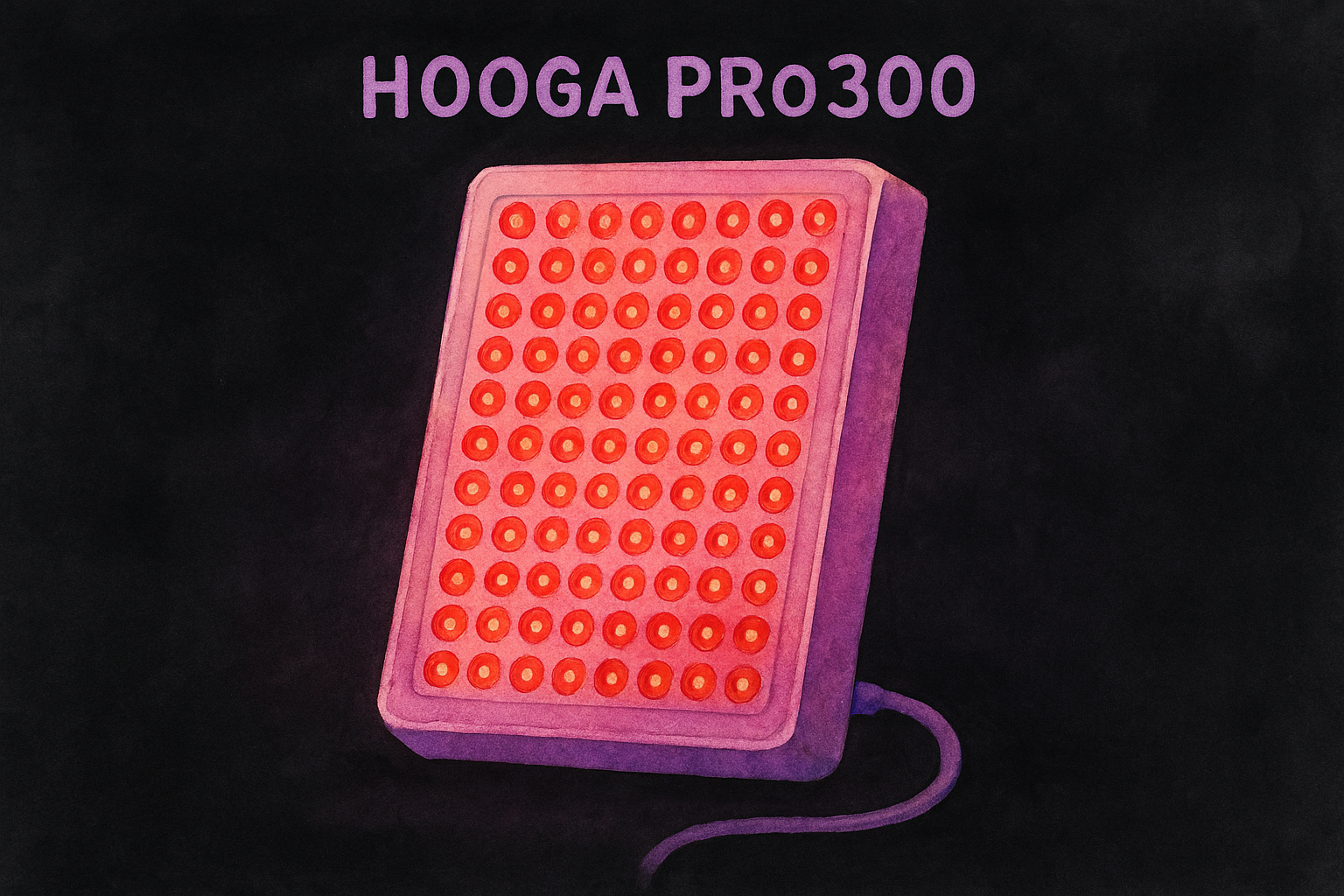
1. Hooga Pro300 panel
The Hooga Pro300 is a mid-sized panel that punches well above its price point. It covers a solid treatment area, runs both 660nm red and 850nm near-infrared wavelengths simultaneously, and delivers irradiance levels that rival panels costing twice as much. If you want a reliable entry point into panel-based red light therapy without spending a fortune, this is one of the best red light therapy devices you can buy right now.
Key specs that matter
The Pro300 ships with 100 dual-chip LEDs covering a surface area large enough to treat your torso, back, or legs in a single session. Irradiance at 6 inches sits around 100 mW/cm², which is competitive for a panel in this category. The unit runs at 300W draw from the wall, though actual LED output is lower after heat dissipation. It also features a flicker-free power supply, which matters more than most people realize since flicker can cause eye strain over repeated sessions.
Irradiance drops sharply with distance, so positioning the panel at 6 to 12 inches from your skin will give you meaningfully better photon delivery than standing a few feet back.
Best for
The Pro300 works best for full torso or targeted muscle recovery, making it a strong choice for anyone dealing with post-workout soreness, joint stiffness, or inflammation. It also suits people who want broad anti-aging benefits across the chest, shoulders, or back rather than just the face. Given its size and output, it fits well into a recovery-focused routine after intense physical activity.
Pros and cons
The panel’s build quality is solid for its price bracket, and Hooga’s customer support has a good reputation for responding to issues quickly. The included hanging kit is straightforward to set up on a door or wall-mounted bracket.
On the downside, the power cable placement on the bottom edge of the unit can feel awkward depending on how you mount it. The fan noise is also noticeable during sessions, which some users find distracting in quiet environments. It is not a silent device.
Feature
Detail
Wavelengths
660nm red + 850nm NIR
LED count
100 dual-chip LEDs
Irradiance at 6 inches
~100 mW/cm²
Power draw
300W
Dimensions
~12 x 8 inches
How to use it safely
Start with 10-minute sessions at 12 inches from the panel, three to four times per week, and build from there based on how your body responds. Always wear the included eye protection goggles during sessions, particularly when using near-infrared, since 850nm light is invisible and you will not be able to judge exposure by sight alone. Avoid applying photosensitizing skincare products, like retinoids or certain acids, immediately before a session.
Price range and warranty
The Hooga Pro300 typically retails between $200 and $250 USD, depending on promotions. Hooga backs it with a 3-year warranty, which is above average for panels at this price. They also offer a 60-day return window, so you have time to test it properly before committing.
2. RLT Home Total Spectrum Compact
The RLT Home Total Spectrum Compact earns its place among the best red light therapy devices by doing something most compact panels skip: delivering multiple therapeutic wavelengths in a small, travel-friendly form factor. It is designed for users who want flexibility without sacrificing meaningful output.
Key specs that matter
This panel covers 630nm, 660nm, 810nm, 830nm, and 850nm wavelengths simultaneously, which is broader than most single or dual-wavelength competitors at a similar price. Irradiance sits around 85 mW/cm² at 6 inches, solid for a compact unit. The build is lightweight at under 3 pounds, and the device ships with both a desk stand and a hanging kit so you can adapt it to your setup without extra hardware purchases.
Best for
The Total Spectrum Compact suits targeted treatment of the face, neck, and upper chest, particularly for users focused on skin quality, collagen support, and superficial tissue recovery. Its compact size also makes it a practical choice for travelers or anyone with limited space who still wants a legitimate panel rather than a handheld wand.
If you want a device that bridges facial skincare and deeper tissue recovery without buying two separate products, this compact panel covers both.
Pros and cons
The multi-wavelength approach gives you meaningful coverage across both superficial and deeper tissue targets in a single session. The desk stand also makes hands-free, positioned sessions straightforward without requiring any wall mounting.
The main limitation is treatment surface area. If you want to cover your back, legs, or full torso, you will need to reposition the panel repeatedly across multiple sessions, which gets tedious fast. The fan also runs louder than expected for its size, which may become a minor irritation during longer sessions.
Feature
Detail
Wavelengths
630, 660, 810, 830, 850nm
Irradiance at 6 inches
~85 mW/cm²
Weight
Under 3 lbs
How to use it safely
Keep sessions to 10 to 15 minutes per treatment zone, three to five times per week. Always wear certified eye protection throughout every session, especially given the near-infrared output, which is completely invisible to the naked eye and easy to underestimate.
Price range and warranty
The Total Spectrum Compact retails between $180 and $220 USD. RLT Home backs it with a 2-year warranty and a 30-day return policy.
3. Lifepro BioHeal Plus panel
The Lifepro BioHeal Plus is a full-sized panel that targets users who want broad body coverage without stepping into the premium price bracket. It delivers both 660nm red and 850nm near-infrared wavelengths and is built with a wider panel design, giving it a clear advantage over compact units when you need to treat your back, thighs, or full torso in a single session.
Key specs that matter
The BioHeal Plus features 200 dual-chip LEDs across its surface, producing an irradiance of roughly 90 mW/cm² at 6 inches. The panel measures approximately 24 x 12 inches, which puts it in the same class as mid-to-large panels from more expensive brands. It ships with a hanging kit and adjustable straps, and the build feels sturdy enough for daily use without wobbling or overheating during extended sessions.
A larger panel surface means you spend less time repositioning and more time actually getting a consistent dose across the treatment area.
Best for
The BioHeal Plus works well for full-body recovery sessions and is a practical pick for anyone dealing with widespread muscle soreness, joint discomfort, or recovery after physically demanding activity. It also suits biohackers who want daily maintenance sessions targeting multiple body areas without breaking their routine to reposition a smaller device repeatedly.
Pros and cons
The panel’s size-to-price ratio is one of the better deals you will find among the best red light therapy devices right now. The included mounting hardware is functional, and the build quality holds up over regular use without showing early signs of wear.
The fan noise runs at a similar level to the Hooga Pro300, which is noticeable but not disruptive in most rooms. The main frustration users report is that the control panel interface is less intuitive than competing units, with a button layout that takes a few sessions to get used to.
Feature
Detail
Wavelengths
660nm red + 850nm NIR
LED count
200 dual-chip LEDs
Irradiance at 6 inches
~90 mW/cm²
Dimensions
~24 x 12 inches
How to use it safely
Start with 10-minute sessions at 6 to 12 inches, three to four times per week. Always wear protective eyewear rated for both red and near-infrared output, and avoid applying photosensitizing skincare products before sessions.
Price range and warranty
The BioHeal Plus typically retails between $250 and $300 USD. Lifepro backs it with a 1-year warranty and a 30-day satisfaction guarantee.
4. Novaalab red light therapy pad
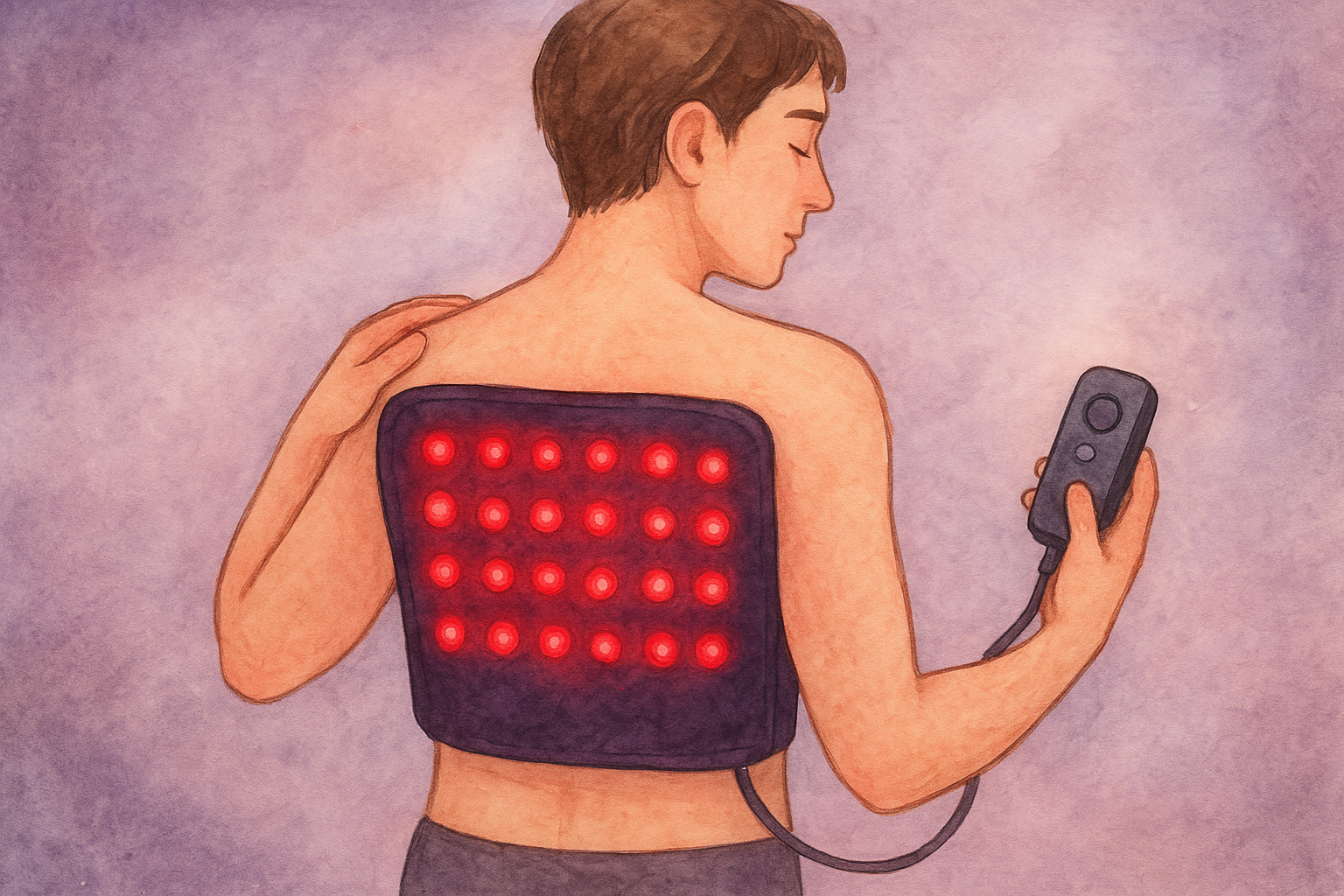
The Novaalab red light therapy pad takes a different physical approach from rigid panels: it is a flexible, wrap-around pad designed to conform to curved body parts like the lower back, knees, shoulders, and joints. Among the best red light therapy devices for targeted pain relief and localized recovery, this pad stands out because it brings the light directly against your skin rather than projecting from a distance.
Key specs that matter
The Novaalab pad runs at 660nm red and 850nm near-infrared wavelengths, similar to most recovery-oriented devices, but its flexible design means it can maintain near-zero distance from the skin surface, which maximizes photon absorption without requiring precise positioning. The pad connects via a straightforward controller unit that lets you adjust session timing with a simple button press. Treatment area varies by model size, with the larger pads covering roughly 12 x 24 inches.
Flexible pads outperform rigid panels for joint-specific and curved body areas because they eliminate the distance problem entirely.
Best for
This pad is specifically suited for localized pain management, targeting areas like the lower back, hips, knees, and shoulders. It also works well for post-exercise muscle recovery when you want to wrap a joint or muscle group directly rather than standing in front of a panel. If you deal with recurring joint discomfort or stiffness, this format is more practical than repositioning a panel across multiple angles.
Pros and cons
The flexible design is the pad’s biggest advantage, making it far easier to apply to awkward body areas than any rigid panel can manage. Setup is minimal, and the controller is simple to operate without reading through instructions first.
The trade-off is coverage area per session. You cannot treat your full torso or back evenly in one go, so full-body recovery routines still require a panel setup alongside this device.
Feature
Detail
Wavelengths
660nm red + 850nm NIR
Design
Flexible wrap pad
Best use case
Joints, lower back, localized areas
How to use it safely
Keep sessions to 10 to 20 minutes per area, and always follow the manufacturer’s timing guidelines to avoid overexposure. Because the pad sits directly against skin, do not use it over open wounds, irritated skin, or areas with impaired sensation.
Price range and warranty
Novaalab pads typically retail between $150 and $250 USD depending on size. They back their products with a 1-year warranty and a 30-day return window.
5. CurrentBody LED light therapy panel
The CurrentBody LED light therapy panel targets the skincare end of the spectrum rather than deep tissue recovery. It uses 633nm red and 830nm near-infrared wavelengths to address collagen stimulation, skin texture, and fine lines, making it one of the more focused options among the best red light therapy devices available for home use today.
Key specs that matter
The panel runs dual wavelengths at 633nm for surface-level skin benefits and 830nm for deeper cellular support. Irradiance sits in the moderate range for a panel of this size, and the unit is designed for close-distance facial and neck treatment. It ships with a stand that props the panel at an optimal angle for seated sessions, removing the need to mount it on a wall. The panel surface covers a broad enough area to treat your full face and neck simultaneously without needing to reposition mid-session.
Consistent close-distance treatment is what separates panels like this from handheld wands when targeting facial skin over time.
Best for
This panel suits users who prioritize facial anti-aging and skin quality above muscle recovery or full-body treatment. If fine lines, uneven tone, and collagen support are your primary goals, the CurrentBody panel delivers a targeted, repeatable protocol that fits easily into a nightly skincare routine.
Pros and cons
The stand-included design makes setup genuinely straightforward, and the panel produces noticeably even light distribution across its surface without hotspots. Build quality feels premium relative to its price bracket.
On the downside, the treatment area does not extend meaningfully below the neck, so you get limited value from it if you also want to address your chest or shoulders. The wavelength range is also narrower than multi-spectrum competitors.
Feature
Detail
Wavelengths
633nm red + 830nm NIR
Primary use
Facial skin, anti-aging
Includes
Angled stand
How to use it safely
Run 10-minute sessions at the recommended distance printed in the manual, four to five times per week. Always wear eye protection rated for your wavelength range throughout every session.
Price range and warranty
The CurrentBody LED panel retails between $300 and $400 USD. CurrentBody backs it with a 2-year warranty and a 60-day return policy.
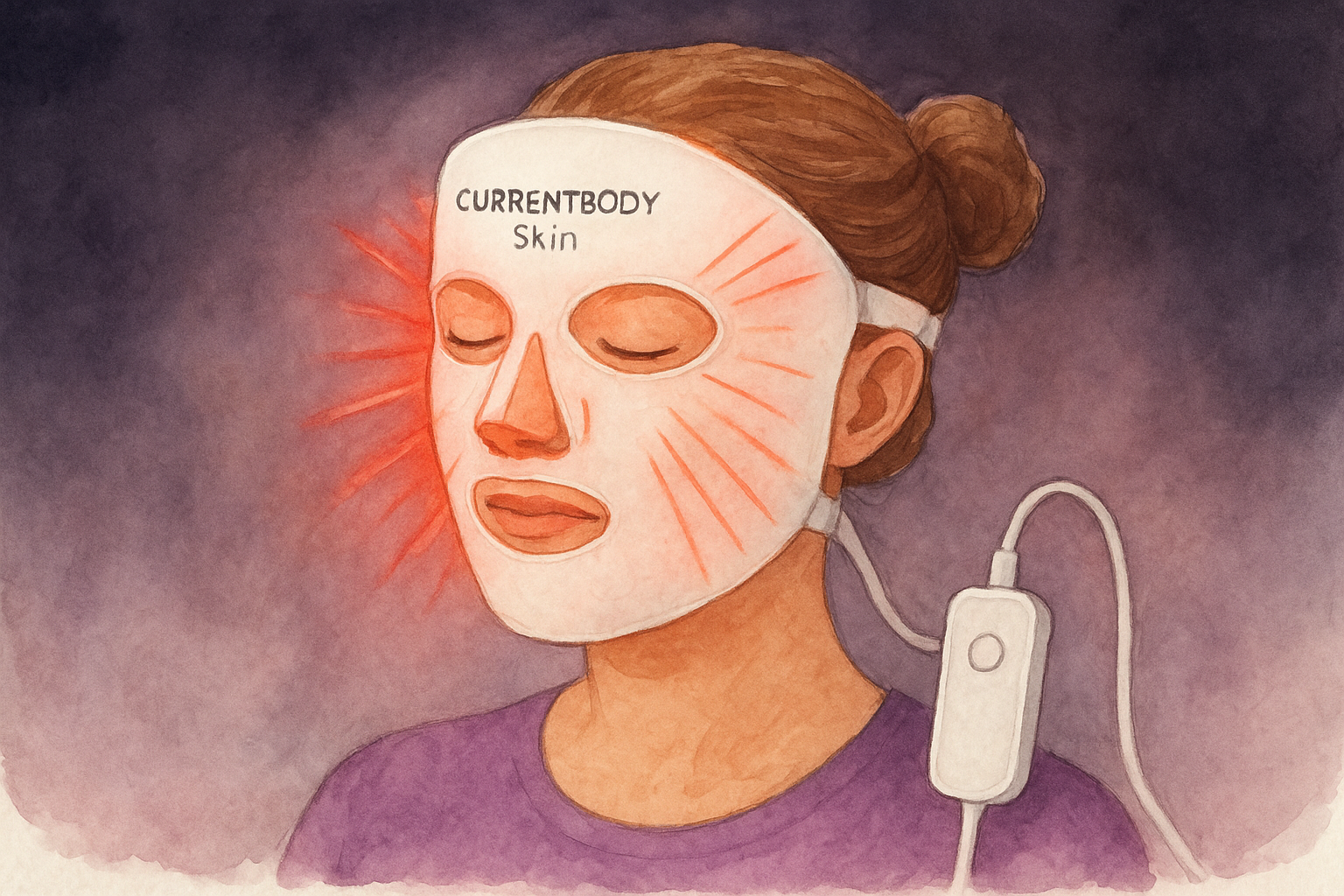
6. CurrentBody Skin Series 2 LED mask
The CurrentBody Skin Series 2 LED mask is a hands-free facial device that wraps around your entire face to deliver 633nm red and 830nm near-infrared wavelengths simultaneously. Unlike panels that require you to sit in front of them, this mask frees you up to do other things during your session, making it one of the more practical entries among the best red light therapy devices built specifically for facial skincare.
Key specs that matter
The Series 2 mask covers your full face, including the forehead, cheeks, nose, and chin, in a single hands-free session. It runs at 633nm for surface skin benefits like collagen stimulation and tone evening, paired with 830nm near-infrared for deeper cellular support. The mask connects to a controller unit that manages session timing automatically, and the flexible silicone body conforms reasonably well across different face shapes without creating uncomfortable pressure points.
A mask format gives you more consistent light coverage across facial contours than a flat panel ever can, since it eliminates the uneven distance problem at the edges of your face.
Best for
This mask suits users focused on facial anti-aging, collagen support, and skin tone who want a repeatable protocol built into their daily routine. It works particularly well for people who already follow a structured skincare regimen and want to add targeted red light sessions without dedicating a separate block of time to sit in front of a panel.
Pros and cons
The hands-free format is the clearest advantage here, since you can wear the mask while reading or relaxing without holding anything in place. The light distribution is even across the face, and the build quality matches what you expect from a brand in this price range.
The main limitation is coverage outside the face. Your neck and chest receive no treatment during a standard session, so users who also want to address those areas will need a separate device alongside this mask.
Feature
Detail
Wavelengths
633nm red + 830nm NIR
Design
Flexible full-face mask
Primary use
Facial anti-aging, skin tone
How to use it safely
Run 10-minute sessions four to five times per week, keeping the mask seated firmly against your face as the manufacturer instructs. Avoid using photosensitizing skincare products like retinoids directly before putting the mask on.
Price range and warranty
The CurrentBody Skin Series 2 retails between $380 and $430 USD. CurrentBody backs it with a 2-year warranty and a 60-day return window.
7. Dr. Dennis Gross FaceWare Pro
The Dr. Dennis Gross FaceWare Pro is a clinical-grade LED face mask that brings dermatologist-developed technology into a home-use format. It targets skin renewal, fine lines, and tone with a combination of wavelengths across its full-face design, making it one of the more medically credentialed entries among the best red light therapy devices you can buy for facial use.
Key specs that matter
The FaceWare Pro uses 162 LEDs delivering red (630nm) and near-infrared (830nm) wavelengths across the full face in a single session. One of its standout features is the treatment time: it completes a full session in just 3 minutes, which is significantly shorter than most comparable masks. The device is FDA-cleared, which gives it a level of regulatory backing that many competing masks at a similar price point cannot claim. The flexible silicone shell conforms to different face shapes, and the cordless design keeps sessions straightforward.
An FDA-cleared designation means the device has passed safety and efficacy review, which matters when you are applying light-based therapy to your face daily.
Best for
This mask suits users who want a fast, repeatable daily skincare protocol without committing to a 10 to 20-minute session. It works well for targeting fine lines, skin texture, and dullness, particularly for people whose schedules make longer sessions impractical. If time efficiency is your primary constraint, the 3-minute treatment window sets this mask apart from most alternatives.
Pros and cons
The FDA clearance and dermatologist credibility give the FaceWare Pro a trust advantage that justifies part of its premium pricing. The 3-minute protocol is genuinely convenient, and the cordless build means no cable management mid-session.
The downside is coverage outside the face. Like every dedicated face mask, it does not address your neck, chest, or any other body area. At this price, you are investing entirely in facial skin outcomes.
Feature
Detail
Wavelengths
630nm red + 830nm NIR
LED count
162 LEDs
Session time
3 minutes
Clearance
FDA-cleared
How to use it safely
Run one session daily, following the 3-minute protocol as directed. Avoid applying photosensitizing products immediately before each session, and wear the device only as instructed, keeping it seated evenly across your face throughout.
Price range and warranty
The FaceWare Pro retails around $435 USD. Dr. Dennis Gross backs it with a 1-year warranty and a standard return policy through authorized retailers.
8. Therabody TheraFace mask
The Therabody TheraFace mask stands out among the best red light therapy devices in the facial category because it combines red LED therapy with additional recovery modalities that most competing masks do not include. Therabody built its reputation on percussive recovery tools, and that same multi-modal philosophy carries into this mask, giving you more than a single-wavelength skincare device.
Key specs that matter
The TheraFace mask delivers red light at 630nm for surface skin stimulation alongside near-infrared at 850nm for deeper cellular support. It also integrates Therabody’s microcurrent technology into the same wearable format, which targets facial muscle tone alongside the light-based skin benefits. The full-face silicone shell covers your forehead, cheeks, nose, and chin evenly, and the session protocol runs for 10 minutes with automatic shutoff so you do not need to track timing manually.
Feature
Detail
Wavelengths
630nm red + 850nm NIR
Additional modalities
Microcurrent
Session duration
10 minutes
Design
Full-face silicone mask
Best for
This mask suits users who want to address both skin quality and facial muscle tone in a single session rather than treating them as separate protocols. It works particularly well for people who already use Therabody products in their recovery routine and want a cohesive, multi-modal approach to facial recovery and rejuvenation.
Combining red light with microcurrent in one device is a genuine time-saver for users who would otherwise need two separate tools to achieve the same outcome.
Pros and cons
The multi-modal format is the clearest differentiator here, and the build quality matches what Therabody delivers across its wider product lineup. The automatic session timer removes any guesswork from your daily routine.
The main limitation is price relative to single-modality masks. You pay a premium for the added microcurrent functionality, so if you only want red light therapy with no interest in microcurrent, cheaper alternatives deliver comparable light-based outcomes.
How to use it safely
Run one 10-minute session daily, and avoid applying photosensitizing skincare products directly before each session. Keep the mask seated evenly against your face throughout to maintain consistent light and microcurrent contact across the full treatment surface.
Price range and warranty
The TheraFace mask retails around $399 USD. Therabody backs it with a 1-year limited warranty and sells through authorized retailers with standard return policies.
9. Solawave Radiant Renewal wand
The Solawave Radiant Renewal wand is a handheld device that combines red light therapy at 660nm with microcurrent, galvanic current, and therapeutic warmth in a single compact tool. Among the best red light therapy devices designed for targeted facial use, it stands apart by packing four modalities into one wand that fits easily into your bathroom drawer or travel bag.
Key specs that matter
The wand delivers red light at 660nm alongside microcurrent stimulation, galvanic current for product absorption, and a gentle warming element sitting around 107°F. It charges via USB-C and runs for roughly 50 minutes per charge, which covers multiple sessions before you need to plug it back in. The treatment head is small by design, built to glide across specific facial zones rather than flood a broad surface area with light simultaneously.
A multi-modality wand format lets you address fine lines, product penetration, and skin tone in one pass, which cuts your routine time without sacrificing results.
Best for
This wand works best for users targeting specific facial zones such as the undereye area, forehead lines, and nasolabial folds where a large panel or mask cannot focus with any precision. It also suits people who travel frequently and want a genuinely portable skincare tool that delivers more than a single therapy in a format that travels without any complications.
Pros and cons
The four-in-one format gives you real value for the price, and the USB-C charging is a practical detail that competing wands at this price point still skip. The ergonomics feel comfortable and balanced during a 5-minute facial session without fatiguing your wrist.
Your main constraint with this wand is coverage speed. Because the treatment head is small, reaching your full face takes noticeably longer than a mask or panel session, which adds time to your routine if you follow a daily full-face protocol.
Feature
Detail
Wavelength
660nm red
Additional modalities
Microcurrent, galvanic current, warmth
Charging
USB-C
How to use it safely
Apply your serum or moisturizer before each session since the galvanic current works best with a conductive product already on your skin. Run sessions for 5 minutes per facial zone, three to five times per week, keeping the wand moving in slow upward strokes as the manual recommends.
Price range and warranty
The Solawave Radiant Renewal wand retails between $149 and $169 USD. Solawave backs it with a 1-year warranty and a 30-day return policy through their direct store and authorized retailers.
10. CurrentBody hair growth helmet
The CurrentBody hair growth helmet takes red light therapy out of the skincare category entirely and applies it directly to your scalp. It is one of the more specialized picks among the best red light therapy devices available for home use, designed specifically to support hair follicle stimulation and slow the progression of thinning using clinically backed wavelengths.
Key specs that matter
The helmet delivers 650nm red light and 830nm near-infrared wavelengths across a full-scalp coverage area, with LEDs distributed throughout the inside shell to reach your entire hairline in a single session. Each session runs for 10 minutes, and the device shuts off automatically so you do not need to track timing yourself. The helmet connects to a wired controller unit, and the shell is designed to fit most head sizes without requiring adjustments between sessions.
Consistent scalp coverage across a full session is the key differentiator between a dedicated helmet and pointing a panel at your head, which leaves the crown and sides unevenly dosed.
Best for
This helmet suits users dealing with early-stage hair thinning or reduced density who want to add a non-invasive, at-home protocol to their hair health routine. It works particularly well alongside other treatments like minoxidil, since the light stimulation supports follicle activity at the cellular level while topical treatments address the scalp environment from the outside.
Pros and cons
The full-scalp LED distribution sets this helmet apart from panel-based approaches, and the automatic 10-minute timer keeps your protocol consistent without adding mental overhead to your morning routine. CurrentBody’s reputation for skincare-grade build quality also carries through here.
Your main limitation is that the device does only one thing: scalp treatment. At this price, it is a dedicated investment with no crossover value for skin or body recovery goals.
Feature
Detail
Wavelengths
650nm red + 830nm NIR
Coverage
Full scalp
Session duration
10 minutes
How to use it safely
Run one 10-minute session daily on a dry, clean scalp with no styling products applied beforehand, as product residue can block light penetration across the follicle surface. Avoid using the helmet over irritated or broken skin on the scalp.
Price range and warranty
The CurrentBody hair growth helmet retails around $549 USD. CurrentBody backs it with a 2-year warranty and a 60-day return window.
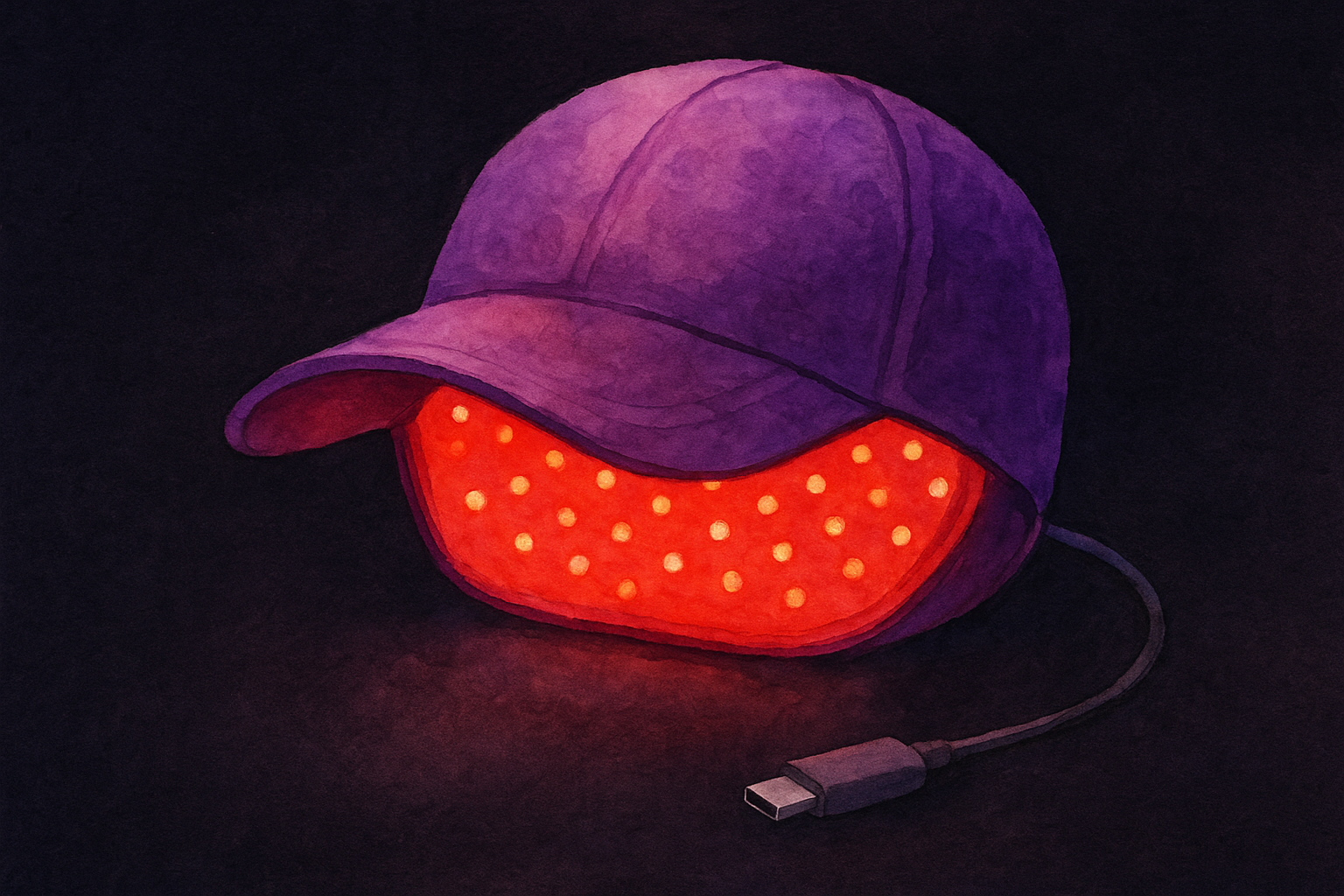
11. HigherDose red light hat
The HigherDose red light hat brings scalp-focused light therapy into a format most people will actually wear consistently: a baseball cap style hat with infrared LEDs embedded into the inner shell. Compared to a rigid helmet, it looks and fits like normal headwear, which removes the friction that causes most recovery devices to sit unused after the first two weeks.
Key specs that matter
The hat runs at 830nm near-infrared wavelengths distributed across the inner cap lining, targeting scalp tissue and follicles during each session. It connects via a USB-C cable to a power bank or wall adapter, giving you flexibility to use it seated at a desk or on the couch without being tethered to a wall outlet. Sessions run for 10 minutes with an automatic shutoff, and the adjustable strap fits most head sizes without modification. Coverage concentrates on the top and crown of the scalp rather than the full hairline perimeter, which is worth noting if thinning at the temples is your primary concern.
Near-infrared at 830nm penetrates deeper into scalp tissue than red wavelengths, making it well-suited for targeting follicles beneath the surface rather than just the skin layer.
Best for
This hat works best for users dealing with crown or top-of-scalp thinning who want a low-profile, wearable protocol that fits naturally into their existing routine. Among the best red light therapy devices in the hair growth category, it is the most practical option for people who dislike the look and feel of a traditional helmet.
Pros and cons
The wearable design is the hat’s biggest advantage, and the USB-C power source keeps it genuinely portable. Build quality is consistent with HigherDose’s wider product lineup.
The coverage limitation at the temples and hairline perimeter is a real trade-off worth weighing before purchasing. The device also targets only one body area, giving you no crossover value for skin or muscle recovery goals.
Feature
Detail
Wavelength
830nm NIR
Charging
USB-C
Session duration
10 minutes
Design
Baseball cap style
How to use it safely
Run one 10-minute session daily on a clean, dry scalp with no styling products in place beforehand, since product buildup reduces light penetration at the follicle level. Keep the hat seated firmly throughout each session to maintain consistent LED contact with your scalp.
Price range and warranty
The HigherDose red light hat retails around $295 USD. HigherDose backs it with a 1-year warranty and sells through their direct store with a standard return policy.
What to pick and what to do next
The best red light therapy devices on this list cover every major use case, but the right one for you depends entirely on your goal. If you want broad body recovery and muscle support, a mid-to-large panel like the Hooga Pro300 or Lifepro BioHeal Plus gives you the most coverage per dollar. For facial skin and anti-aging, the CurrentBody mask or Dr. Dennis Gross FaceWare Pro deliver consistent, targeted results. Hair thinning points you toward the CurrentBody helmet or HigherDose hat, depending on how much coverage your scalp needs.
Red light therapy fits naturally into a broader recovery protocol, and many in our community already pair it with targeted supplementation to support their overall well-being after demanding physical or psychedelic experiences. If you want to go deeper on the recovery side, take a look at the Afterglow Recovery Protocol and see how a structured supplement approach complements the physical tools you are already using.
Lukas Nelpela
writes on neuroscience, mental health, and mindful exploration. With a passion in research-driven wellness and years focused on set & setting, integration, and recovery, he turns complex ideas into clear, usable insight.
You’re staring at your screen, reading the same sentence for the fourth time, and nothing sticks. Your thoughts feel like they’re wading through wet cement. So what is brain fog, exactly? It’s not a medical diagnosis, it’s a catch-all term for that frustrating state of mental cloudiness where focus, memory,
Every process in your body, thinking, moving, recovering, runs on energy produced inside your cells. That energy comes from mitochondria, and when they’re not functioning well, you feel it: brain fog, fatigue, slow recovery, and a general sense of running on empty. Mitochondrial support refers to the nutrients, habits, and
You sit down to focus, stare at your screen, and nothing clicks. Thoughts scatter, simple decisions feel impossible, and your mind moves like it’s stuck in wet concrete. If you’ve been looking up how to get rid of brain fog, you already know the frustration, that heavy, hazy state where
Working nights, rotating schedules, or pulling irregular hours throws your body’s internal clock into a constant state of confusion. Around 20% of the global workforce does some form of shift work, and the majority of those people report poor sleep as their number one complaint. Good sleep hygiene for shift
Stiff ankles affect more than just your squat depth. Limited ankle range of motion can mess with your knees, hips, and lower back, and if you spend long hours on your feet at festivals, retreats, or anywhere that keeps you moving, you’ll feel it. A solid ankle mobility routine takes
We use various cookies on our website. Some are essential for the website to function properly, while others we may only use with your consent. You can find more information about cookies on our website here.
This website uses cookies to improve your experience while you navigate through the website. Out of these cookies, the cookies that are categorized as necessary are stored on your browser as they are essential for the working of basic functionalities of the website. We also use third-party cookies that help us analyze and understand how you use this website. These cookies will be stored on your browser only with your consent. You also have the option to opt-out of these cookies. However, opting out of some of these cookies may have an impact on your browsing experience.
Necessary cookies are absolutely essential for the website to function properly. These cookies anonymously ensure basic functionalities and security features of the website.
Cookie
Duration
Description
cookielawinfo-checkbox-advertisement
1 year
Set by the GDPR Cookie Consent plugin, this cookie records the user consent for the cookies in the "Advertisement" category.
cookielawinfo-checkbox-analytics
11 months
This cookie is set by GDPR Cookie Consent plugin. The cookie is used to store the user consent for the cookies in the category "Analytics".
cookielawinfo-checkbox-functional
11 months
The cookie is set by GDPR cookie consent to record the user consent for the cookies in the category "Functional".
cookielawinfo-checkbox-necessary
11 months
This cookie is set by GDPR Cookie Consent plugin. The cookies is used to store the user consent for the cookies in the category "Necessary".
cookielawinfo-checkbox-others
11 months
This cookie is set by GDPR Cookie Consent plugin. The cookie is used to store the user consent for the cookies in the category "Other.
cookielawinfo-checkbox-performance
11 months
This cookie is set by GDPR Cookie Consent plugin. The cookie is used to store the user consent for the cookies in the category "Performance".
CookieLawInfoConsent
1 year
CookieYes sets this cookie to record the default button state of the corresponding category and the status of CCPA. It works only in coordination with the primary cookie.
elementor
never
The website's WordPress theme uses this cookie. It allows the website owner to implement or change the website's content in real-time.
fb_event_id_atc
30 minutes
Used to match client and server events for Meta Conversion API deduplication. Contains only anonymous technical IDs; no personal data stored.
fb_event_id_ic
30 minutes
Used to match client and server events for Meta Conversion API deduplication. Contains only anonymous technical IDs; no personal data stored.
fb_event_id_pur
30 minutes
Used to match client and server events for Meta Conversion API deduplication. Contains only anonymous technical IDs; no personal data stored.
fb_event_id_vc
30 minutes
Used to match client and server events for Meta Conversion API deduplication. Contains only anonymous technical IDs; no personal data stored.
rc::a
never
This cookie is set by the Google recaptcha service to identify bots to protect the website against malicious spam attacks.
rc::c
session
This cookie is set by the Google recaptcha service to identify bots to protect the website against malicious spam attacks.
viewed_cookie_policy
11 months
The cookie is set by the GDPR Cookie Consent plugin and is used to store whether or not user has consented to the use of cookies. It does not store any personal data.
VISITOR_PRIVACY_METADATA
6 months
YouTube sets this cookie to store the user's cookie consent state for the current domain.
wpEmojiSettingsSupports
session
WordPress sets this cookie when a user interacts with emojis on a WordPress site. It helps determine if the user's browser can display emojis properly.
Functional cookies help to perform certain functions, such as sharing website content on social media platforms, collecting feedback, and other third-party functions.
Cookie
Duration
Description
sib_cuid
6 months
SendinBlue sets this cookie to store unique visits.
VISITOR_INFO1_LIVE
6 months
A cookie set by YouTube to measure bandwidth that determines whether the user gets the new or old player interface.
yt-remote-cast-available
session
The yt-remote-cast-available cookie is used to store the user's preferences regarding whether casting is available on their YouTube video player.
yt-remote-cast-installed
session
The yt-remote-cast-installed cookie is used to store the user's video player preferences using embedded YouTube video.
yt-remote-connected-devices
never
YouTube sets this cookie to store the user's video preferences using embedded YouTube videos.
yt-remote-device-id
never
YouTube sets this cookie to store the user's video preferences using embedded YouTube videos.
yt-remote-fast-check-period
session
The yt-remote-fast-check-period cookie is used by YouTube to store the user's video player preferences for embedded YouTube videos.
yt-remote-session-app
session
The yt-remote-session-app cookie is used by YouTube to store user preferences and information about the interface of the embedded YouTube video player.
yt-remote-session-name
session
The yt-remote-session-name cookie is used by YouTube to store the user's video player preferences using embedded YouTube video.
ytidb::LAST_RESULT_ENTRY_KEY
never
The cookie ytidb::LAST_RESULT_ENTRY_KEY is used by YouTube to store the last search result entry that was clicked by the user. This information is used to improve the user experience by providing more relevant search results in the future.
Performance cookies are used to understand and analyze key website performance indexes, which helps in providing a better user experience for visitors.
Cookie
Duration
Description
SRM_B
1 year 24 days
Used by Microsoft Advertising as a unique ID for visitors.
Analytical cookies are used to understand how visitors interact with the website. These cookies help provide information on metrics such as the number of visitors, bounce rate, traffic source, etc.
Cookie
Duration
Description
_clck
1 year
Microsoft Clarity sets this cookie to retain the browser's Clarity User ID and settings exclusive to that website. This guarantees that actions taken during subsequent visits to the same website will be linked to the same user ID.
_clsk
1 day
Microsoft Clarity sets this cookie to store and consolidate a user's pageviews into a single session recording.
_fbp
3 months
Facebook sets this cookie to display advertisements when either on Facebook or on a digital platform powered by Facebook advertising after visiting the website.
_ga
1 year 1 month 4 days
Google Analytics sets this cookie to calculate visitor, session and campaign data and track site usage for the site's analytics report. The cookie stores information anonymously and assigns a randomly generated number to recognise unique visitors.
_ga_*
1 year 1 month 4 days
Google Analytics sets this cookie to store and count page views.
_gcl_au
3 months
Google Tag Manager sets the cookie to experiment advertisement efficiency of websites using their services.
_hjSession_*
1 hour
Hotjar sets this cookie to ensure data from subsequent visits to the same site is attributed to the same user ID, which persists in the Hotjar User ID, which is unique to that site.
_hjSessionUser_*
1 year
Hotjar sets this cookie to ensure data from subsequent visits to the same site is attributed to the same user ID, which persists in the Hotjar User ID, which is unique to that site.
_hjTLDTest
session
To determine the most generic cookie path that has to be used instead of the page hostname, Hotjar sets the _hjTLDTest cookie to store different URL substring alternatives until it fails.
CLID
1 year
Microsoft Clarity set this cookie to store information about how visitors interact with the website. The cookie helps to provide an analysis report. The data collection includes the number of visitors, where they visit the website, and the pages visited.
MR
7 days
This cookie, set by Bing, is used to collect user information for analytics purposes.
sbjs_current
session
Sourcebuster sets this cookie to identify the source of a visit and stores user action information in cookies. This analytical and behavioural cookie is used to enhance the visitor experience on the website.
sbjs_current_add
session
Sourcebuster sets this cookie to identify the source of a visit and stores user action information in cookies. This analytical and behavioural cookie is used to enhance the visitor experience on the website.
sbjs_first
session
Sourcebuster sets this cookie to identify the source of a visit and stores user action information in cookies. This analytical and behavioural cookie is used to enhance the visitor experience on the website.
sbjs_first_add
session
Sourcebuster sets this cookie to identify the source of a visit and stores user action information in cookies. This analytical and behavioural cookie is used to enhance the visitor experience on the website.
sbjs_migrations
session
Sourcebuster sets this cookie to identify the source of a visit and stores user action information in cookies. This analytical and behavioural cookie is used to enhance the visitor experience on the website.
sbjs_session
1 hour
Sourcebuster sets this cookie to identify the source of a visit and stores user action information in cookies. This analytical and behavioural cookie is used to enhance the visitor experience on the website.
sbjs_udata
session
Sourcebuster sets this cookie to identify the source of a visit and stores user action information in cookies. This analytical and behavioural cookie is used to enhance the visitor experience on the website.
SM
session
Microsoft Clarity cookie set this cookie for synchronizing the MUID across Microsoft domains.
YSC
session
YSC cookie is set by Youtube and is used to track the views of embedded videos on Youtube pages.
Advertising cookies are used to deliver relevant advertisements and marketing campaigns to visitors. These cookies track visitors across websites and collect information to deliver tailored advertisements.
Cookie
Duration
Description
_rdt_uuid
3 months
Reddit sets this cookie to build a profile of your interests and show you relevant ads.
ANONCHK
10 minutes
The ANONCHK cookie, set by Bing, is used to store a user's session ID and verify ads' clicks on the Bing search engine. The cookie helps in reporting and personalization as well.
MUID
1 year 24 days
Bing sets this cookie to recognise unique web browsers visiting Microsoft sites. This cookie is used for advertising, site analytics, and other operations.
test_cookie
15 minutes
doubleclick.net sets this cookie to determine if the user's browser supports cookies.
yt.innertube::nextId
never
YouTube sets this cookie to register a unique ID to store data on what videos from YouTube the user has seen.
yt.innertube::requests
never
YouTube sets this cookie to register a unique ID to store data on what videos from YouTube the user has seen.