If you’ve ever woken up after a psychedelic experience with a locked jaw, tight shoulders, or a neck that barely turns, you already know the toll that sustained muscle tension can take on your body. That tightness doesn’t just sit on the surface, it often lives deeper, in the connective tissue known as fascia. And that’s exactly where myofascial release techniques come in.
Myofascial release is a hands-on therapy (or self-treatment practice) that targets restrictions in the fascial network to relieve chronic pain, reduce stiffness, and restore range of motion. Whether you’re dealing with post-trip jaw clenching, everyday tension headaches, or lingering soreness that won’t quit, these techniques offer a practical, drug-free path to recovery.
At Afterglow Supplements, we build recovery protocols for people who push their minds and bodies into intense experiences. Our formulas address the biochemical side of recovery, replenishing neurotransmitters, easing anxiety, supporting sleep. But physical tension needs a physical solution. That’s why we put this guide together: to give you step-by-step methods for releasing fascial restrictions on your own or with a trained therapist, so your body can recover as fully as your mind does.
What myofascial release is and how it works
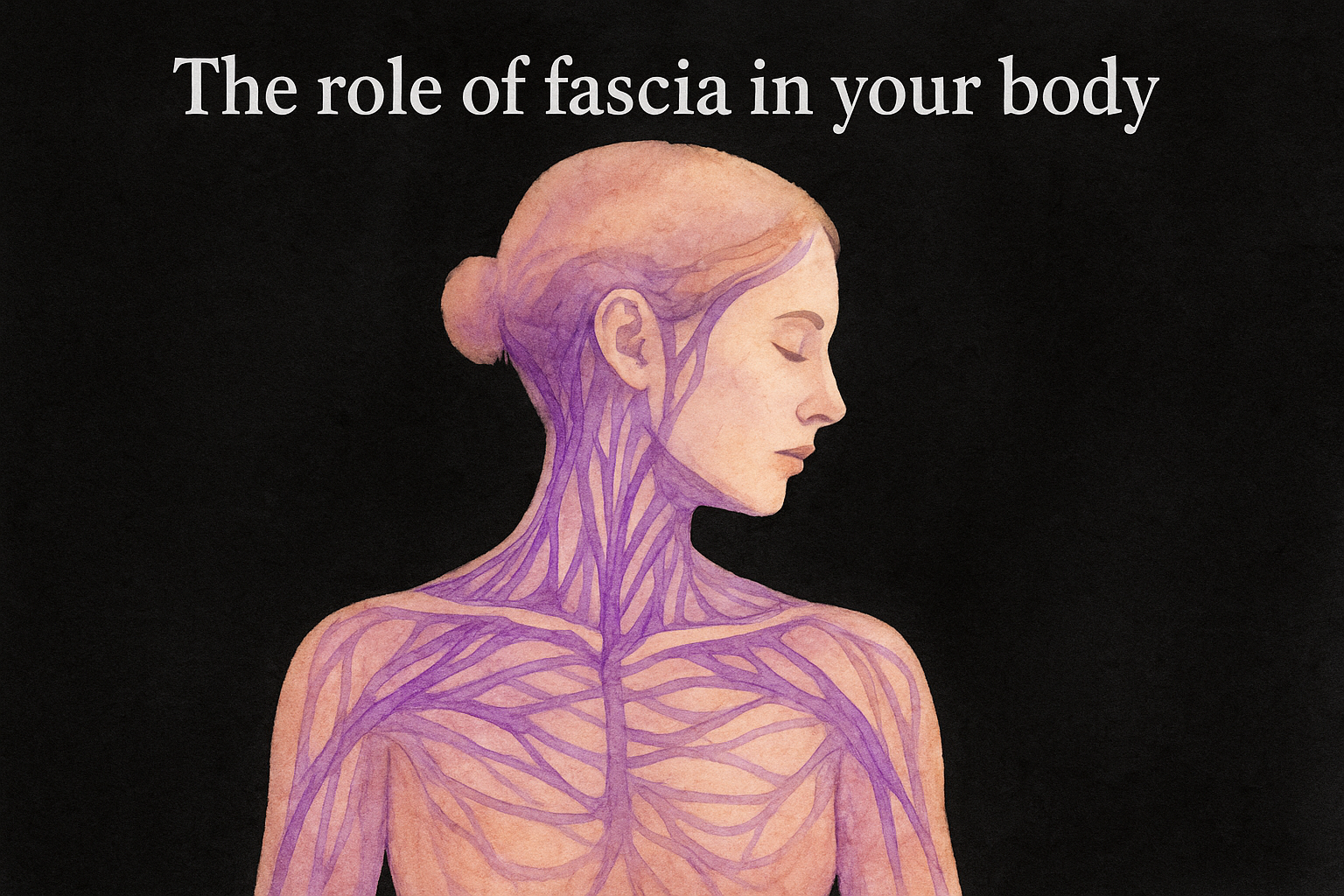
Fascia is a sheet of connective tissue that wraps around every muscle, bone, nerve, and organ in your body. Think of it as a three-dimensional web that runs continuously from head to toe, holding everything in place and allowing smooth, coordinated movement. When this tissue is healthy, it glides freely and stays well-hydrated. When it tightens or dehydrates, it can pull on surrounding structures, compress nerves, and create persistent, deep pain that stretching alone cannot fix.
The role of fascia in your body
Fascia is made mostly of densely packed collagen fibers and water. Under normal conditions, it remains pliable and responsive, letting your muscles fire and lengthen without friction or restriction. Physical stress, injury, dehydration, prolonged postures, or intense experiences like sustained jaw clenching can cause the fascia to thicken and harden, forming what practitioners call "restrictions." These restrictions don’t appear on X-rays or MRIs, which is one reason fascial pain often goes undiagnosed despite being very real and very debilitating.
Restrictions rarely stay confined to where they started. A tight band in your hip fascia can pull tension upward through your lower back, across your shoulders, and eventually contribute to headaches or limited neck rotation. Fascial lines are interconnected, meaning a problem in one region often expresses itself as pain somewhere completely different. This is why treating only the site of pain frequently produces no lasting change.
Fascia responds to sustained, gentle pressure applied over time, not to aggressive force. That distinction separates effective myofascial work from ordinary deep-tissue massage.
How pressure and sustained holds release restrictions
Myofascial release techniques work by applying slow, controlled pressure directly into restricted fascial tissue and holding it there. Unlike conventional massage, which primarily works across muscle fibers, myofascial release maintains pressure for 90 seconds or longer, giving the tissue enough time to soften, rehydrate, and let go of its mechanical tension. Researchers sometimes describe this response in terms of thixotropy, the property of a substance to become more fluid when subjected to sustained mechanical input.
Your therapist’s hands, or your own body weight on a tool like a foam roller, locate areas where the fascia feels dense, immobile, or tender, then sink into that tissue without sliding across the surface. You’re waiting for a release, a subtle spreading or softening sensation that signals the tissue is responding. As the fascia releases, blood flow increases to the area, local nerve compression decreases, and the muscles anchored to that tissue can finally return to their natural resting length. That’s when you feel the change: not just less pain, but genuinely improved mobility.
Benefits and who it helps
Myofascial release techniques deliver results that go beyond temporary pain relief. By targeting restricted fascial tissue at its source, this approach can produce lasting changes in how your body moves, feels, and recovers. The improvements compound over time, especially when you combine myofascial work with proper hydration, sleep, and nutrient support.
Physical and neurological benefits
Releasing fascial restrictions reduces localized nerve compression, which directly lowers pain signals traveling to your brain. Many people also report a significant drop in muscle soreness and tension headaches within the first few sessions. Over a longer period, consistent myofascial work improves joint range of motion, corrects postural imbalances caused by chronically tight fascial lines, and speeds up overall tissue recovery after physically demanding activities.
The combination of reduced nerve compression and improved blood flow to previously restricted tissue often creates noticeable relief faster than stretching or conventional massage alone.
Beyond the mechanical effects, myofascial release also activates the parasympathetic nervous system, shifting your body out of a stress response and into a rest-and-repair state. That neurological shift matters, especially if you’re recovering from an intense experience where your nervous system spent hours in overdrive.
Who benefits most from this approach
Anyone dealing with chronic muscle tightness, recurring headaches, jaw clenching, or unexplained deep pain that hasn’t responded to conventional treatment stands to gain the most. Athletes use myofascial release to maintain tissue health and shorten recovery windows between training sessions. People who sit at desks for long hours often develop fascial restrictions in the hips, chest, and neck that standard stretching never fully resolves.
For those coming out of a psychedelic experience with physical tension baked into their muscles and jaw, myofascial release offers a structured, body-level method to complete the recovery that supplements begin.
Safety, risks, and when to avoid it
Myofascial release techniques are generally safe for most healthy adults, but applying too much pressure too fast can cause real harm. The tissue needs time to respond, and forcing a release by pressing harder or moving aggressively across the skin only creates micro-trauma in the muscle and surrounding fascia, leaving you sorer than before. Start with lighter pressure, especially if you’re new to this work or your muscles are already inflamed from a recent intense experience.
Risks to know before you start
The most common side effect is temporary soreness lasting 24 to 48 hours after a session, similar to what you feel after a hard workout. Your tissues are rehydrating and adjusting, and that process is uncomfortable for some people. Less common reactions include temporary bruising, lightheadedness, or an emotional release as your nervous system shifts out of a prolonged tension state. None of these are dangerous on their own, but they signal that you should slow down and drink more water after each session.
Staying well-hydrated before and after myofascial work directly improves how your fascia responds and how quickly discomfort clears.
When to skip myofascial release
Certain conditions make myofascial work unsafe, and you should avoid all forms of direct tissue pressure if any of the following apply to you:
Open wounds, bruises, or skin infections in the area you intend to treat
Diagnosed blood clotting disorders or if you are currently taking blood thinners
Active inflammation or a flare-up of conditions like rheumatoid arthritis
Osteoporosis or fragile bone density, where sustained pressure carries a fracture risk
Pregnancy, particularly around the abdomen and lower back
If you have a recent injury, chronic medical condition, or you’re recovering from surgery, consult a licensed physical therapist or physician before adding myofascial release to your routine. Self-treatment works well within safe limits, but knowing where those limits are protects you from setbacks.
How to do self myofascial release step by step
Self-applied myofascial release techniques give you direct access to your own tissue at any time, without a therapist. You need very little equipment, but you do need patience and body awareness to do this effectively. The core rule is simple: find a tender or restricted spot, apply steady pressure, and wait for the tissue to soften before you move on.
Choose your tool and target area
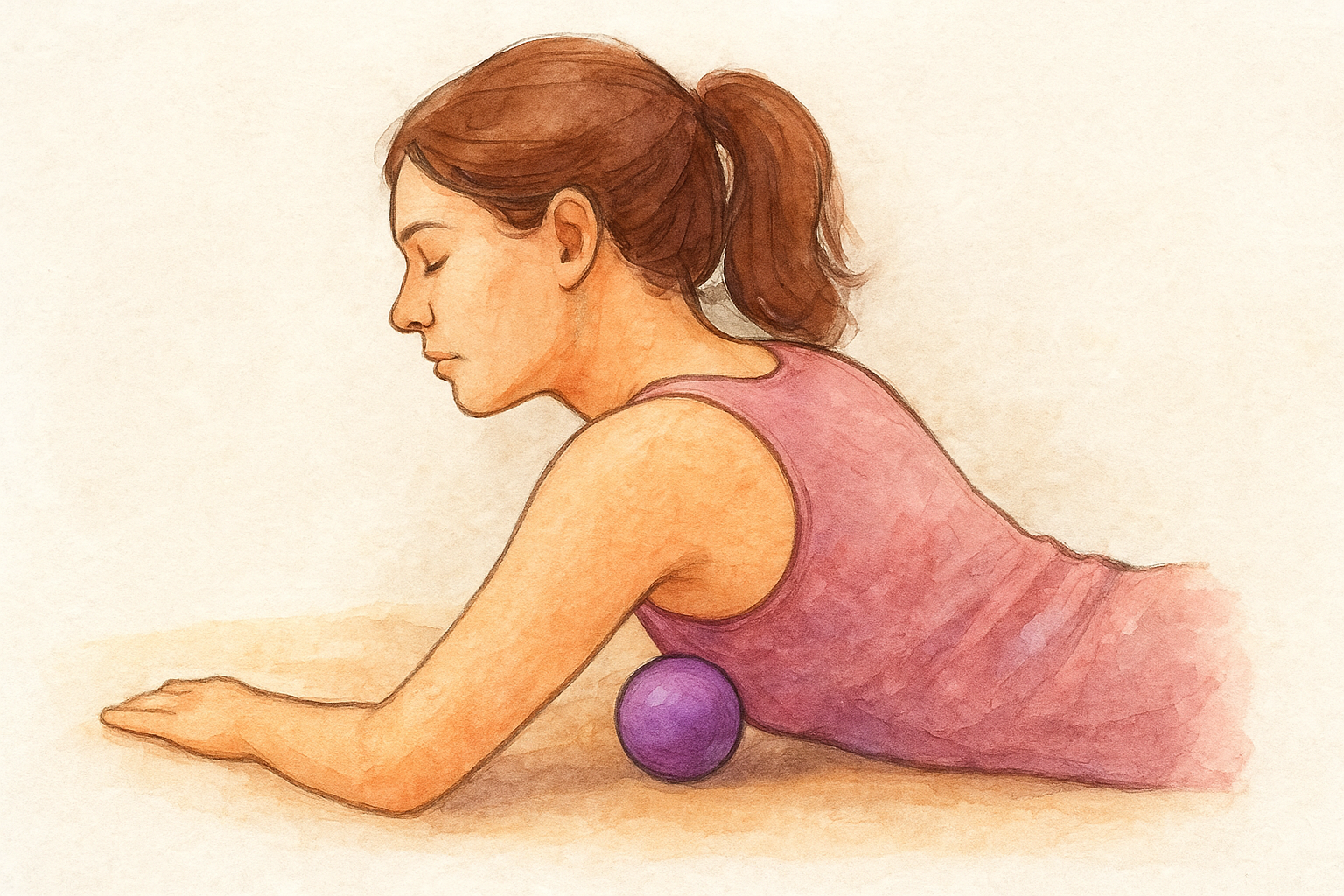
Your tool determines how much pressure reaches the fascia. A foam roller covers broad areas like your upper back, IT band, and calves well. A lacrosse ball or massage ball lets you target smaller, harder-to-reach areas like your jaw muscles, the base of your skull, the arch of your foot, or the space between your shoulder blade and spine.
Before you start, scan your body by gently pressing different areas with your fingertips. You’re looking for spots that feel dense, knotted, or noticeably tender compared to the surrounding tissue. Those are your starting points.
Start with only two or three areas per session so your nervous system has time to process and respond to the work.
Apply pressure and hold
Position your body so the tool sits directly on your target area, then gradually lower your weight onto it. You should feel a noticeable ache or pressure, but not sharp pain. If something feels sharp, shift slightly off that spot.
Hold the position without rolling or moving for 90 seconds to two full minutes. You’re waiting for a release, a softening or spreading sensation that tells you the fascia is responding. Once you feel that shift, you can slowly roll a few centimeters to find the next restricted spot.
Getting the most from myofascial release techniques comes down to consistency and patience. A single session can produce noticeable change, but lasting tissue remodeling happens over weeks of regular practice. Aim for three to four sessions per week, treating each area for no more than two minutes before moving on. Overdoing a single spot in one sitting does not speed things up; it just creates unnecessary soreness that delays your next session.
Build frequency into your routine
Your fascia responds to repeated, sustained input over time, not to occasional intense sessions. Short daily sessions outperform long weekly ones for most people. Work myofascial release into your morning or evening routine by pairing it with something you already do, like breathing exercises or a wind-down stretch before sleep. Five to ten minutes per day is enough to drive real, measurable improvement in mobility and tissue quality if you stay consistent week over week.
Avoid the most common errors
The biggest mistake most people make is moving too fast across the tissue, treating the roller like a massage tool rather than a release tool. Rolling back and forth rapidly creates friction and surface-level stimulation, but it does not give the fascia enough sustained pressure to actually release. Stop on each tender spot and hold it until you feel the tissue shift.
Hydration is one of the most overlooked factors: dehydrated fascia is stiffer, less responsive, and slower to recover after any manual therapy.
A second frequent error is skipping the areas that aren’t obviously painful. Fascial restrictions often develop quietly in regions like your chest, inner thighs, or upper arms before they start pulling tension into a more noticeable area. Treating your whole body systematically, not just the spots that hurt today, produces far better long-term outcomes than chasing pain from session to session.
Key takeaways
Myofascial release techniques work because they target the root cause of deep, persistent tension rather than just the surface symptoms. Your fascia responds to slow, sustained pressure, not speed or force, and consistent short sessions over several weeks produce far better results than sporadic intense ones. Hydration, breathing, and patience are the three factors that separate effective practice from wasted effort.
Your physical recovery after any intense experience, whether that is a grueling training block, a long event, or a psychedelic journey, runs on multiple tracks at once. Bodywork addresses the tissue layer. Nutritional and neurochemical recovery requires a different approach entirely. If you are dealing with the aftermath of a psychedelic experience, jaw tension and muscle soreness are only part of what your body needs to resolve. The Afterglow Recovery Protocol is designed to handle the biochemical side of that recovery, so your body and mind can both return to baseline fully.
Lukas Nelpela
writes on neuroscience, mental health, and mindful exploration. With a passion in research-driven wellness and years focused on set & setting, integration, and recovery, he turns complex ideas into clear, usable insight.
Sleep quality shapes how you think, feel, and recover, whether you’re bouncing back from a tough week or integrating a psychedelic experience. The Harvard sleep hygiene guidelines, developed by researchers at Harvard Medical School, remain some of the most cited and practical recommendations for improving rest. They’re not trendy hacks
Your mitochondria produce roughly 90% of the energy your body runs on. Every thought, every heartbeat, every moment of focus or fatigue traces back to these tiny organelles inside your cells. When they’re thriving, you feel sharp, resilient, and recharged. When they’re not, you feel it, brain fog, sluggish recovery,
Stiff hips, locked-up shoulders, a jaw that still feels like a vice grip from last weekend, your body keeps a receipt for everything you put it through. Whether you’re recovering from a heavy festival, an intense psychedelic session, or just sitting at a desk for ten hours straight, mobility work
You already know the drill: you’re lying in bed after a long day (or a long night), scrolling your phone, and sleep feels miles away. Your brain won’t shut off, your eyes sting, and that melatonin you took 40 minutes ago hasn’t kicked in. One of the simplest fixes? Blue
You don’t need a cushion, a quiet room, or even ten free minutes to start meditating. Walking meditation takes something you already do every day, putting one foot in front of the other, and turns it into a focused, grounding practice. If you’ve been searching for walking meditation steps that
We use various cookies on our website. Some are essential for the website to function properly, while others we may only use with your consent. You can find more information about cookies on our website here.
This website uses cookies to improve your experience while you navigate through the website. Out of these cookies, the cookies that are categorized as necessary are stored on your browser as they are essential for the working of basic functionalities of the website. We also use third-party cookies that help us analyze and understand how you use this website. These cookies will be stored on your browser only with your consent. You also have the option to opt-out of these cookies. However, opting out of some of these cookies may have an impact on your browsing experience.
Necessary cookies are absolutely essential for the website to function properly. These cookies anonymously ensure basic functionalities and security features of the website.
Cookie
Duration
Description
cookielawinfo-checkbox-advertisement
1 year
Set by the GDPR Cookie Consent plugin, this cookie records the user consent for the cookies in the "Advertisement" category.
cookielawinfo-checkbox-analytics
11 months
This cookie is set by GDPR Cookie Consent plugin. The cookie is used to store the user consent for the cookies in the category "Analytics".
cookielawinfo-checkbox-functional
11 months
The cookie is set by GDPR cookie consent to record the user consent for the cookies in the category "Functional".
cookielawinfo-checkbox-necessary
11 months
This cookie is set by GDPR Cookie Consent plugin. The cookies is used to store the user consent for the cookies in the category "Necessary".
cookielawinfo-checkbox-others
11 months
This cookie is set by GDPR Cookie Consent plugin. The cookie is used to store the user consent for the cookies in the category "Other.
cookielawinfo-checkbox-performance
11 months
This cookie is set by GDPR Cookie Consent plugin. The cookie is used to store the user consent for the cookies in the category "Performance".
CookieLawInfoConsent
1 year
CookieYes sets this cookie to record the default button state of the corresponding category and the status of CCPA. It works only in coordination with the primary cookie.
elementor
never
The website's WordPress theme uses this cookie. It allows the website owner to implement or change the website's content in real-time.
fb_event_id_atc
30 minutes
Used to match client and server events for Meta Conversion API deduplication. Contains only anonymous technical IDs; no personal data stored.
fb_event_id_ic
30 minutes
Used to match client and server events for Meta Conversion API deduplication. Contains only anonymous technical IDs; no personal data stored.
fb_event_id_pur
30 minutes
Used to match client and server events for Meta Conversion API deduplication. Contains only anonymous technical IDs; no personal data stored.
fb_event_id_vc
30 minutes
Used to match client and server events for Meta Conversion API deduplication. Contains only anonymous technical IDs; no personal data stored.
rc::a
never
This cookie is set by the Google recaptcha service to identify bots to protect the website against malicious spam attacks.
rc::c
session
This cookie is set by the Google recaptcha service to identify bots to protect the website against malicious spam attacks.
viewed_cookie_policy
11 months
The cookie is set by the GDPR Cookie Consent plugin and is used to store whether or not user has consented to the use of cookies. It does not store any personal data.
VISITOR_PRIVACY_METADATA
6 months
YouTube sets this cookie to store the user's cookie consent state for the current domain.
wpEmojiSettingsSupports
session
WordPress sets this cookie when a user interacts with emojis on a WordPress site. It helps determine if the user's browser can display emojis properly.
Functional cookies help to perform certain functions, such as sharing website content on social media platforms, collecting feedback, and other third-party functions.
Cookie
Duration
Description
sib_cuid
6 months
SendinBlue sets this cookie to store unique visits.
VISITOR_INFO1_LIVE
6 months
A cookie set by YouTube to measure bandwidth that determines whether the user gets the new or old player interface.
yt-remote-cast-available
session
The yt-remote-cast-available cookie is used to store the user's preferences regarding whether casting is available on their YouTube video player.
yt-remote-cast-installed
session
The yt-remote-cast-installed cookie is used to store the user's video player preferences using embedded YouTube video.
yt-remote-connected-devices
never
YouTube sets this cookie to store the user's video preferences using embedded YouTube videos.
yt-remote-device-id
never
YouTube sets this cookie to store the user's video preferences using embedded YouTube videos.
yt-remote-fast-check-period
session
The yt-remote-fast-check-period cookie is used by YouTube to store the user's video player preferences for embedded YouTube videos.
yt-remote-session-app
session
The yt-remote-session-app cookie is used by YouTube to store user preferences and information about the interface of the embedded YouTube video player.
yt-remote-session-name
session
The yt-remote-session-name cookie is used by YouTube to store the user's video player preferences using embedded YouTube video.
ytidb::LAST_RESULT_ENTRY_KEY
never
The cookie ytidb::LAST_RESULT_ENTRY_KEY is used by YouTube to store the last search result entry that was clicked by the user. This information is used to improve the user experience by providing more relevant search results in the future.
Performance cookies are used to understand and analyze key website performance indexes, which helps in providing a better user experience for visitors.
Cookie
Duration
Description
SRM_B
1 year 24 days
Used by Microsoft Advertising as a unique ID for visitors.
Analytical cookies are used to understand how visitors interact with the website. These cookies help provide information on metrics such as the number of visitors, bounce rate, traffic source, etc.
Cookie
Duration
Description
_clck
1 year
Microsoft Clarity sets this cookie to retain the browser's Clarity User ID and settings exclusive to that website. This guarantees that actions taken during subsequent visits to the same website will be linked to the same user ID.
_clsk
1 day
Microsoft Clarity sets this cookie to store and consolidate a user's pageviews into a single session recording.
_fbp
3 months
Facebook sets this cookie to display advertisements when either on Facebook or on a digital platform powered by Facebook advertising after visiting the website.
_ga
1 year 1 month 4 days
Google Analytics sets this cookie to calculate visitor, session and campaign data and track site usage for the site's analytics report. The cookie stores information anonymously and assigns a randomly generated number to recognise unique visitors.
_ga_*
1 year 1 month 4 days
Google Analytics sets this cookie to store and count page views.
_gcl_au
3 months
Google Tag Manager sets the cookie to experiment advertisement efficiency of websites using their services.
_hjSession_*
1 hour
Hotjar sets this cookie to ensure data from subsequent visits to the same site is attributed to the same user ID, which persists in the Hotjar User ID, which is unique to that site.
_hjSessionUser_*
1 year
Hotjar sets this cookie to ensure data from subsequent visits to the same site is attributed to the same user ID, which persists in the Hotjar User ID, which is unique to that site.
_hjTLDTest
session
To determine the most generic cookie path that has to be used instead of the page hostname, Hotjar sets the _hjTLDTest cookie to store different URL substring alternatives until it fails.
CLID
1 year
Microsoft Clarity set this cookie to store information about how visitors interact with the website. The cookie helps to provide an analysis report. The data collection includes the number of visitors, where they visit the website, and the pages visited.
MR
7 days
This cookie, set by Bing, is used to collect user information for analytics purposes.
sbjs_current
session
Sourcebuster sets this cookie to identify the source of a visit and stores user action information in cookies. This analytical and behavioural cookie is used to enhance the visitor experience on the website.
sbjs_current_add
session
Sourcebuster sets this cookie to identify the source of a visit and stores user action information in cookies. This analytical and behavioural cookie is used to enhance the visitor experience on the website.
sbjs_first
session
Sourcebuster sets this cookie to identify the source of a visit and stores user action information in cookies. This analytical and behavioural cookie is used to enhance the visitor experience on the website.
sbjs_first_add
session
Sourcebuster sets this cookie to identify the source of a visit and stores user action information in cookies. This analytical and behavioural cookie is used to enhance the visitor experience on the website.
sbjs_migrations
session
Sourcebuster sets this cookie to identify the source of a visit and stores user action information in cookies. This analytical and behavioural cookie is used to enhance the visitor experience on the website.
sbjs_session
1 hour
Sourcebuster sets this cookie to identify the source of a visit and stores user action information in cookies. This analytical and behavioural cookie is used to enhance the visitor experience on the website.
sbjs_udata
session
Sourcebuster sets this cookie to identify the source of a visit and stores user action information in cookies. This analytical and behavioural cookie is used to enhance the visitor experience on the website.
SM
session
Microsoft Clarity cookie set this cookie for synchronizing the MUID across Microsoft domains.
YSC
session
YSC cookie is set by Youtube and is used to track the views of embedded videos on Youtube pages.
Advertising cookies are used to deliver relevant advertisements and marketing campaigns to visitors. These cookies track visitors across websites and collect information to deliver tailored advertisements.
Cookie
Duration
Description
_rdt_uuid
3 months
Reddit sets this cookie to build a profile of your interests and show you relevant ads.
ANONCHK
10 minutes
The ANONCHK cookie, set by Bing, is used to store a user's session ID and verify ads' clicks on the Bing search engine. The cookie helps in reporting and personalization as well.
MUID
1 year 24 days
Bing sets this cookie to recognise unique web browsers visiting Microsoft sites. This cookie is used for advertising, site analytics, and other operations.
test_cookie
15 minutes
doubleclick.net sets this cookie to determine if the user's browser supports cookies.
yt.innertube::nextId
never
YouTube sets this cookie to register a unique ID to store data on what videos from YouTube the user has seen.
yt.innertube::requests
never
YouTube sets this cookie to register a unique ID to store data on what videos from YouTube the user has seen.