Physiological Sigh Breathing: How It Works and How to Do It
17 min read
Your nervous system doesn’t always come down as smoothly as you’d like, whether after a stressful day, a sleepless night, or an intense psychedelic experience. When anxiety spikes and your body feels locked in overdrive, you need something that works in seconds, not hours. That’s where physiological sigh breathing comes in: a specific, science-backed breathing pattern that can calm your stress response faster than any other known breathing technique.
Unlike generic "just breathe" advice, the physiological sigh has a precise mechanism rooted in neuroscience. Researchers at Stanford University have studied it extensively, and the results are striking, a deliberate double inhale followed by an extended exhale can shift your autonomic nervous system from sympathetic (fight-or-flight) to parasympathetic (rest-and-recover) dominance almost immediately.
At Afterglow Supplements, we build science-based recovery protocols for people who push their neurochemistry to the edges, through psychedelic journeys, festival weekends, or deep therapeutic work. Supplements handle the nutritional and neurochemical side of recovery, but your nervous system also needs real-time tools to regulate itself when tension, jaw clenching, or post-experience anxiety won’t let go. The physiological sigh is one of the most effective tools we recommend alongside our protocol, and it costs nothing but a few conscious breaths.
This article breaks down exactly what the physiological sigh is, why it works at a biological level, how to perform it step by step, and when to use it for maximum effect.
What physiological sigh breathing is
Physiological sigh breathing is a specific two-inhale, one-extended-exhale breathing pattern that directly activates your parasympathetic nervous system. The pattern gets its name from the spontaneous sighs your body produces automatically, roughly once every one to five minutes, to prevent the collapse of tiny air sacs in your lungs called alveoli. When you do it deliberately, you get the same rapid nervous system reset on demand, whenever you need it most.
Your body already knows this pattern. You are just learning to use it intentionally.
The reflex your body already knows
Humans and most mammals produce physiological sighs involuntarily throughout the day and during sleep. You have probably noticed it yourself: a sudden deep breath followed by a long, slow exhale that arrives without any conscious intention. Researchers at Stanford, including Dr. Andrew Huberman and his colleagues, identified that this reflex originates in a small cluster of neurons in the brainstem called the pre-Bötzinger complex. These neurons monitor oxygen and carbon dioxide levels in your blood and trigger the double-inhale sigh when your alveoli begin to deflate.
When alveoli collapse even partially, your lungs lose surface area for gas exchange. A single large inhale can reinflate them, but a second breath stacked directly on top of the first, before any exhale, maximally re-expands those deflated sacs. This structural feature is exactly what separates the physiological sigh from a standard deep breath and what makes it so effective at resetting your stress state.
The anatomy of the pattern
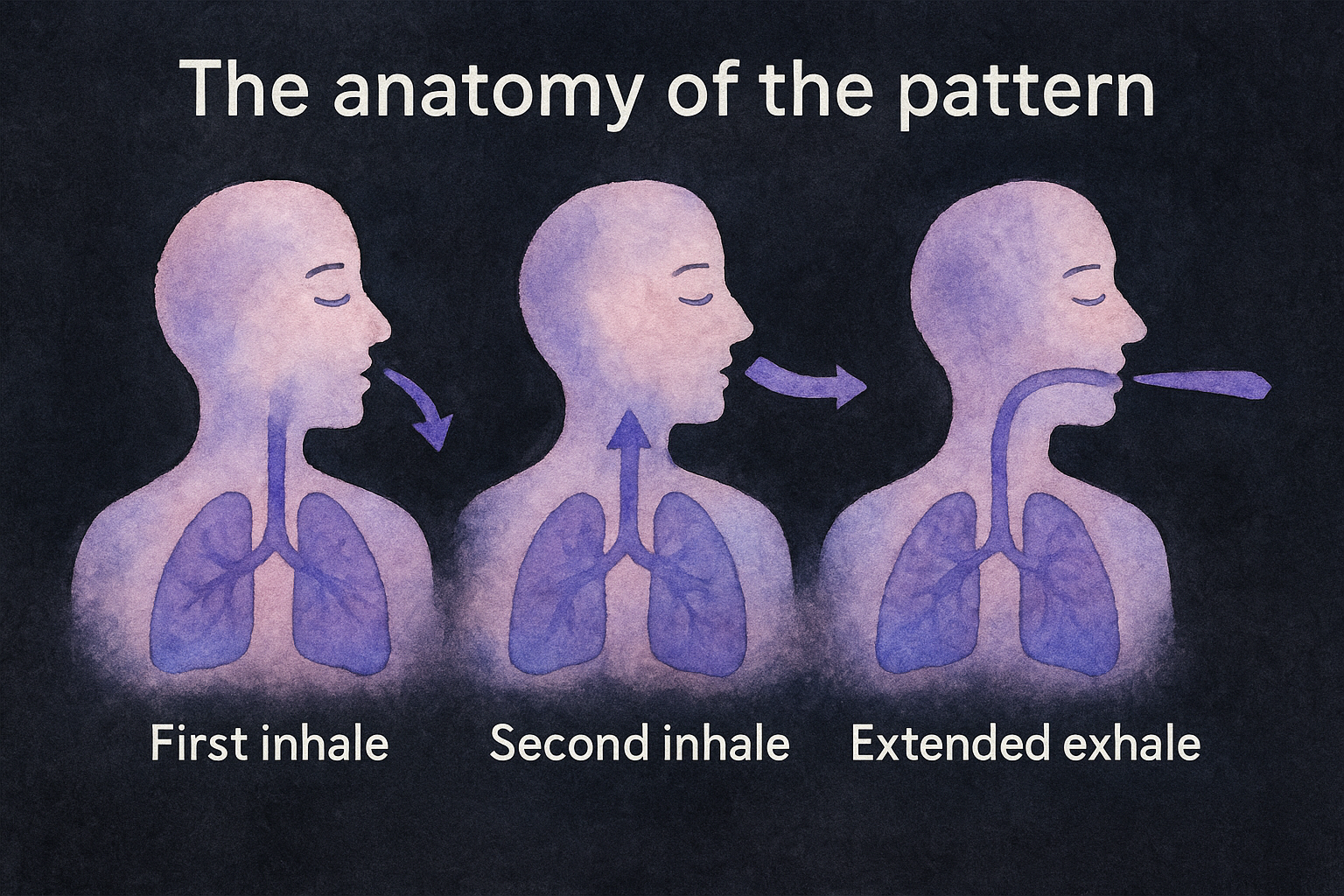
The physiological sigh breathing pattern has three distinct parts. Each part serves a specific biological purpose, and the sequence matters. Changing the order or the ratio between inhale and exhale reduces its effectiveness significantly.
Here is exactly what each phase does:
First inhale (through the nose): A full, deep breath that begins filling the lungs and starts drawing in fresh oxygen.
Second inhale (through the nose): A short, forceful sniff layered on top of the first inhale. This is the defining feature of the pattern. It re-inflates partially collapsed alveoli and maximizes lung volume before the exhale begins.
Extended exhale (through the mouth): A slow, complete exhale that lasts roughly twice as long as your combined inhales. This phase drives the parasympathetic activation, because a prolonged exhale slows your heart rate through a mechanism called respiratory sinus arrhythmia.
The whole cycle takes roughly 10 to 15 seconds, making it one of the fastest breathing interventions available. You do not need to repeat it for several minutes to feel a shift. In research conducted at Stanford, even a single physiological sigh produced measurable reductions in self-reported anxiety, though one to three repetitions tend to produce the most consistent calming effect in real-world conditions.
Why it calms you so fast
The speed of physiological sigh breathing surprises most people the first time they try it. The reason it works so quickly comes down to two well-understood biological mechanisms that operate simultaneously: a structural lung reset and a direct cardiac brake applied through the nervous system. Neither requires minutes of practice to kick in. Your body responds within seconds of completing the exhale.
The exhale applies a direct brake on your heart rate
Your heart rate and your breathing are physically linked through a process called respiratory sinus arrhythmia. When you inhale, your diaphragm drops, your chest cavity expands, and your heart speeds up slightly because more blood rushes toward it. When you exhale, the opposite happens: your diaphragm rises, pressure in your chest increases, and your heart rate slows down as a reflex. The longer and more complete your exhale, the longer that slowing effect lasts.
This is why the extended exhale in the physiological sigh is not optional. It is the part that actually drives the parasympathetic shift. A short, incomplete exhale shortchanges the entire mechanism. When you empty your lungs fully and let the exhale take its time, you are essentially holding down the brake pedal on your heart rate with your own breath.
The exhale is where calm happens. The inhales just set it up.
Carbon dioxide does more than you think
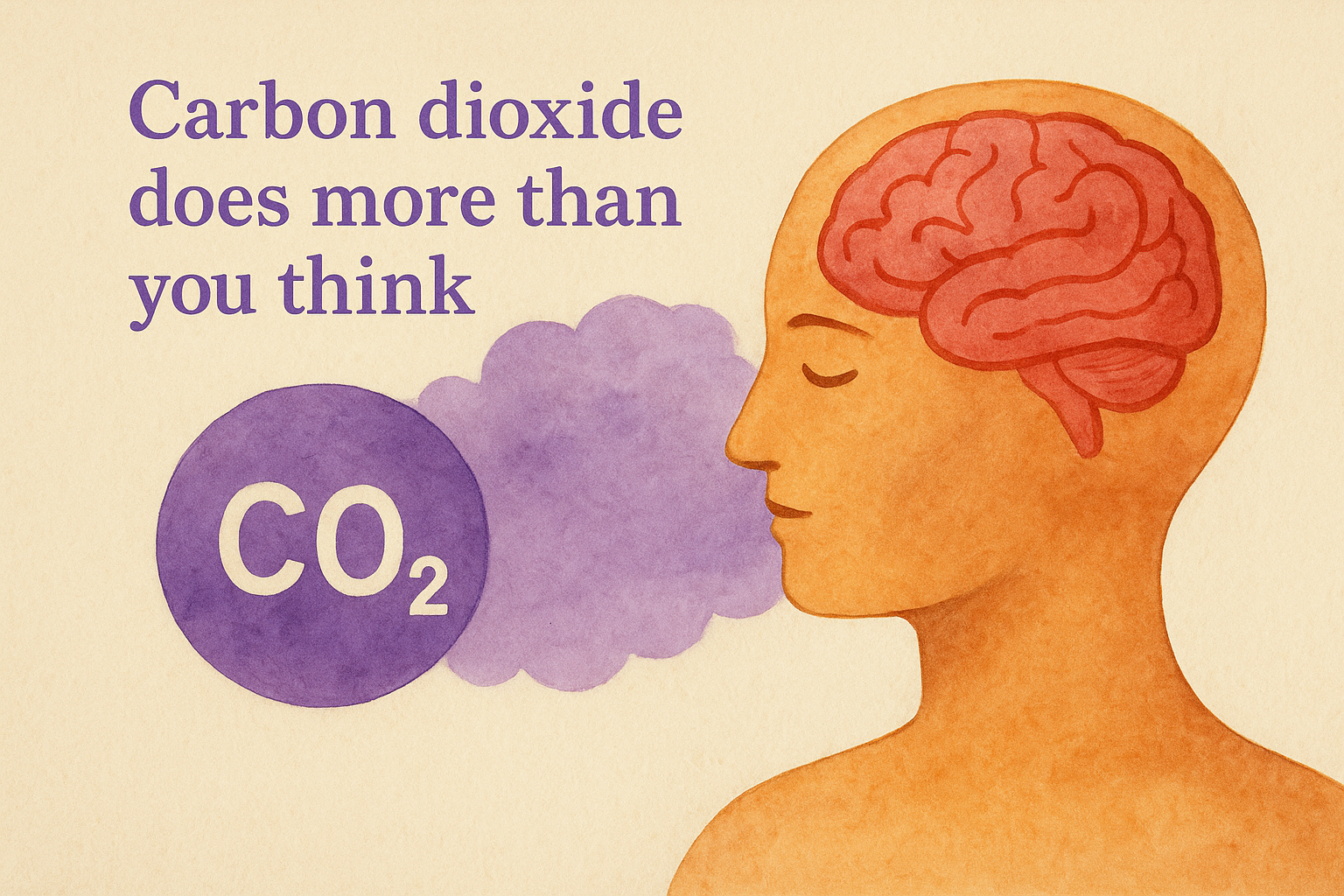
Most people think of carbon dioxide purely as a waste gas, something your body needs to get rid of. In reality, CO2 plays an active role in regulating your nervous system state. When your breathing is fast and shallow, as it tends to be during stress or anxiety, you exhale CO2 too quickly. That drop in CO2 causes blood vessels to constrict and triggers a heightened threat response in your brain, which is why over-breathing makes panic worse, not better.
The double inhale in physiological sigh breathing temporarily maximizes oxygen intake while the extended exhale allows CO2 to normalize. Your brainstem detects the improved gas balance and signals the body to reduce its alarm state. You are not just "relaxing on purpose." You are giving your nervous system accurate chemical data that the immediate threat has passed, and it responds accordingly.
How to do physiological sigh breathing
The technique is simple enough to learn in under a minute, but the specific sequence and pacing make all the difference. Most people get it right on their first attempt once they understand what each phase should feel like. Follow the steps below exactly the first few times so the pattern becomes automatic.
Step-by-step instructions
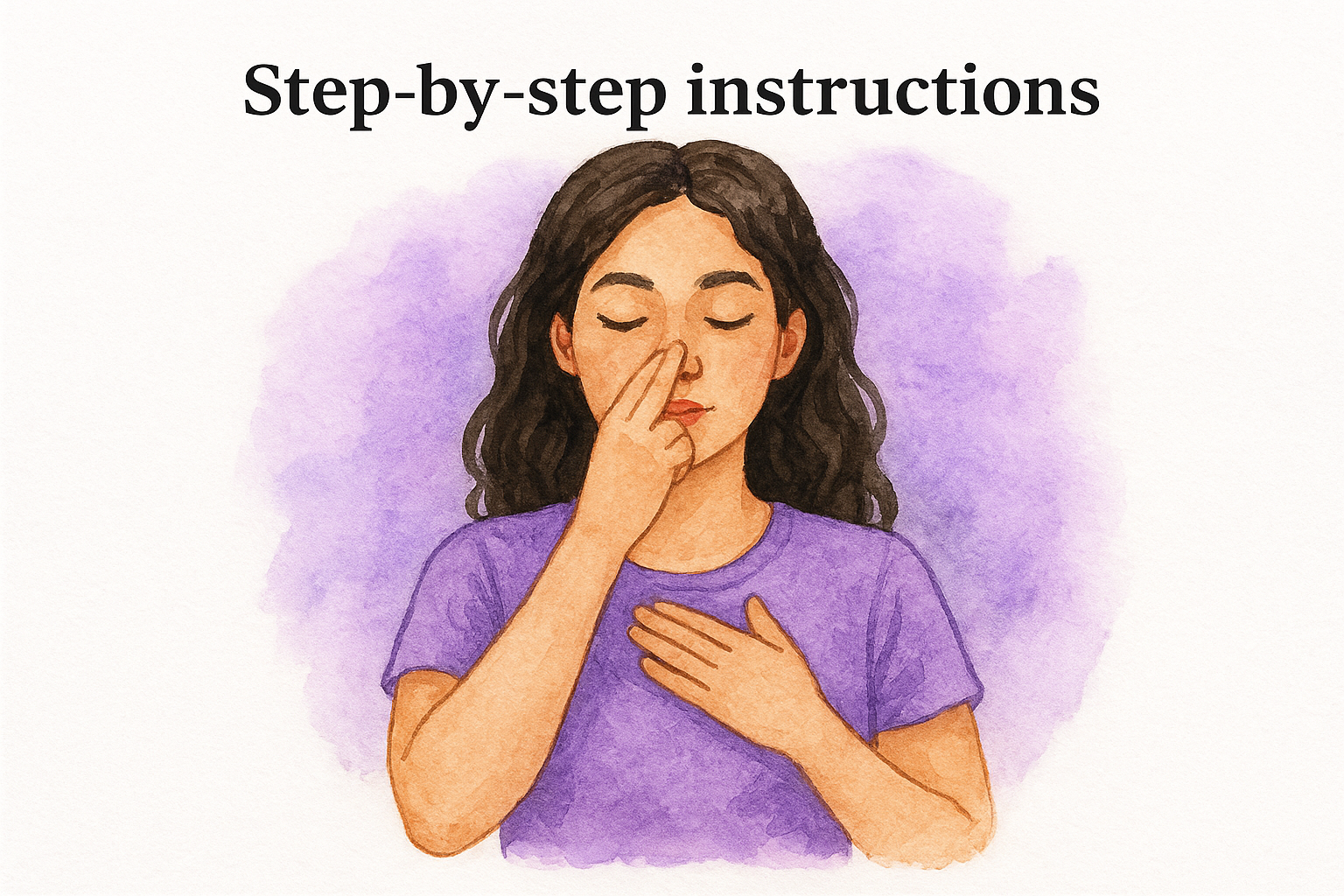
Before you start, find a position where your chest can expand freely. Sitting upright or lying flat both work. Close your eyes if it helps, and keep your shoulders relaxed. Now move through the three phases:
First inhale through your nose: Breathe in deeply and fully, filling your lungs as much as you comfortably can. This should take about three to four seconds.
Second inhale through your nose: Without exhaling first, take one more short, sharp sniff through your nose. You are stacking this second breath directly on top of the first. Your lungs will feel close to maximum capacity. This sniff takes about one second.
Extended exhale through your mouth: Release all of the air slowly through your mouth. Let this exhale last as long as possible, ideally six to eight seconds. Do not force it, just let the air leave completely. You want your lungs nearly empty by the end.
One complete cycle takes roughly 10 to 15 seconds. You do not need to rush any phase.
Repeat the cycle one to three times. Most people feel a noticeable drop in tension within the first or second repetition. If you feel slightly lightheaded after the second inhale, that is normal and passes within a few seconds once the exhale completes.
What the pattern should feel like
During the second sniff, your lungs may feel tight or full. That sensation is intentional. You are pushing past the point of a normal breath to re-inflate any partially collapsed alveoli. It is not uncomfortable once you expect it.
The exhale phase of physiological sigh breathing is where most people make the biggest errors. A slow, complete emptying of the lungs activates the parasympathetic effect. If your exhale feels rushed or cut short, extend it further on the next cycle. Think of it less as blowing air out and more as letting the air fall out on its own, guided gently by your body settling downward.
How often to practice and what to expect
Physiological sigh breathing doesn’t require a daily 20-minute session to produce results. Its main advantage is on-demand effectiveness: you use it when you need it, and it works within a single cycle. That said, building a light practice habit helps you deploy the technique instinctively when stress peaks, rather than fumbling to remember the steps at exactly the wrong moment.
How often to use it
Most people benefit from two types of use: reactive (in the moment when stress or anxiety spikes) and proactive (as a brief daily reset). For reactive use, one to three repetitions is enough to shift your state. For proactive practice, running through two or three cycles once or twice a day builds familiarity with the pattern so it becomes automatic under pressure.
Setting aside dedicated time is not necessary. Three cycles take under a minute, so you can work them into natural transition points in your day: before a meeting, after waking up, before sleep, or when you notice your shoulders creeping toward your ears. The technique stays effective regardless of context, which is part of what makes physiological sigh breathing a practical tool rather than an abstract wellness habit.
What to expect short-term
In the first few uses, most people notice a clear drop in physical tension, particularly in the chest, jaw, and shoulders. Your heart rate slows perceptibly after the extended exhale, and the sense of mental urgency that often accompanies stress tends to soften within one to two cycles.
The effect is not subtle once you practice the exhale correctly.
Some people also report brief lightheadedness after the second sniff inhale. This is normal and resolves within seconds as the exhale completes and CO2 levels stabilize.
What to expect long-term
Regular use over one to two weeks tends to lower your baseline reactivity to stress triggers, not because the breathing rewires your neurology permanently, but because you start catching stress earlier and interrupting it before it escalates. You become faster at recognizing the body signals that mean you need a reset, and faster at applying the technique before your nervous system fully shifts into overdrive.
Consistency also builds confidence. Knowing you have a reliable tool that works in under 15 seconds changes how you approach stressful situations in the first place.
Common mistakes and quick fixes
Most people get the concept right but stumble on one or two execution details that undercut the calming effect. The good news is that each mistake has a fast fix, and once you identify which part of the cycle is off, the full effect of physiological sigh breathing comes through immediately on your next attempt.
Cutting the exhale short
The most common error is ending the exhale too soon. When your lungs still hold residual air at the end of the exhale phase, you lose the bulk of the parasympathetic activation. The heart rate brake only fully engages when the exhale is long and as complete as possible.
If the technique doesn’t seem to be working, the exhale is almost always why.
Fix it by extending the exhale two to three seconds longer than feels natural. Think of the air as something you are gently releasing rather than actively pushing out. Let your body settle downward as you exhale, and keep going until your lungs feel genuinely empty before your next cycle.
Skipping or softening the second sniff
Some people take the second sniff so gently that it adds almost no volume to the lungs. This defeats the purpose of the double inhale, which is to re-inflate partially collapsed alveoli and maximize lung capacity before the exhale begins.
The second sniff should feel sharp and deliberate, like you are quickly catching a scent you want to identify. Your chest should visibly expand slightly with that second breath. If your lungs already feel full after the first inhale, that is correct. Stack the sniff on top anyway and let the pressure build briefly before releasing into the exhale.
Breathing through the mouth on the inhales
Inhaling through your mouth during both inhale phases reduces the effectiveness of the technique. Nasal breathing adds nitric oxide, which supports blood vessel dilation, and it naturally paces the inhale at a rate that sets up the exhale correctly. Mouth inhales tend to be faster and shallower, which disrupts that pacing.
Switch both inhales to your nose and reserve mouth breathing for the exhale only. If nasal congestion makes full nasal breathing difficult, even partial nasal airflow on the inhales will improve your results compared to breathing entirely through your mouth throughout the cycle.
Physiological sigh vs box breathing and more
Several breathing techniques claim to reduce stress, and each one works through a slightly different biological mechanism. Knowing what distinguishes physiological sigh breathing from the alternatives helps you pick the right tool for the right moment rather than defaulting to whichever technique you happened to learn first.
Box breathing
Box breathing uses four equal phases: inhale for four seconds, hold for four seconds, exhale for four seconds, hold for four seconds. The military and first responders favor it because the structured rhythm is easy to remember under extreme pressure, and the holds give the mind a clear focal point. It works particularly well for sustained focus and pre-performance calm when you have two to four minutes to settle into the count.
The key difference is pace and cognitive load. Box breathing takes longer to produce a noticeable shift and requires active attention to track the count. Physiological sigh breathing, by contrast, delivers a measurable drop in heart rate within a single 15-second cycle and demands almost no concentration. When anxiety is already spiking, tracking four equal phases can actually interfere with the calming effect rather than support it.
Use box breathing when you want sustained mental focus. Use the physiological sigh when you need fast relief right now.
4-7-8 breathing
The 4-7-8 technique involves inhaling for four counts, holding for seven, and exhaling for eight. The extended exhale shares the same underlying logic as the physiological sigh: prolonged exhalation drives parasympathetic activation through respiratory sinus arrhythmia. The long breath hold, however, raises carbon dioxide levels temporarily in a way some people find deeply uncomfortable, particularly if they already feel anxious or are navigating a post-psychedelic state where CO2 sensitivity can be altered.
For acute anxiety relief, the physiological sigh sidesteps that discomfort entirely because it requires no breath holds at all, just two stacked inhales and a slow exhale.
Diaphragmatic breathing
Diaphragmatic or belly breathing is the broadest category of relaxed breathing and forms the foundation of many formal meditation practices. It lowers your average breathing rate over weeks of consistent practice. The limitation is that it does not engage the alveolar reinflation mechanism that makes the physiological sigh uniquely fast-acting. Think of diaphragmatic breathing as long-term conditioning and the physiological sigh as the emergency brake you reach for when you need to reset in seconds, not minutes.
When to use it for anxiety and comedowns
Knowing the technique is one thing. Knowing exactly when to apply it is what makes the difference between a tool that sits unused and one that genuinely changes how you move through difficult moments. Physiological sigh breathing fits into two specific scenarios particularly well: sudden anxiety spikes and the turbulent post-experience window that follows intense psychedelic sessions.
During acute anxiety spikes
When anxiety rises fast, your breathing typically shifts into shallow, rapid, upper-chest territory without you noticing. CO2 drops, blood vessels constrict, and your brain interprets the resulting sensations as confirmation that something is wrong, which makes the anxiety worse. This is the cycle you want to interrupt.
Use the physiological sigh the moment you notice your chest tightening or your thoughts accelerating, not after the spiral is already in full swing.
The technique is most effective when you apply it at the earliest signal rather than as a last resort. Physical cues like jaw tension, a tight throat, or the urge to pace are all reliable entry points. One to three cycles of physiological sigh breathing at that stage will typically soften the spike before it peaks, giving you a clear enough head to engage other coping strategies or simply continue with your day.
During comedowns and post-psychedelic states
The hours and days following an intense psychedelic experience often bring dysregulation of the autonomic nervous system: residual anxiety, emotional rawness, difficulty settling into sleep, or a generalized sense of unease that is hard to name. Nutritional recovery through a structured supplement protocol addresses the neurochemical side of that process, but your nervous system also needs active regulation in real time.
Physiological sigh breathing works particularly well during this window because it requires no concentration, no props, and no preparation. You can use it lying in bed when sleep won’t come, seated during a difficult integration conversation, or mid-festival when sensory overload starts tilting toward overwhelm. Two or three cycles takes under a minute and can provide enough of a reset to interrupt the feedback loop between physical tension and anxious thinking that drives most post-experience discomfort.
Pairing the breathing technique with adequate hydration, sleep, and targeted supplementation gives your nervous system support from multiple directions at once, which tends to produce a faster and more complete return to baseline than any single intervention on its own.
Safety notes and who should be careful
Physiological sigh breathing is safe for the vast majority of people and produces no lasting physiological changes when used as described. That said, any breathing technique that alters your respiratory pattern and blood gas levels briefly deserves a few precautions, particularly if you have an existing medical condition or are using it during an already intense physical or psychological state.
Conditions that require extra caution
Certain conditions make it worth proceeding more slowly and paying close attention to how your body responds during each phase of the technique.
Respiratory conditions such as asthma, COPD, or chronic bronchitis: the double inhale can briefly raise airway pressure. If you have any of these, use a gentler sniff on the second inhale and avoid forcing maximum lung capacity.
Cardiovascular conditions: because physiological sigh breathing directly influences heart rate through respiratory sinus arrhythmia, anyone with arrhythmia, heart disease, or uncontrolled hypertension should consult a physician before adding any deliberate breathing protocol to their routine.
Anxiety disorders or panic disorder: while the technique is often helpful for acute anxiety, some people in an active panic episode find that focusing on breathing intensifies the sense of physical threat rather than reducing it. If that happens, shift your attention outward to your surroundings rather than continuing to focus on the breath.
Pregnancy: significant changes to CO2 and oxygen dynamics are best discussed with a healthcare provider before introducing structured breathing interventions.
If you feel faint, experience chest pain, or notice unusual heart rhythm during the technique, stop immediately and rest.
When to stop and seek support
One or two cycles of physiological sigh breathing should leave you feeling calmer and more grounded, not dizzy, short of breath, or more anxious than when you started. Mild lightheadedness immediately after the second sniff is normal and passes within seconds once the exhale completes. Persistent dizziness, tingling in the hands or face, or chest tightness that does not resolve after a few normal breaths are signs to stop and breathe naturally until you feel steady.
The technique is a self-regulation tool, not a substitute for professional support. If anxiety, emotional dysregulation, or post-experience distress is severe, persistent, or feels unmanageable, reaching out to a qualified mental health professional is the right move. Breathing exercises work best as one part of a broader recovery approach, not as the only one.
Key takeaways
Physiological sigh breathing is a double inhale followed by a long, slow exhale, and it works because it simultaneously reinflates collapsed alveoli and slows your heart rate through respiratory sinus arrhythmia. Your body already produces this pattern automatically. Learning to trigger it deliberately gives you a fast, reliable way to shift from stress to calm in under 15 seconds, with no equipment and no preparation required.
One to three cycles is enough for most acute situations. The exhale is the active ingredient: extend it, complete it fully, and the parasympathetic effect follows. Use it when anxiety spikes, when sleep won’t come, or during the unsettled hours after an intense experience. Pair it with proper nutrition, hydration, and targeted supplementation for a faster return to baseline. If you want to understand the science behind full-body recovery after psychedelic experiences, the Afterglow science-based recovery protocol covers exactly that.
Lukas Nelpela
writes on neuroscience, mental health, and mindful exploration. With a passion in research-driven wellness and years focused on set & setting, integration, and recovery, he turns complex ideas into clear, usable insight.
You’re staring at your screen, reading the same sentence for the fourth time, and nothing sticks. Your thoughts feel like they’re wading through wet cement. So what is brain fog, exactly? It’s not a medical diagnosis, it’s a catch-all term for that frustrating state of mental cloudiness where focus, memory,
Every process in your body, thinking, moving, recovering, runs on energy produced inside your cells. That energy comes from mitochondria, and when they’re not functioning well, you feel it: brain fog, fatigue, slow recovery, and a general sense of running on empty. Mitochondrial support refers to the nutrients, habits, and
You sit down to focus, stare at your screen, and nothing clicks. Thoughts scatter, simple decisions feel impossible, and your mind moves like it’s stuck in wet concrete. If you’ve been looking up how to get rid of brain fog, you already know the frustration, that heavy, hazy state where
Working nights, rotating schedules, or pulling irregular hours throws your body’s internal clock into a constant state of confusion. Around 20% of the global workforce does some form of shift work, and the majority of those people report poor sleep as their number one complaint. Good sleep hygiene for shift
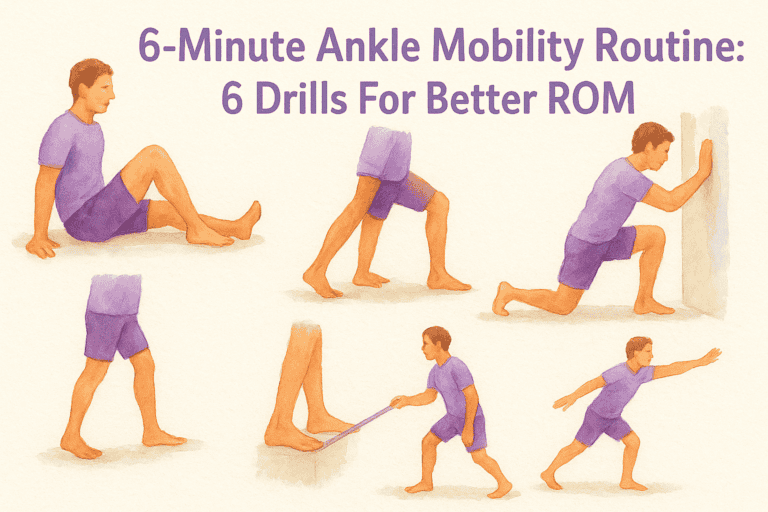
Stiff ankles affect more than just your squat depth. Limited ankle range of motion can mess with your knees, hips, and lower back, and if you spend long hours on your feet at festivals, retreats, or anywhere that keeps you moving, you’ll feel it. A solid ankle mobility routine takes
We use various cookies on our website. Some are essential for the website to function properly, while others we may only use with your consent. You can find more information about cookies on our website here.
This website uses cookies to improve your experience while you navigate through the website. Out of these cookies, the cookies that are categorized as necessary are stored on your browser as they are essential for the working of basic functionalities of the website. We also use third-party cookies that help us analyze and understand how you use this website. These cookies will be stored on your browser only with your consent. You also have the option to opt-out of these cookies. However, opting out of some of these cookies may have an impact on your browsing experience.
Necessary cookies are absolutely essential for the website to function properly. These cookies anonymously ensure basic functionalities and security features of the website.
Cookie
Duration
Description
cookielawinfo-checkbox-advertisement
1 year
Set by the GDPR Cookie Consent plugin, this cookie records the user consent for the cookies in the "Advertisement" category.
cookielawinfo-checkbox-analytics
11 months
This cookie is set by GDPR Cookie Consent plugin. The cookie is used to store the user consent for the cookies in the category "Analytics".
cookielawinfo-checkbox-functional
11 months
The cookie is set by GDPR cookie consent to record the user consent for the cookies in the category "Functional".
cookielawinfo-checkbox-necessary
11 months
This cookie is set by GDPR Cookie Consent plugin. The cookies is used to store the user consent for the cookies in the category "Necessary".
cookielawinfo-checkbox-others
11 months
This cookie is set by GDPR Cookie Consent plugin. The cookie is used to store the user consent for the cookies in the category "Other.
cookielawinfo-checkbox-performance
11 months
This cookie is set by GDPR Cookie Consent plugin. The cookie is used to store the user consent for the cookies in the category "Performance".
CookieLawInfoConsent
1 year
CookieYes sets this cookie to record the default button state of the corresponding category and the status of CCPA. It works only in coordination with the primary cookie.
elementor
never
The website's WordPress theme uses this cookie. It allows the website owner to implement or change the website's content in real-time.
fb_event_id_atc
30 minutes
Used to match client and server events for Meta Conversion API deduplication. Contains only anonymous technical IDs; no personal data stored.
fb_event_id_ic
30 minutes
Used to match client and server events for Meta Conversion API deduplication. Contains only anonymous technical IDs; no personal data stored.
fb_event_id_pur
30 minutes
Used to match client and server events for Meta Conversion API deduplication. Contains only anonymous technical IDs; no personal data stored.
fb_event_id_vc
30 minutes
Used to match client and server events for Meta Conversion API deduplication. Contains only anonymous technical IDs; no personal data stored.
rc::a
never
This cookie is set by the Google recaptcha service to identify bots to protect the website against malicious spam attacks.
rc::c
session
This cookie is set by the Google recaptcha service to identify bots to protect the website against malicious spam attacks.
viewed_cookie_policy
11 months
The cookie is set by the GDPR Cookie Consent plugin and is used to store whether or not user has consented to the use of cookies. It does not store any personal data.
VISITOR_PRIVACY_METADATA
6 months
YouTube sets this cookie to store the user's cookie consent state for the current domain.
wpEmojiSettingsSupports
session
WordPress sets this cookie when a user interacts with emojis on a WordPress site. It helps determine if the user's browser can display emojis properly.
Functional cookies help to perform certain functions, such as sharing website content on social media platforms, collecting feedback, and other third-party functions.
Cookie
Duration
Description
sib_cuid
6 months
SendinBlue sets this cookie to store unique visits.
VISITOR_INFO1_LIVE
6 months
A cookie set by YouTube to measure bandwidth that determines whether the user gets the new or old player interface.
yt-remote-cast-available
session
The yt-remote-cast-available cookie is used to store the user's preferences regarding whether casting is available on their YouTube video player.
yt-remote-cast-installed
session
The yt-remote-cast-installed cookie is used to store the user's video player preferences using embedded YouTube video.
yt-remote-connected-devices
never
YouTube sets this cookie to store the user's video preferences using embedded YouTube videos.
yt-remote-device-id
never
YouTube sets this cookie to store the user's video preferences using embedded YouTube videos.
yt-remote-fast-check-period
session
The yt-remote-fast-check-period cookie is used by YouTube to store the user's video player preferences for embedded YouTube videos.
yt-remote-session-app
session
The yt-remote-session-app cookie is used by YouTube to store user preferences and information about the interface of the embedded YouTube video player.
yt-remote-session-name
session
The yt-remote-session-name cookie is used by YouTube to store the user's video player preferences using embedded YouTube video.
ytidb::LAST_RESULT_ENTRY_KEY
never
The cookie ytidb::LAST_RESULT_ENTRY_KEY is used by YouTube to store the last search result entry that was clicked by the user. This information is used to improve the user experience by providing more relevant search results in the future.
Performance cookies are used to understand and analyze key website performance indexes, which helps in providing a better user experience for visitors.
Cookie
Duration
Description
SRM_B
1 year 24 days
Used by Microsoft Advertising as a unique ID for visitors.
Analytical cookies are used to understand how visitors interact with the website. These cookies help provide information on metrics such as the number of visitors, bounce rate, traffic source, etc.
Cookie
Duration
Description
_clck
1 year
Microsoft Clarity sets this cookie to retain the browser's Clarity User ID and settings exclusive to that website. This guarantees that actions taken during subsequent visits to the same website will be linked to the same user ID.
_clsk
1 day
Microsoft Clarity sets this cookie to store and consolidate a user's pageviews into a single session recording.
_fbp
3 months
Facebook sets this cookie to display advertisements when either on Facebook or on a digital platform powered by Facebook advertising after visiting the website.
_ga
1 year 1 month 4 days
Google Analytics sets this cookie to calculate visitor, session and campaign data and track site usage for the site's analytics report. The cookie stores information anonymously and assigns a randomly generated number to recognise unique visitors.
_ga_*
1 year 1 month 4 days
Google Analytics sets this cookie to store and count page views.
_gcl_au
3 months
Google Tag Manager sets the cookie to experiment advertisement efficiency of websites using their services.
_hjSession_*
1 hour
Hotjar sets this cookie to ensure data from subsequent visits to the same site is attributed to the same user ID, which persists in the Hotjar User ID, which is unique to that site.
_hjSessionUser_*
1 year
Hotjar sets this cookie to ensure data from subsequent visits to the same site is attributed to the same user ID, which persists in the Hotjar User ID, which is unique to that site.
_hjTLDTest
session
To determine the most generic cookie path that has to be used instead of the page hostname, Hotjar sets the _hjTLDTest cookie to store different URL substring alternatives until it fails.
CLID
1 year
Microsoft Clarity set this cookie to store information about how visitors interact with the website. The cookie helps to provide an analysis report. The data collection includes the number of visitors, where they visit the website, and the pages visited.
MR
7 days
This cookie, set by Bing, is used to collect user information for analytics purposes.
sbjs_current
session
Sourcebuster sets this cookie to identify the source of a visit and stores user action information in cookies. This analytical and behavioural cookie is used to enhance the visitor experience on the website.
sbjs_current_add
session
Sourcebuster sets this cookie to identify the source of a visit and stores user action information in cookies. This analytical and behavioural cookie is used to enhance the visitor experience on the website.
sbjs_first
session
Sourcebuster sets this cookie to identify the source of a visit and stores user action information in cookies. This analytical and behavioural cookie is used to enhance the visitor experience on the website.
sbjs_first_add
session
Sourcebuster sets this cookie to identify the source of a visit and stores user action information in cookies. This analytical and behavioural cookie is used to enhance the visitor experience on the website.
sbjs_migrations
session
Sourcebuster sets this cookie to identify the source of a visit and stores user action information in cookies. This analytical and behavioural cookie is used to enhance the visitor experience on the website.
sbjs_session
1 hour
Sourcebuster sets this cookie to identify the source of a visit and stores user action information in cookies. This analytical and behavioural cookie is used to enhance the visitor experience on the website.
sbjs_udata
session
Sourcebuster sets this cookie to identify the source of a visit and stores user action information in cookies. This analytical and behavioural cookie is used to enhance the visitor experience on the website.
SM
session
Microsoft Clarity cookie set this cookie for synchronizing the MUID across Microsoft domains.
YSC
session
YSC cookie is set by Youtube and is used to track the views of embedded videos on Youtube pages.
Advertising cookies are used to deliver relevant advertisements and marketing campaigns to visitors. These cookies track visitors across websites and collect information to deliver tailored advertisements.
Cookie
Duration
Description
_rdt_uuid
3 months
Reddit sets this cookie to build a profile of your interests and show you relevant ads.
ANONCHK
10 minutes
The ANONCHK cookie, set by Bing, is used to store a user's session ID and verify ads' clicks on the Bing search engine. The cookie helps in reporting and personalization as well.
MUID
1 year 24 days
Bing sets this cookie to recognise unique web browsers visiting Microsoft sites. This cookie is used for advertising, site analytics, and other operations.
test_cookie
15 minutes
doubleclick.net sets this cookie to determine if the user's browser supports cookies.
yt.innertube::nextId
never
YouTube sets this cookie to register a unique ID to store data on what videos from YouTube the user has seen.
yt.innertube::requests
never
YouTube sets this cookie to register a unique ID to store data on what videos from YouTube the user has seen.