Pursed Lip Breathing Benefits: Ease Shortness Of Breath Fast
9 min read
If you’ve ever felt tightness in your chest during a difficult trip or struggled to catch your breath during a post-experience anxiety wave, you already know how much your breathing matters. Pursed lip breathing benefits go far beyond managing chronic lung conditions, this simple technique can calm your nervous system in minutes, reduce shortness of breath, and help you regain a sense of control when your body feels like it’s working against you. It’s one of the most accessible tools for anyone dealing with breathlessness, whether from a medical condition, panic, or the physical toll of an intense psychedelic journey.
At Afterglow Supplements, we build recovery protocols that address what happens in your body after transformative experiences, from serotonin replenishment to muscle relaxation. But supplementation works best alongside practical skills that support your nervous system in real time. Pursed lip breathing is exactly that kind of skill: free, portable, and backed by solid respiratory science.
This article breaks down how pursed lip breathing works physiologically, what specific benefits it offers, who it helps most, and how to do it correctly, step by step, no guesswork. Whether you’re managing COPD, navigating post-trip anxiety, or simply looking for a way to breathe more efficiently under stress, you’ll walk away with a technique you can use immediately.
Why pursed lip breathing works
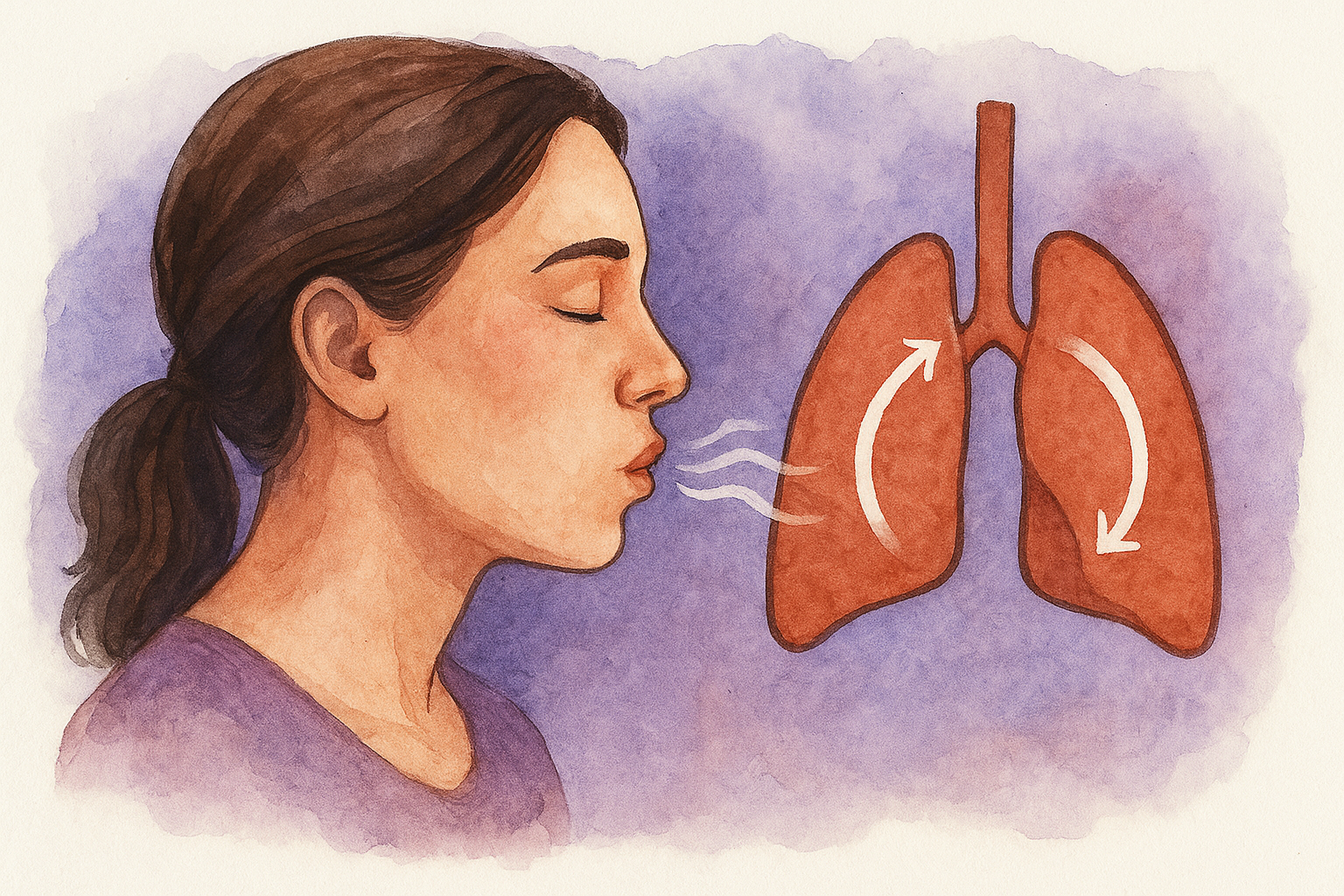
When you breathe rapidly under stress or with a lung condition, your exhalation becomes shallow and incomplete, which traps stale air inside your lungs and reduces how much fresh oxygen your bloodstream receives. Pursed lip breathing fixes this by creating a controlled resistance at your lips during the exhale. That resistance slows your breathing rate automatically and sets off a chain of physiological events that make every breath significantly more efficient.
How back pressure and slowed exhalation work together
The core mechanism is straightforward. When you purse your lips and exhale through a small opening, you force yourself to breathe out more slowly, typically doubling the length of your exhale relative to your inhale. A longer exhale gives your lungs more time to empty completely, which clears carbon dioxide that would otherwise accumulate in your blood. When CO2 builds up, your body signals distress, and that distress amplifies breathlessness and panic. By clearing CO2 more efficiently, pursed lip breathing breaks that cycle before it escalates.
Alongside the slowed airflow, the resistance at your lips generates a slight increase in pressure inside your airways during exhalation, called positive expiratory pressure. This back pressure prevents smaller airways from collapsing before your lungs finish emptying. In people with COPD or asthma, airways tend to collapse prematurely, trapping air and causing that familiar sense of chest tightness. Positive expiratory pressure holds those airways open just long enough to release the trapped air, which is the same principle used in clinical respiratory devices, but without any equipment.
Positive expiratory pressure keeps your airways from collapsing mid-exhale, which is why people with COPD often notice relief within a few breaths of using this technique.
The nervous system connection
Your breathing rate directly influences your autonomic nervous system. Fast, shallow breathing activates your sympathetic system, the fight-or-flight response, which raises heart rate, tightens muscles, and sharpens anxiety. Pursed lip breathing slows your respiratory rate to roughly 4 to 6 breaths per minute in many cases, which shifts your body toward parasympathetic dominance, sometimes called rest-and-digest mode. Heart rate drops, cortisol levels fall, and your perception of breathlessness decreases even before blood oxygen levels fully normalize.
For anyone navigating post-experience anxiety or the physical tension that follows intense stress, this nervous system reset is one of the most immediate pursed lip breathing benefits you can access without any tools. With consistent practice, the shift happens faster and becomes more reliable each time you use the technique.
How to do pursed lip breathing step by step
You don’t need any special equipment or training to start this technique. Most people pick it up in under a minute, and the physical shift in your breathing becomes noticeable within two or three cycles. Getting the steps right from the beginning means you build a reliable habit that holds up when you’re stressed or breathless.
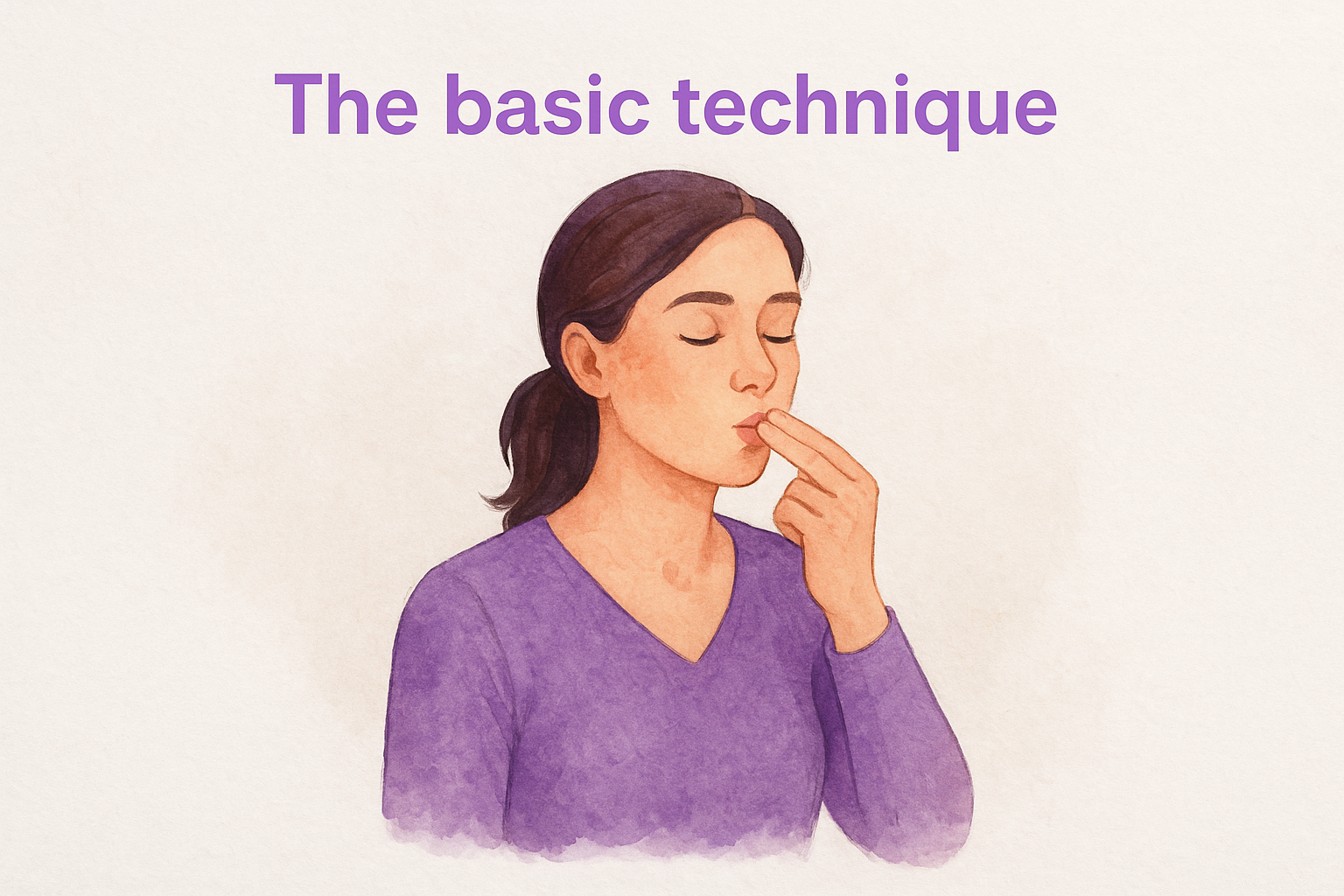
The basic technique
Start in a comfortable position, either seated upright or lying down, with your neck and shoulders relaxed. Tension in your shoulders and jaw restricts airflow, so consciously drop them before you begin. Follow these steps:
Relax your neck, shoulders, and jaw
Close your mouth and inhale slowly through your nose for 2 counts
Pucker your lips as if you’re blowing out a candle
Exhale slowly and steadily through your pursed lips for 4 counts
Repeat for 4 to 10 cycles, or until your breathing settles
The exhale should feel effortless, not forced. If you’re pushing air out with too much effort, loosen your lips slightly until the airflow feels smooth and even.
Timing and pacing
The standard 2:4 inhale-to-exhale ratio gives your lungs enough time to clear trapped air on each cycle. As you get more comfortable, you can extend your exhale to 6 counts to deepen the calming effect. One of the core pursed lip breathing benefits is that the technique naturally regulates your breathing rate without requiring you to track anything complex. Once the rhythm feels familiar, your body tends to maintain it on its own.
Pursed lip breathing benefits you can feel fast
Most breathing techniques take weeks of practice before they produce noticeable results. Pursed lip breathing benefits show up within two to three breath cycles, which makes it one of the few respiratory tools that delivers a measurable shift in how your body feels almost immediately. Understanding what to expect helps you trust the technique when you need it most.
Immediate relief from breathlessness
Your sense of breathlessness drops quickly once you slow your exhalation and clear the trapped air from your lungs. Within a minute of using the technique correctly, most people notice a significant reduction in chest tightness and the urge to gasp. Your breathing rate slows, your muscles stop bracing for the next difficult inhale, and the feedback loop between breathlessness and panic begins to break down.
The drop in perceived breathlessness often happens before your blood oxygen levels fully stabilize, which means your nervous system responds to the slowed rhythm itself.
Reduced anxiety and muscle tension
Slower exhalation directly activates your parasympathetic nervous system, which lowers your heart rate and reduces the muscular tension that builds during stress or breathlessness. You’ll often feel your shoulders drop and your jaw loosen within a few cycles. For anyone managing post-experience anxiety or the physical tension that builds during difficult moments, this calming effect is one of the most practical pursed lip breathing benefits available without any equipment or preparation. Your body responds to the rhythm, not just the oxygen exchange.
When to use it for activity, panic, and COPD
Pursed lip breathing isn’t a technique you save for emergencies. Knowing exactly when to apply it gives you a reliable tool across different situations, from climbing stairs to managing post-experience anxiety or controlling breathlessness from a chronic lung condition. Each context calls for slightly different timing, but the core technique stays the same.
During physical activity and panic
When you start an activity that makes you short of breath, such as walking uphill or carrying something heavy, begin pursed lip breathing before breathlessness peaks. Starting early keeps your breathing rate from spiraling upward. During panic or post-experience anxiety, the technique works the same way: the slower exhale interrupts the hyperventilation loop that feeds the panic response. One of the key pursed lip breathing benefits is that you can apply it discreetly mid-activity without stopping.
You don’t need to retreat somewhere quiet to use it. Most people manage it in almost any setting without drawing attention.
For COPD and chronic breathlessness
If you have COPD or another condition that causes persistent air trapping or reduced airflow, build pursed lip breathing into your daily routine rather than waiting for a bad episode. Using it during low-intensity tasks like dressing, cooking, or walking trains your airways to stay open and reduces how often severe breathlessness stops you cold.
Your pulmonologist may also recommend pairing it with other strategies like diaphragmatic breathing. Consistent daily use produces cumulative improvements in exercise tolerance and breathlessness ratings over weeks, not just in the moment you apply it.
Common mistakes, safety, and when to get help
Even a simple technique has a few ways to go wrong. Knowing what to avoid keeps you from accidentally making breathlessness worse, and recognizing the warning signs that need medical attention is just as important as knowing the technique itself.
Mistakes that reduce effectiveness
The most common error is forcing the exhale. Pushing air out with active muscle effort defeats the purpose, because it tightens your chest and raises your breathing rate instead of lowering it. Your exhale should feel relaxed and passive, driven by the elastic recoil of your lungs rather than deliberate pressure. Another frequent mistake is tensing your shoulders or jaw during the inhale, which restricts airflow before it even reaches your lungs. Consciously relax both before each breath cycle.
Pursed lip breathing benefits disappear quickly if you breathe out too hard. The resistance at your lips should feel gentle, not like blowing up a balloon.
Skipping the nasal inhale is also common. Breathing in through your mouth bypasses the filtering and humidity your nasal passages provide, which irritates your airways and reduces how well each breath is absorbed.
When to get help
Stop and seek medical attention if you experience sudden severe shortness of breath that doesn’t improve within a few minutes of using the technique. Chest pain, a feeling of pressure, rapid heart rate that won’t settle, or blue-tinged lips or fingertips are all signs that require immediate evaluation, not a breathing exercise. Pursed lip breathing supports recovery and manages mild-to-moderate breathlessness. It does not replace treatment for acute cardiac or respiratory emergencies.
Quick recap and next step
Pursed lip breathing works by slowing your exhale, building gentle back pressure that keeps your airways open, and shifting your nervous system away from fight-or-flight within a few breath cycles. The technique delivers results fast: reduced breathlessness, lower anxiety, and less chest tightness in under a minute. You can use it before physical activity, during a panic response, or as a daily habit if you live with COPD or chronic breathlessness.
The pursed lip breathing benefits covered here work best when your body has what it needs to recover fully, not just in the moment, but over hours and days. Physical stress depletes your body at a biochemical level, and breathing techniques alone can only take you so far. If you want to support your recovery from the inside out, explore the Afterglow science-based recovery protocol and see how targeted supplementation pairs with practical skills like this one.
Lukas Nelpela
writes on neuroscience, mental health, and mindful exploration. With a passion in research-driven wellness and years focused on set & setting, integration, and recovery, he turns complex ideas into clear, usable insight.
You’re staring at your screen, reading the same sentence for the fourth time, and nothing sticks. Your thoughts feel like they’re wading through wet cement. So what is brain fog, exactly? It’s not a medical diagnosis, it’s a catch-all term for that frustrating state of mental cloudiness where focus, memory,
Every process in your body, thinking, moving, recovering, runs on energy produced inside your cells. That energy comes from mitochondria, and when they’re not functioning well, you feel it: brain fog, fatigue, slow recovery, and a general sense of running on empty. Mitochondrial support refers to the nutrients, habits, and
You sit down to focus, stare at your screen, and nothing clicks. Thoughts scatter, simple decisions feel impossible, and your mind moves like it’s stuck in wet concrete. If you’ve been looking up how to get rid of brain fog, you already know the frustration, that heavy, hazy state where
Working nights, rotating schedules, or pulling irregular hours throws your body’s internal clock into a constant state of confusion. Around 20% of the global workforce does some form of shift work, and the majority of those people report poor sleep as their number one complaint. Good sleep hygiene for shift
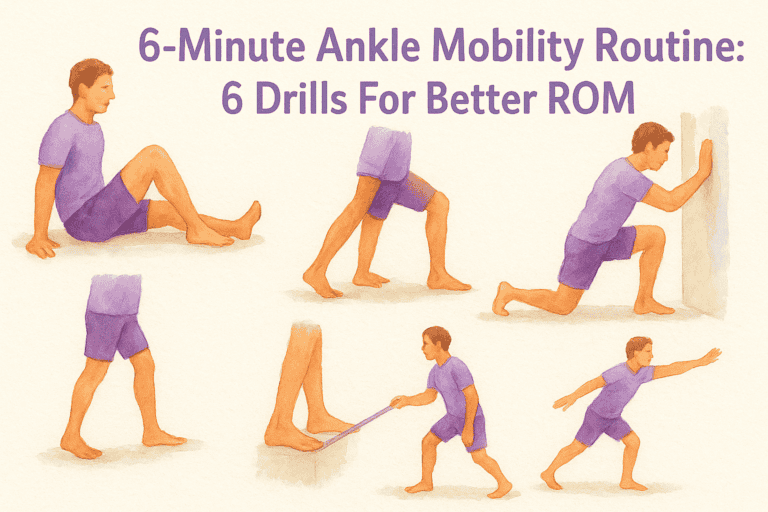
Stiff ankles affect more than just your squat depth. Limited ankle range of motion can mess with your knees, hips, and lower back, and if you spend long hours on your feet at festivals, retreats, or anywhere that keeps you moving, you’ll feel it. A solid ankle mobility routine takes
We use various cookies on our website. Some are essential for the website to function properly, while others we may only use with your consent. You can find more information about cookies on our website here.
This website uses cookies to improve your experience while you navigate through the website. Out of these cookies, the cookies that are categorized as necessary are stored on your browser as they are essential for the working of basic functionalities of the website. We also use third-party cookies that help us analyze and understand how you use this website. These cookies will be stored on your browser only with your consent. You also have the option to opt-out of these cookies. However, opting out of some of these cookies may have an impact on your browsing experience.
Necessary cookies are absolutely essential for the website to function properly. These cookies anonymously ensure basic functionalities and security features of the website.
Cookie
Duration
Description
cookielawinfo-checkbox-advertisement
1 year
Set by the GDPR Cookie Consent plugin, this cookie records the user consent for the cookies in the "Advertisement" category.
cookielawinfo-checkbox-analytics
11 months
This cookie is set by GDPR Cookie Consent plugin. The cookie is used to store the user consent for the cookies in the category "Analytics".
cookielawinfo-checkbox-functional
11 months
The cookie is set by GDPR cookie consent to record the user consent for the cookies in the category "Functional".
cookielawinfo-checkbox-necessary
11 months
This cookie is set by GDPR Cookie Consent plugin. The cookies is used to store the user consent for the cookies in the category "Necessary".
cookielawinfo-checkbox-others
11 months
This cookie is set by GDPR Cookie Consent plugin. The cookie is used to store the user consent for the cookies in the category "Other.
cookielawinfo-checkbox-performance
11 months
This cookie is set by GDPR Cookie Consent plugin. The cookie is used to store the user consent for the cookies in the category "Performance".
CookieLawInfoConsent
1 year
CookieYes sets this cookie to record the default button state of the corresponding category and the status of CCPA. It works only in coordination with the primary cookie.
elementor
never
The website's WordPress theme uses this cookie. It allows the website owner to implement or change the website's content in real-time.
fb_event_id_atc
30 minutes
Used to match client and server events for Meta Conversion API deduplication. Contains only anonymous technical IDs; no personal data stored.
fb_event_id_ic
30 minutes
Used to match client and server events for Meta Conversion API deduplication. Contains only anonymous technical IDs; no personal data stored.
fb_event_id_pur
30 minutes
Used to match client and server events for Meta Conversion API deduplication. Contains only anonymous technical IDs; no personal data stored.
fb_event_id_vc
30 minutes
Used to match client and server events for Meta Conversion API deduplication. Contains only anonymous technical IDs; no personal data stored.
rc::a
never
This cookie is set by the Google recaptcha service to identify bots to protect the website against malicious spam attacks.
rc::c
session
This cookie is set by the Google recaptcha service to identify bots to protect the website against malicious spam attacks.
viewed_cookie_policy
11 months
The cookie is set by the GDPR Cookie Consent plugin and is used to store whether or not user has consented to the use of cookies. It does not store any personal data.
VISITOR_PRIVACY_METADATA
6 months
YouTube sets this cookie to store the user's cookie consent state for the current domain.
wpEmojiSettingsSupports
session
WordPress sets this cookie when a user interacts with emojis on a WordPress site. It helps determine if the user's browser can display emojis properly.
Functional cookies help to perform certain functions, such as sharing website content on social media platforms, collecting feedback, and other third-party functions.
Cookie
Duration
Description
sib_cuid
6 months
SendinBlue sets this cookie to store unique visits.
VISITOR_INFO1_LIVE
6 months
A cookie set by YouTube to measure bandwidth that determines whether the user gets the new or old player interface.
yt-remote-cast-available
session
The yt-remote-cast-available cookie is used to store the user's preferences regarding whether casting is available on their YouTube video player.
yt-remote-cast-installed
session
The yt-remote-cast-installed cookie is used to store the user's video player preferences using embedded YouTube video.
yt-remote-connected-devices
never
YouTube sets this cookie to store the user's video preferences using embedded YouTube videos.
yt-remote-device-id
never
YouTube sets this cookie to store the user's video preferences using embedded YouTube videos.
yt-remote-fast-check-period
session
The yt-remote-fast-check-period cookie is used by YouTube to store the user's video player preferences for embedded YouTube videos.
yt-remote-session-app
session
The yt-remote-session-app cookie is used by YouTube to store user preferences and information about the interface of the embedded YouTube video player.
yt-remote-session-name
session
The yt-remote-session-name cookie is used by YouTube to store the user's video player preferences using embedded YouTube video.
ytidb::LAST_RESULT_ENTRY_KEY
never
The cookie ytidb::LAST_RESULT_ENTRY_KEY is used by YouTube to store the last search result entry that was clicked by the user. This information is used to improve the user experience by providing more relevant search results in the future.
Performance cookies are used to understand and analyze key website performance indexes, which helps in providing a better user experience for visitors.
Cookie
Duration
Description
SRM_B
1 year 24 days
Used by Microsoft Advertising as a unique ID for visitors.
Analytical cookies are used to understand how visitors interact with the website. These cookies help provide information on metrics such as the number of visitors, bounce rate, traffic source, etc.
Cookie
Duration
Description
_clck
1 year
Microsoft Clarity sets this cookie to retain the browser's Clarity User ID and settings exclusive to that website. This guarantees that actions taken during subsequent visits to the same website will be linked to the same user ID.
_clsk
1 day
Microsoft Clarity sets this cookie to store and consolidate a user's pageviews into a single session recording.
_fbp
3 months
Facebook sets this cookie to display advertisements when either on Facebook or on a digital platform powered by Facebook advertising after visiting the website.
_ga
1 year 1 month 4 days
Google Analytics sets this cookie to calculate visitor, session and campaign data and track site usage for the site's analytics report. The cookie stores information anonymously and assigns a randomly generated number to recognise unique visitors.
_ga_*
1 year 1 month 4 days
Google Analytics sets this cookie to store and count page views.
_gcl_au
3 months
Google Tag Manager sets the cookie to experiment advertisement efficiency of websites using their services.
_hjSession_*
1 hour
Hotjar sets this cookie to ensure data from subsequent visits to the same site is attributed to the same user ID, which persists in the Hotjar User ID, which is unique to that site.
_hjSessionUser_*
1 year
Hotjar sets this cookie to ensure data from subsequent visits to the same site is attributed to the same user ID, which persists in the Hotjar User ID, which is unique to that site.
_hjTLDTest
session
To determine the most generic cookie path that has to be used instead of the page hostname, Hotjar sets the _hjTLDTest cookie to store different URL substring alternatives until it fails.
CLID
1 year
Microsoft Clarity set this cookie to store information about how visitors interact with the website. The cookie helps to provide an analysis report. The data collection includes the number of visitors, where they visit the website, and the pages visited.
MR
7 days
This cookie, set by Bing, is used to collect user information for analytics purposes.
sbjs_current
session
Sourcebuster sets this cookie to identify the source of a visit and stores user action information in cookies. This analytical and behavioural cookie is used to enhance the visitor experience on the website.
sbjs_current_add
session
Sourcebuster sets this cookie to identify the source of a visit and stores user action information in cookies. This analytical and behavioural cookie is used to enhance the visitor experience on the website.
sbjs_first
session
Sourcebuster sets this cookie to identify the source of a visit and stores user action information in cookies. This analytical and behavioural cookie is used to enhance the visitor experience on the website.
sbjs_first_add
session
Sourcebuster sets this cookie to identify the source of a visit and stores user action information in cookies. This analytical and behavioural cookie is used to enhance the visitor experience on the website.
sbjs_migrations
session
Sourcebuster sets this cookie to identify the source of a visit and stores user action information in cookies. This analytical and behavioural cookie is used to enhance the visitor experience on the website.
sbjs_session
1 hour
Sourcebuster sets this cookie to identify the source of a visit and stores user action information in cookies. This analytical and behavioural cookie is used to enhance the visitor experience on the website.
sbjs_udata
session
Sourcebuster sets this cookie to identify the source of a visit and stores user action information in cookies. This analytical and behavioural cookie is used to enhance the visitor experience on the website.
SM
session
Microsoft Clarity cookie set this cookie for synchronizing the MUID across Microsoft domains.
YSC
session
YSC cookie is set by Youtube and is used to track the views of embedded videos on Youtube pages.
Advertising cookies are used to deliver relevant advertisements and marketing campaigns to visitors. These cookies track visitors across websites and collect information to deliver tailored advertisements.
Cookie
Duration
Description
_rdt_uuid
3 months
Reddit sets this cookie to build a profile of your interests and show you relevant ads.
ANONCHK
10 minutes
The ANONCHK cookie, set by Bing, is used to store a user's session ID and verify ads' clicks on the Bing search engine. The cookie helps in reporting and personalization as well.
MUID
1 year 24 days
Bing sets this cookie to recognise unique web browsers visiting Microsoft sites. This cookie is used for advertising, site analytics, and other operations.
test_cookie
15 minutes
doubleclick.net sets this cookie to determine if the user's browser supports cookies.
yt.innertube::nextId
never
YouTube sets this cookie to register a unique ID to store data on what videos from YouTube the user has seen.
yt.innertube::requests
never
YouTube sets this cookie to register a unique ID to store data on what videos from YouTube the user has seen.